Do Black Spots on Bananas Mean They're Rotten? Experts Reveal the Real Answer
Black spots on bananas don't always mean they're spoiled. Learn what these dark marks actually indicate, when the fruit is safe to eat, and the signs that tell you it's time to throw a banana away.
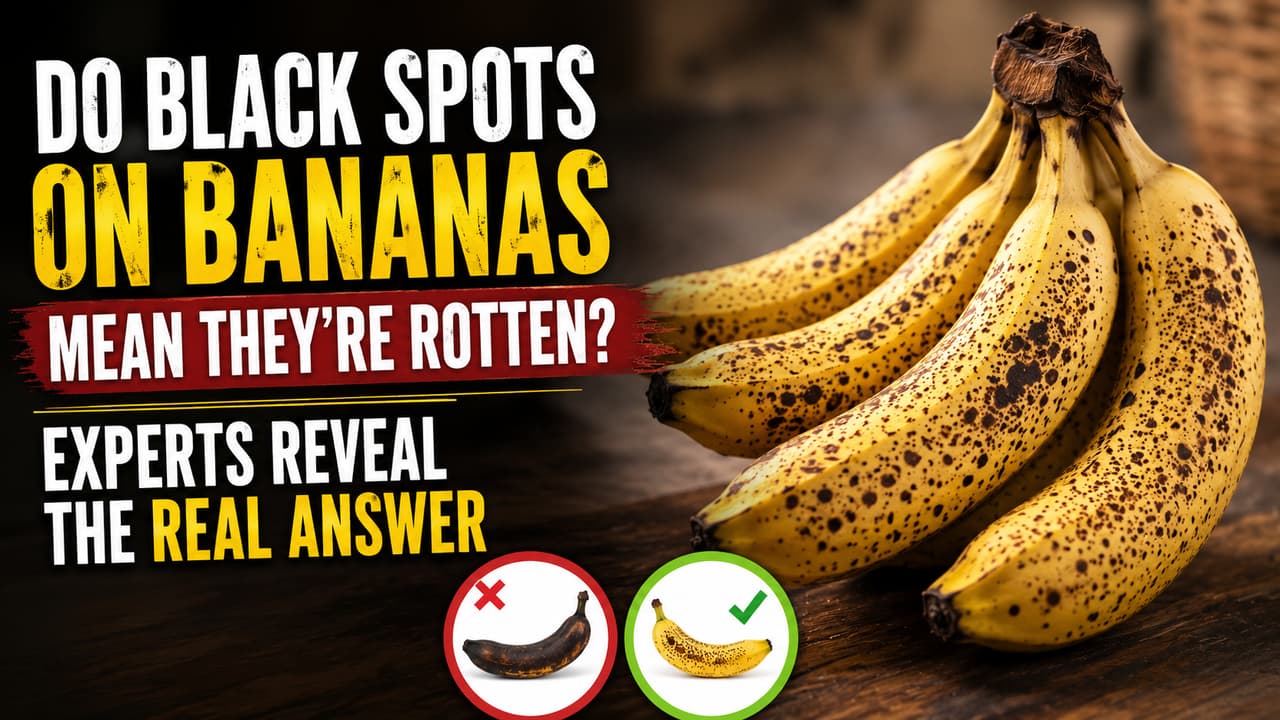
Why do bananas get those black spots?
We buy green bananas, and in a few days, they turn yellow and then get black spots. This is a totally natural part of the ripening process. A gas called 'ethylene' in the banana breaks down its cells, turning starch into sugar. This chemical change is what causes the black spots. In many homes, people see these spots and just throw the banana away, thinking it's gone bad. But a spot just means the banana is ripe, nothing more.


So, is it safe to eat a banana with black spots?
Yes, black spots from natural ripening usually mean the banana is perfectly safe to eat. As the fruit ripens, its starch turns into sugar, making it sweeter and the flesh softer. So, don't immediately think a banana with black spots is spoiled. Its outside look isn't enough to judge. You should also check its condition inside. Plus, ripe bananas are great for many recipes.
Don't eat the banana if you see these signs!
While black spots are natural, sometimes a banana really does go bad. You must avoid it if it has a bad smell. If you see fungus growing on it or if water is leaking from inside, that's a clear sign it's spoiled. Also, if the taste is off—like a sour taste or a strange smell—don't eat that banana. These signs mean the fruit is rotten and eating it can be harmful. So, always be careful.
The taste and nutrition of a ripe banana!
When a banana ripens, its flesh gets softer and the taste becomes sweeter. This sweetness increases because the starch converts to sugar. This change also makes ripe bananas easier to digest. Some studies even suggest their antioxidant properties might increase. Many people love using ripe bananas for smoothies, desserts, or baking. However, some people don't like the taste of very ripe bananas—it's all about personal preference. They are generally considered an easy-to-digest food for kids.
Think before you throw it away!
So, the final word is, you don't usually need to throw away bananas with black spots. They are most likely just naturally ripe and good to eat. Just check the look, smell, and feel of the fruit to decide. If there's no bad smell, fungus, or leakage, you can definitely eat it. From now on, don't just throw away a banana because of its spots. First, check if it's ripe or actually spoiled! This is the right way to go. You can avoid waste and enjoy a perfectly good fruit.
Explore the latest Lifestyle News covering fashion, wellness, travel, Food and Recipes, and more. Stay updated with trending Health News, fitness tips, and expert insights to inspire your daily living. Discover personalized lifestyle trends that keep you stylish and informed. Download the Asianet News Official App from the Android Play Store and iPhone App Store for everything that adds value to your everyday life.