- Home
- International
- Science
- Tropical Forest Loss Drops, Yet Forests Equal to 11 Football Fields Disappear Every Minute
Tropical Forest Loss Drops, Yet Forests Equal to 11 Football Fields Disappear Every Minute
Tropical forest loss slowed in 2025 after record destruction, but experts warn climate-driven fires and deforestation remain dangerously high, threatening global goals and ecosystems.
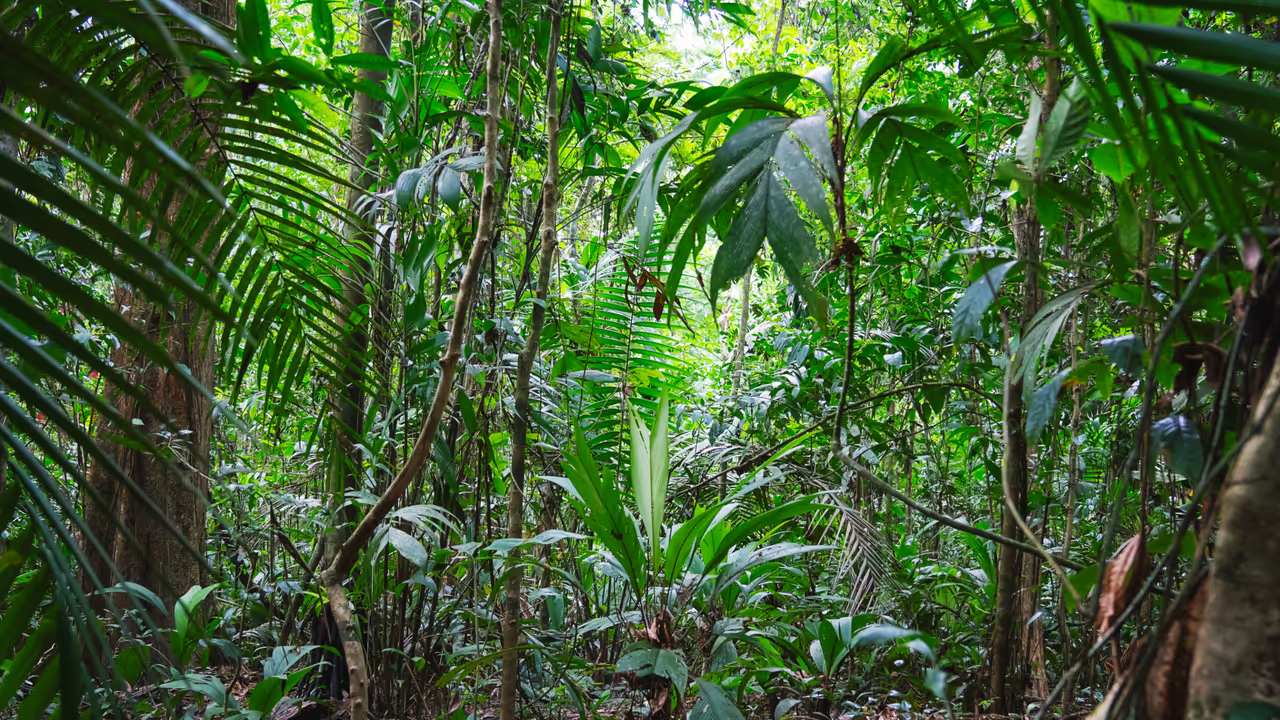
Tropical Forest Loss Slows After Record Spike — But Threats Persist
After a devastating spike in deforestation the previous year, there’s a rare sliver of good news for the planet’s lungs: the pace of tropical forest destruction slowed in 2025. But experts caution that the fight is far from over.
According to researchers from the World Resources Institute (WRI) and the University of Maryland, the world lost 4.3 million hectares (10.6 million acres) of tropical primary rainforest last year — a 36 percent drop from 2024’s record losses.
Still, the scale remains staggering — roughly 11 football fields of forest disappearing every minute.


A Dip in Destruction — But Not a Turning Point Yet
Researchers say the decline is encouraging, but not necessarily a sign of lasting progress.
“A drop of this scale in a single year is encouraging -- it shows what decisive government action can achieve,” said Elizabeth Goldman, co-director of WRI's Global Forest Watch platform.
However, she added a note of caution:
“But part of the decline reflects a lull after an extreme fire year.”
In other words, 2025 may look better partly because 2024 was exceptionally bad — not because the underlying drivers of deforestation have been solved
Climate Change and Fires: A Growing Threat
One of the most worrying trends is the rising role of forest fires — increasingly intensified by climate change.
Fires accounted for 42 percent of global tree cover loss last year. Over the past three years, they’ve burned more than twice as much forest area compared to two decades ago.
“For the past three years, fires burned more than twice as much tree cover as they did two decades ago,” Goldman said.
With the possible return of the El Nino weather pattern later this year, scientists warn that heatwaves, droughts, and wildfires could intensify again, potentially undoing recent gains.
Brazil Leads the Slowdown
Much of the global improvement came from one key country: Brazil.
Home to the Amazon rainforest, Brazil recorded a 41 percent drop in forest loss (excluding fires) — its lowest rate on record.
Researchers credit strong political action under President Luiz Inácio Lula da Silva.
“Brazil's declines are associated with stronger environmental policies and enforcement since President Lula took office in 2023,” Goldman said.
The government revived anti-deforestation plans and increased penalties for environmental crimes. Still, challenges remain — especially from agriculture, which continues to drive clearing for soy farming and cattle ranching.
Mixed Results Across the Tropics
Other countries showed varied progress:
- Colombia saw forest loss fall by 17 percent, thanks to government agreements and policy action
- Indonesia recorded a 14 percent increase, though still far below historic highs
- Malaysia managed to stabilise forest loss
But the situation remains dire in several regions, including:
- Bolivia
- Democratic Republic of Congo
- Cameroon
- Madagascar
Still Far From 2030 Goals
Despite the improvement, global forest loss is still 70 percent higher than what’s needed to meet the 2030 target of halting and reversing deforestation.
“A good year is a good year, but you need good years forever if you're going to conserve, for example, the tropical rainforest,” said Matthew Hansen of the University of Maryland.
The total forest area lost in 2025 was roughly the size of Denmark — and 46 percent higher than a decade ago.
A “Near-Permanent State of Emergency”
The broader picture, experts warn, is increasingly alarming.
“Climate change and land clearing have shortened the fuse on global forest fires,” Hansen said. “They are turning seasonal disturbances into a near-permanent state of emergency.”
Even countries outside the tropics are feeling the heat. Canada, for instance, experienced its second-worst wildfire season on record, with 5.3 million hectares burned.
The slowdown in tropical forest loss offers a glimpse of what strong policies can achieve. But with climate change intensifying and deforestation drivers still in play, the world is walking a tightrope.
The message from scientists is clear: one good year isn’t enough. Sustained action — year after year — is the only way forward.