- Home
- India
- Karthigai Deepam Lit at Thiruparankundram Deepathoon After Supreme Court Order: Full Timeline Explained
Karthigai Deepam Lit at Thiruparankundram Deepathoon After Supreme Court Order: Full Timeline Explained
A Karthigai Deepam was lit at Deepathoon on Thiruparankundram hill on November 28, under CRPF security and supervision of two SC-appointed former judges. The ceremony followed SC's November 27 order after the lamp was not lit at the pillar on Nov 24.
Thiruparankundram Deepathoon: The Karthigai Deepam Lighting Battle
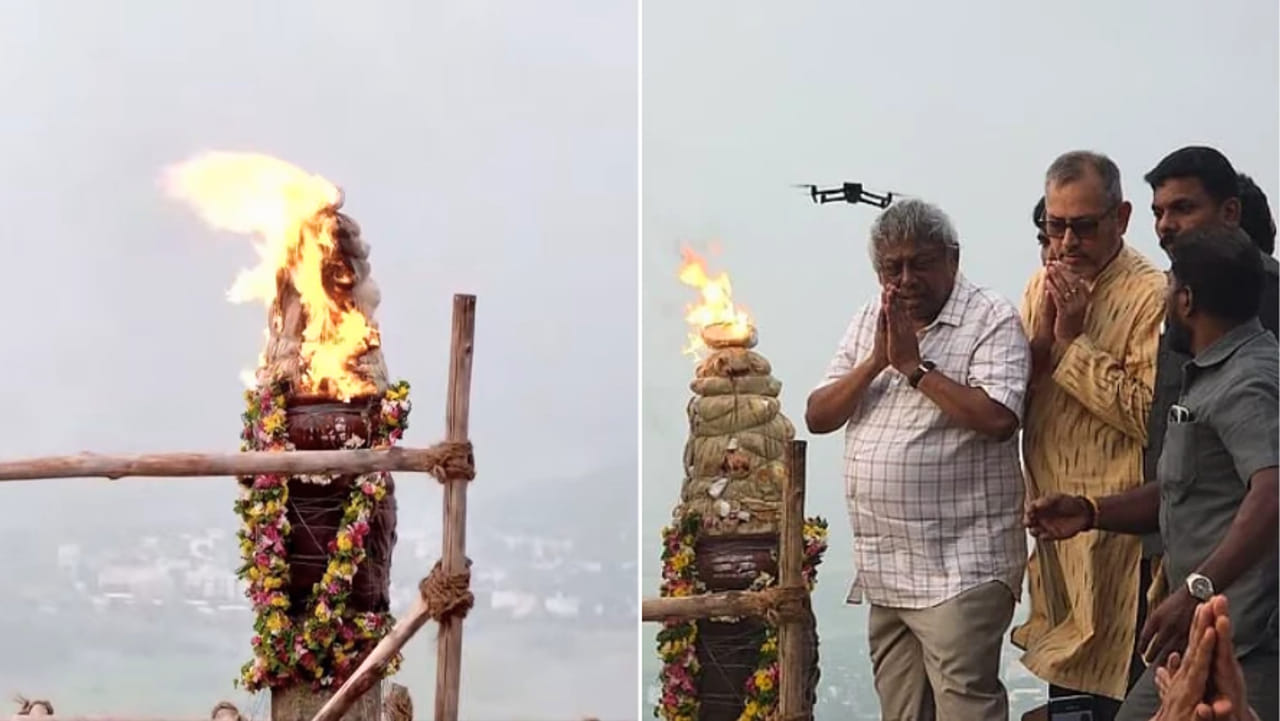
The lighting of the Karthigai Deepam at the Deepathoon stone pillar atop Tamil Nadu's Thiruparankundram hill on November 28, 2026, marked a significant moment in a decades-long dispute over where the traditional lamp could be lit. The ceremony took place under tight Central Reserve Police Force (CRPF) security and in the presence of two retired judges appointed by the Supreme Court.
#WATCH | Madurai, Tamil Nadu: The ceremonial Karthigai Deepam is lit at the Deepathoon stone pillar at Thiruparankundram Hill following the Supreme Court's verdict under the supervision of retired High Court judges Justice S. Vaidyanathan and Justice V. Parthiban. https://t.co/Qpy6kHfVPj
— ANI (@ANI) November 28, 2026
🚨 VIDEO OF THE DAY
Karthigai Deepam lit at the Deepathoon atop Thiruparankundram Hill. History Created !! https://t.co/WSa36GCJmH
— News Algebra (@NewsAlgebraIND) November 28, 2026
𝐉𝐚𝐢 𝐒𝐚𝐧𝐚𝐭𝐚𝐧!
𝐌𝐮𝐫𝐮𝐠𝐚𝐧𝐮𝐤𝐤𝐮 𝐀𝐫𝐨𝐡𝐚𝐫𝐚! 🚩
The sacred Deepam illuminating Thiruparankundram fills every devotee’s heart with immense pride and devotion.
#KarthigaiDeepam
#MuruganukkuArohara https://t.co/UF5OAv3x20
— BJP (@BJP4India) November 28, 2026
The event was more than a religious celebration. It followed a series of court orders, a failure to implement an earlier direction, contempt proceedings against state authorities and the suspension of the temple's board of trustees.
🚨 VIDEO OF THE DAY
Karthigai Deepam lit at the Deepathoon atop Thiruparankundram Hill. History Created !! https://t.co/WSa36GCJmH
— News Algebra (@NewsAlgebraIND) November 28, 2026
🚨 UNPRECEDENTED VISUALS
Devotees turn emotional as the sacred Deepam is lit atop Thiruparankundram hill 🥹 https://t.co/KbuaQJNly7
— News Algebra (@NewsAlgebraIND) November 28, 2026
At the heart of the dispute is a question that has repeatedly reached the courts: should the Karthigai Deepam be lit only at its customary location, or should devotees also be allowed to light it at the Deepathoon higher up the hill?


What Is Karthigai Deepam And Why Is It Celebrated?
Karthigai Deepam is an important Hindu festival celebrated in Tamil Nadu, particularly by devotees of Lord Shiva and Lord Murugan. It is observed during the Tamil month of Karthigai, which usually falls in November or December. Lighting lamps is the central part of the festival. The flames are traditionally seen as a symbol of divine light overcoming darkness and ignorance.
At Thiruparankundram, the festival is associated with the Arulmigu Subramaniya Swamy Temple, one of the important shrines dedicated to Lord Murugan (Kartikeya, the son of Lord Shiva). The temple is located on the lower part of the hill, which is also home to the Hazrat Sultan Sikandar Badusha Auliya Dargah and a mosque near its summit.
For years, the temple's main ceremonial lamp has been lit at the Deepa Mandapam near the Uchipillaiyar Temple on the hill. The recent dispute is about whether another lamp should also be lit at a higher point called the Deepathoon.
This distinction is important. The demand was not simply to move the existing lamp from one place to another. The petitions sought permission for an additional ceremonial lamp at the stone pillar, while the traditional lighting at the Deepa Mandapam could continue.
What Is The Deepathoon And Why Do Devotees Want A Lamp There?
The word Deepathoon is commonly understood as a lamp pillar. It refers to a stone structure on the upper part of Thiruparankundram hill, around 50 metres from the Sikandar Badusha Dargah.
Hindu devotees and organisations supporting the demand argue that the pillar is a suitable place to light the Karthigai Deepam. They say the customary Deepa Mandapam is not at the highest point of the hill and that devotees should be allowed to light a lamp at the elevated location as well.
The temple's customary practice, however, has been to light the festival lamp at the Deepa Mandapam near the Uchipillaiyar shrine. Temple authorities and those opposing the change have argued that this is the established religious practice and should not be altered without considering the temple's traditions.
There is also disagreement over the history and identity of the stone structure. Petitioners refer to it as the Deepathoon, while the Tamil Nadu government had questioned whether it was actually a lamp pillar or a survey structure erected during the British period.
The origin and original purpose of the pillar have not been conclusively established. The Madras High Court considered the available historical and legal material, but the Supreme Court's November 20, 2026, order made it clear that the temporary permission to light a lamp would not settle questions about the pillar's history, ownership or religious significance.
How Old Is The Dispute? What Happened In 1862 And 1912?
The disagreement has roots going back more than a century. Historical records referred to in court proceedings mention attempts by Hindus to light a lamp at an elevated location on Thiruparankundram hill in 1862 and again in 1912.
Both attempts were reportedly stopped by the authorities. The reasons recorded included the absence of an established custom of lighting the lamp at that location and the possibility of a breach of peace.
However, there is an important point to understand: the historical references do not conclusively establish that the exact stone pillar now called the Deepathoon was used in those attempts. The identity of the pillar mentioned in the old records remains uncertain.
The events of 1862 and 1912 are relevant because they show that the demand for a lamp at an elevated location is not entirely new. But they do not, by themselves, prove that lighting the lamp at the present Deepathoon was an established annual tradition.
The dispute later became connected to a much larger legal question: who owns which parts of Thiruparankundram hill, and what rights do the temple and the dargah have over their respective areas?
What Did The 1920 Land Dispute And 1931 Privy Council Ruling Decide?
In 1920, the temple administration filed a civil suit seeking recognition of its ownership and possession of Thiruparankundram hill. The case was not specifically about the Karthigai Deepam ritual. It concerned the ownership of the hill and certain structures and areas claimed by the Muslim community.
In 1923, a subordinate court in Madurai ruled largely in favour of the temple. It recognised the temple's ownership of most of the hill, while identifying specific areas as belonging to the Muslim parties. These included:
- The area containing the mosque and its flagstaff
- Nellithope, including the structures located there
- The steps leading from Nellithope towards the mosque
The judgment was challenged. In 1926, the Madras High Court overturned the lower court's decision and held that the government owned the hill. The temple then appealed to the Privy Council in London, which was India's highest court of appeal during British rule.
In 1931, the Privy Council restored the 1923 decree. This meant that the temple's ownership of most of the hill was recognised, while the specified areas associated with the mosque and Muslim community remained protected.
This ruling is central to the present dispute. However, it does not mean that every location on the hill automatically belongs to the temple. The exact boundaries and rights relating to particular places, including the Deepathoon, have remained contested.
The legal distinction is between ownership of the larger hill and the rights over specific portions of it. The dargah's area and access to it cannot simply be treated as temple property because the temple owns much of the surrounding hill.
What Happened In 1994 And 1996?
The question of lighting the Karthigai Deepam at an alternative location came before the Madras High Court again in the 1990s.
A 1996 order gave the temple authorities the option of considering an alternative location on the hill for lighting the lamp in future years. This was subject to approval from the Hindu Religious and Charitable Endowments Department, which oversees the administration of many Hindu temples in Tamil Nadu.
The order also specified a safety and property-related condition: any alternative location had to be at least 15 metres away from the dargah's property, its access steps and Nellithope, along with other areas recognised as belonging to the Muslim parties.
The order did not itself establish that the Deepathoon was a traditional place for the ritual. Instead, it provided a framework under which the temple administration could consider another suitable location, subject to the stated conditions.
Supporters of lighting the lamp at the Deepathoon have relied on this earlier direction to argue that an additional lamp at an elevated location should be permitted. Those opposing the move have questioned whether the pillar falls within the temple's property and whether the ritual has an established history there.
How Did The Dispute Reach The Madras High Court In 2025-26?
The latest phase of the dispute gathered momentum in October 2025, when Madurai resident Rama Ravikumar sought permission to light the Karthigai Deepam at the top of the hill. The temple's executive officer rejected the request on November 3, saying that the lamp would be lit at the customary Deepa Mandapam near the Uchipillaiyar Temple.
Ravikumar and other petitioners approached the Madurai Bench of the Madras High Court. On December 1, 2025, a single-judge Bench led by Justice G R Swaminathan directed that the lamp be lit at the Deepathoon in addition to the customary location.
The direction led to objections from the Tamil Nadu government, temple administration and representatives associated with the dargah. They raised concerns about religious traditions, ownership, access to the pillar and the possibility of law-and-order problems.
The matter went before a Division Bench of the Madras High Court. On January 6, 2026, Justices G Jayachandran and K K Ramakrishnan upheld the direction to light the lamp at the Deepathoon.
The judges said that lighting the lamp at an additional location would not prevent the temple from continuing its existing ritual at the Deepa Mandapam. They also said that questions involving ownership, access and rights over the exact site required proper legal consideration.
The High Court's ruling was significant because it supported the devotees' demand for an additional lamp at the pillar. However, the dispute was not over. The matter reached the Supreme Court, which had to consider the competing claims and decide what should happen during the 2026 festival.
Why Was The Supreme Court Involved?
The Supreme Court got involved as the legal challenge to the High Court's ruling continued. The central issue before it was not only where the lamp should be lit, but also how the court's directions could be implemented without disturbing the religious activities of either community.
On November 20, 2026, the Supreme Court passed an interim order permitting the ceremonial lamp to be lit at the Deepathoon on November 24 as a one-time arrangement. It directed that a restricted team authorised by the temple administration should carry out the ritual, with the district administration coordinating the arrangements.
The order included safeguards. The general public was not allowed to accompany the authorised team to the pillar. No procession, public gathering, demonstration or slogan-raising was to take place at the site. The Archaeological Survey of India was to ensure that the structure and its surroundings were protected.
The Supreme Court also made an important clarification: the one-time permission did not establish any customary, religious or ownership right. It did not decide whether the pillar had historically been used for the ritual or whether any group had a permanent right to light the lamp there. The existing religious activities at the customary locations and the lawful activities of the dargah were to continue without interference.
Why Was The Lamp Not Lit At Deepathoon On November 24?
Despite the Supreme Court's November 20 direction, the lamp was lit only at the customary Deepa Mandapam near the Uchipillaiyar Temple on November 24. It was not lit at the Deepathoon.
The temple's board of trustees had reportedly passed a resolution to continue the traditional practice at the Deepa Mandapam. It cited the temple's customs, religious traditions and the views of its hereditary officials.
The state and temple authorities offered explanations for not carrying out the Supreme Court's direction. They disputed allegations of deliberate disobedience and referred to the need to follow the temple's established practices and the arrangements permitted by the court.
Petitioners, however, argued that the Supreme Court's order had been deliberately ignored. They approached the top court through contempt petitions, seeking action over the failure to light the lamp at the pillar.
A contempt proceeding examines whether a person or authority has wilfully disobeyed a court order. It is not simply another hearing on the original religious or property dispute. In this case, the Supreme Court had to consider whether its November 20 direction had been deliberately disregarded.
What Did The Supreme Court Order On November 27?
On November 27, a Bench of Justices Aravind Kumar and Vipul M Pancholi took a serious view of the failure to implement its earlier direction. The court said that its orders had to be followed and that authorities could not decide on their own whether to comply.
It issued contempt notices to several Tamil Nadu officials, police officers, HR&CE (Hindu Religious and Charitable Endowments) officials and temple representatives, asking them to explain why contempt proceedings should not be initiated. The persons concerned were directed to appear before the court on December 15, 2026.
The court also suspended the board of trustees of the Arulmigu Subramania Swamy Temple and appointed two retired judges as joint receivers to take charge of the temple's administration:
- Justice S Vaidyanathan, former Chief Justice of the Meghalaya High Court.
- Justice V Parthiban, former judge of the Madras High Court.
The Supreme Court also directed the CRPF to take over security of the temple and the entire hill. It said the force must ensure that devotees at both the temple and the dargah could carry out their religious rituals without obstruction.
Most importantly, the court ordered that the Karthigai Deepam be lit at the Deepathoon on November 28. It also allowed devotees to light lamps at designated places on the hill, subject to security arrangements. To protect the dargah, the court specified that the lamp-lighting locations should be at least 50 metres away from it on all sides.
The court said the earlier flame from the Deepa Mandapam could be used if it was still burning. If it had gone out, the receivers could arrange to light a fresh flame.
Karthigai Deepam lit in Thiruparankundram Deepathoon
The ceremony took place at around 5 pm on Saturday, November 28, under tight security. The two retired judges appointed by the Supreme Court oversaw the arrangements, while CRPF personnel secured the hill.
A limited team went up to the Deepathoon to carry out the ritual. Thousands of devotees gathered at locations below the hill, including a nearby flyover and surrounding buildings, to watch the ceremony.
When the flame was lit, people cheered and raised devotional slogans in praise of Lord Murugan. Some devotees showered flowers, while others waved their upper cloths in celebration. Conch shells and traditional musical instruments were also heard.
The lighting was a significant moment for devotees and organisations that had campaigned for permission to perform the ritual at the elevated location. It was also the first time the lamp was lit at the disputed pillar in the present phase of the legal battle, after the earlier attempts recorded in historical accounts.
The event was conducted under the Supreme Court's directions, with CRPF security in place to protect both religious sites and prevent any disturbance.
(With inputs from agencies)
Stay updated with the Breaking News Today and Latest News from across India and around the world. Get real-time updates, in-depth analysis, and comprehensive coverage of India News, World News, Indian Defence News, Kerala News, and Karnataka News. From politics to current affairs, follow every major story as it unfolds. Get real-time updates from IMD on major cities weather forecasts, including Rain alerts, Cyclone warnings, and temperature trends. Download the Asianet News Official App from the Android Play Store and iPhone App Store for accurate and timely news updates anytime, anywhere.