Independence Day 2025: 10 Unsung Freedom Fighters From Northeast India Should Celebrate
As Independence Day 2025 nears, India will pay homage to many men and women who sacrificed their lives and paved the way forward. Here's a list of 10 legendary figures from the northeast who fought the struggle against the British.

Kanaklata Barua
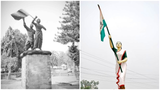
Born on 22 December 1924, in Borangabari village of the undivided Darrang district, Assam, Kanaklata Barua scripted her name during the Quit India Movement, when she joined the Mrityu Bahini, a suicide squad, when she was only 17. On 20 September 1942, the revolutionary camp of Gohpur division of undivided Darrang district decided to hoist and unfurl the national flag at a local police station, and it was Barua who led a procession of unarmed villagers for the task.
When Rebati Mahan Som, the officer in-charge of the police station, warned the procession of deadly consequences if they went ahead with their plan, Barua refused to slow down. Consequently, the police opened fire and Barua was shot dead holding the flag, which was subsequently picked up by her compatriot Mukunda Kakoti, who was also killed.


Rani Gaidinliu
“We are free people, the white men should not rule over us,” said a 13-year-old Rani Gaidinliu of the Rongmei Naga tribe in 1927, while issuing a clarion call to all ethnic Naga tribes from remote hills of the northeastern region.
The same year, she joined the Heraka religious reform movement begun by her cousin Haipou Jadonang, which sought to standardise the traditional Naga belief systems against the growing influence of Christianity and Vaishnavism.
Under her guidance, the movement later turned into a political movement seeking to kick the British out from the region. She urged the people not to pay taxes, not work for the British and even went underground to lead many attacks on the colonial administration.
She was arrested in 1932 at the age of 16, and sentenced to life imprisonment. Jawaharlal Nehru met her at Shillong Jail in 1937, and gave her the title of Rani. Released in 1947 after India’s independence, she continued to work for the upliftment of her people.
U Tirot Sing Syiemlieh
Born in 1802, U Tirot Sing Syiemlieh was a native chief of Nongkhlaw, a territory in the Khasi Hills of Meghalaya, who led the Khasis in their fight against the British during the 1829-1833 Anglo-Khasi War. After securing the Brahmaputra Valley and Surma Valley (in Assam and partly in Bangladesh), the British sought permission from Tirot to construct a road cutting through the hills inhabited by the Khasis.
Tirot and his men battled the British for four years engaging in guerilla warfare. In 1833, while he was hiding out in the hills after sustaining a bullet injury, he was betrayed by one of his men and soon captured by the British forces. He was deported to Dhaka, where he died in captivity on 17 July 1835.
Bir Tikendrajit Singh
“Bir Tikendrajit Singh, the crown prince of Manipur, who laid down his life along with his General Thangal for protecting the territorial integrity of the state against British imperialist design, has gone down in the annals of history as a hero of supreme sacrifice and extraordinary valour,” says local academic Prof K Nayan Chanda Singha.
When the Maharaja refused to abdicate or hand over the prince, the British tried to conduct a sudden midnight raid and capture Tikendrajit in 1891. But their plan was quickly foiled by Manipuri soldiers. Angered, King Kulachandra ordered the beheading of the five British officers on March 24, 1891. It was this incident that triggered what was later called the Anglo-Manipur war of 1891.
“To save their motherland, the Manipuris fought very bravely under the direction of Tikendrajit. But it was all in vain against the superior mite and arms of the British. On 27th April, 1891 the British occupied Manipur. Tikendrajit was arrested and after a farcical trial by a general court-martial, he was publicly hanged on 13th August 1891,” notes the archives of the Manipur government.
Paona Brajabashi
One of the most revered figures of the Anglo-Manipur War in 1891 was Major Paona Brajabashi, a soldier of the Kangleipak kingdom (Kingdom of Manipur) under Maharaja Kulachandra. Battling the British undermanned and under-armed in the Battle of Khongjom, Paona valiantly led his soldiers in one of the fiercest battles in Indian history on 23 April 1891. Engaged in a bloody clash, the Manipuri soldiers, including Paona, fought until the last man by some accounts. Before he was killed, however, he was given a choice.
Haipou Jadonang
A Rongmei Naga leader from present-day Manipur, he was a spiritual leader, social reformist, and political leader who sought to emancipate the Naga people from the clutches of British colonial rule during the early decades of the 20th century.
On 19 February 1931, however, he was arrested by British officials on charges of sedition and later hanged on false murder charges. He was only 26.
Moje Riba
Born sometime during the last decade of the 19th century in Daring village, Basar Sub-Division of the present West Siang District, Arunachal Pradesh, Moje Riba was involved in the cane business with traders across the Brahmaputra in Dibrugarh, Assam, before his involvement in the freedom struggle. It was in Dibrugarh when he first heard about the freedom struggle against the British.
“After joining INC, Moje Riba became the first INC President from Arunachal Pradesh. He led the marches and his supporters in the path of the country’s freedom. He has contributed in this freedom struggle in different ways. For his sacrifices and contributions in the India’s movement, he was conferred with Tamra Patra by the then PM of India, Smt. Indira Gandhi. It happened on the red letter day of the silver jubilee year of India’s Independence Day i.e. on 15th August, 1972,” says report in The Sentinel. He died in 1982.
Pa Togan Sangma
Also known as Togan Sangma or Pa Togan Nengminja Sangma, he was a 19th century Garo (A-chik) warrior and leader from Garo hills, Meghalaya, who died battling British forces on 12 December, 1872.
“In 1872, British soldiers entered the Garo hills and set up a camp near Chisobibra village. Pa Togan Sangma and other warriors launched an attack against the British forces, only to face a barrage of bullets. Being ill-equipped, the warriors suffered grave losses, and Pa Togan Sangma died on the spot in his quest to save his motherland and his people,” notes this report from the Telegraph.
U Kiang Nangbah
A freedom fighter from Meghalaya, he led an uprising against the British during the 1860s. Although very little is known about his early life, historians claim that he was born before the British had annexed the Jaintia hills in 1835. “U Kiang Nangbah lived in a locality we now called Tpep-pale and Kiang Nangbah’s family’s hut must be on the hill top across the valley between the two hills where Yawmusiang and Tpep-pale stand,” notes HH Mohrmen for Shillong Times. When the colonial government sought to impose taxes and interfere with traditional customs, the tribes of the Jaintia Hills began harbouring an anti-British sentiment. All hell broke loose in 1860 with the imposition of house tax on the tribes inhabiting the Jaintia hills. That’s when they joined forces under the leadership of Nangbah. His forces soon attacked a British police station and set fire to all its weapons.
What followed was a series of guerilla attacks which paralysed the colonial administration. In response, the British launched a full-scale military operation against Nangbah and his men. The British captured him in December 1862 after one of his men had tipped off the enemy. After a mock trial, he was hanged three days later.
Gopinath Bordoloi
Born on 6 June 1890, Gopinath Bordoloi not only challenged the British, but also ensured that at the time of Independence, Assam remained part of India, and eventually became the first Chief Minister of undivided Assam.
Despite his immense contribution to the freedom struggle, particularly through the 1930s and the Quit India Movement, it was in 1947 when he truly came to the fore.
With the introduction of the Mountbatten Plan in 1947, Bordoloi battled leaders of the Muslim League to ensure Assam remained in India.
Stay updated with the Breaking News Today and Latest News from across India and around the world. Get real-time updates, in-depth analysis, and comprehensive coverage of India News, World News, Indian Defence News, Kerala News, and Karnataka News. From politics to current affairs, follow every major story as it unfolds. Get real-time updates from IMD on major cities weather forecasts, including Rain alerts, Cyclone warnings, and temperature trends. Download the Asianet News Official App from the Android Play Store and iPhone App Store for accurate and timely news updates anytime, anywhere.