Diwali Joins UNESCO Heritage List: A Landmark Moment for India’s Cultural Legacy
UNESCO has added Diwali to its Intangible Cultural Heritage list, honouring the festival’s global legacy of lights, community, and the triumph of good over evil, sparking celebrations across India.
Diwali’s Glow Reaches UNESCO
In a moment that blended pride, nostalgia, and a sense of long-awaited recognition, UNESCO on Wednesday added Diwali—the Festival of Lights—to its Intangible Cultural Heritage list. The announcement, made in New Delhi where the United Nations cultural agency is holding its annual session, triggered celebrations across the capital and beyond.
The recognition places one of India’s most beloved festivals among the world’s protected cultural traditions, honouring practices that societies treasure as markers of identity, memory, and community life.
🔴 BREAKING
New inscription on the #IntangibleHeritage List: Deepavali, #India🇮🇳.
Congratulations!https://t.co/xoL14QknFp #LivingHeritage pic.twitter.com/YUM7r6nUai— UNESCO 🏛️ #Education #Sciences #Culture 🇺🇳 (@UNESCO) December 10, 2025


A Festival Rooted in Memory and Myth
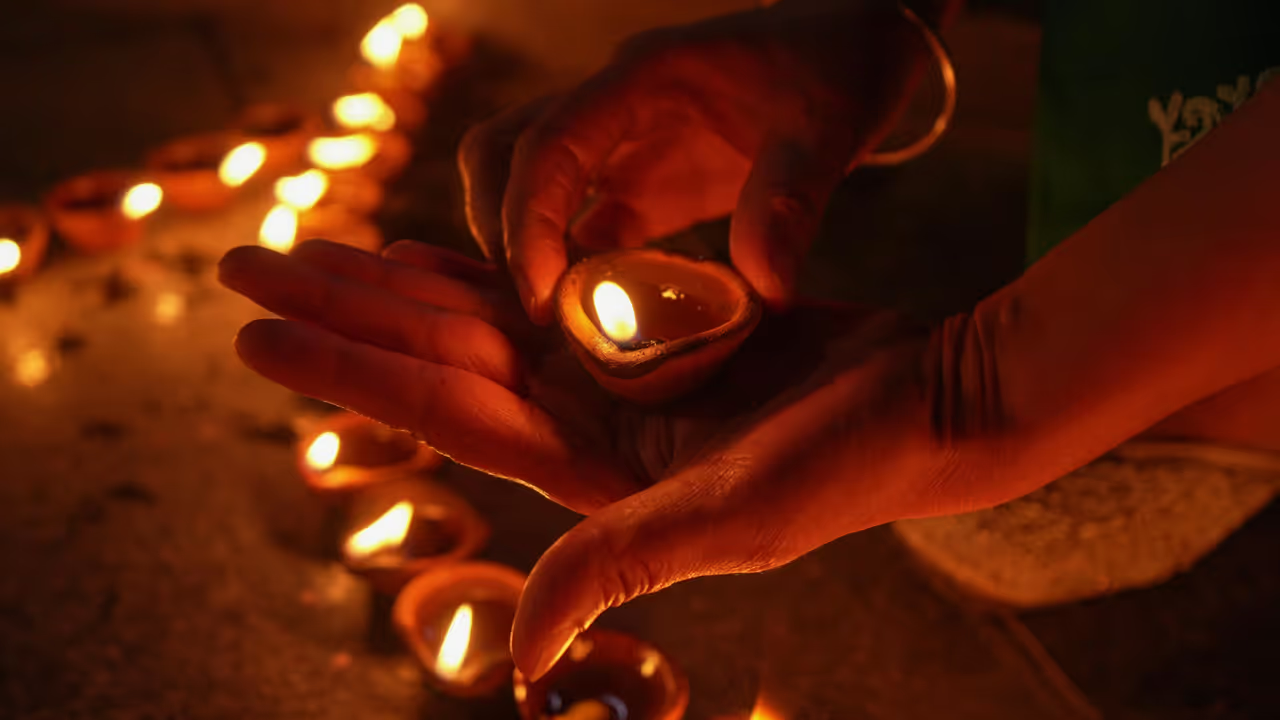
For countless Indians, Diwali is more than a celebration—it is a ritual of remembrance. Families recall stories passed down through generations: the lamps lit to welcome Lord Rama back to Ayodhya after his victory over the demon king Ravana; the prayers to Lakshmi for prosperity; and the timeless belief in light prevailing over darkness.
The festival’s deeper layers were reflected in the government’s immediate response. India’s foreign ministry, in a message on social platform X, wrote: “A joyous moment as Deepavali, the festival of lights marking the triumph of good over evil and the return of Lord Rama to his kingdom Ayodhya, which is celebrated globally, is added to the UNESCO Intangible Cultural Heritage list.”
The phrasing echoed what millions feel every year as they set out clay lamps, clean their homes, decorate entrances with rangoli, and prepare sweets whose recipes often live only in memory.
A historic day for India.
Deepavali has been officially inscribed on the UNESCO List of Intangible Cultural Heritage of Humanity.
During the tenure of Hon’ble PM Shri Narendra Modi Ji, India’s cultural heritage is receiving unprecedented global recognition and this milestone… pic.twitter.com/pZDH7nqu85— Gajendra Singh Shekhawat (@gssjodhpur) December 10, 2025
UNESCO’s Spotlight in New Delhi
The decision came as UNESCO experts met in the Indian capital from Tuesday to Thursday, considering dozens of nominations from 78 countries. The agency’s process is deliberate, focused on living traditions that continue to bind communities emotionally and socially, rather than relics frozen in time.
The new additions will join UNESCO's long-standing heritage list, created to “raise awareness of the diversity of these traditions" and ensure they are protected for future generations. In the case of Diwali, the recognition feels both symbolic and practical—it sends a message to the world that festivals are not just spectacles, but cultural ecosystems that thrive on shared participation.
Delhi Dressed in Light
Across the city, the announcement sparked a celebratory mood. Government officials confirmed a series of events: special illuminations, decorative installations on major roadways, and a grand lamp-lighting ceremony expected to draw thousands.
A Celebration Shared Beyond Borders
While Diwali is deeply rooted in Hindu tradition, it is equally embraced by Sikhs and Jains, and by the massive Indian diaspora scattered worldwide. In cities like London, Durban, Kuala Lumpur, New York, Sydney, and Singapore, immigrants illuminate homes and streets to recreate the feeling of a festival that symbolizes belonging.
Millions observe it as a five-day celebration, each day carrying its own rituals—from the cleaning and shopping that precede the festival, to the night skies crackling with fireworks on the main Diwali evening.
The festival is typically celebrated on the new moon day of late October or November, aligning with the Hindu lunisolar calendar. In countless households, parents still whisper the story to their children: good defeating evil, light finding a way even when darkness appears complete.
More Than Lamps and Firecrackers
To outsiders, Diwali might appear mostly ornamental—a festival of lamps, sweets, and dazzling fireworks. But for those who participate, it carries emotional weight: the chance to begin again, to renew bonds with family, to forgive old grievances, and to hope for better days.
Its rituals continue to evolve. Urban families may swap candles for LED lamps, and environmental concerns have tempered the once-unchecked use of firecrackers. But the sentiment—the belief in renewal—remains constant.
A Cultural Moment India Will Remember
UNESCO’s inclusion is not just a line on an international register; it is a nod to a tradition that millions carry in their hearts, year after year. For many Indians, the recognition feels long overdue, but all the more satisfying because it comes at a moment when the country is hosting the world’s cultural custodians.
As celebrations ripple outward from New Delhi, the glow of Diwali—steady, familiar, and centuries old—now carries an added warmth. It has been acknowledged as a global treasure, a cultural inheritance shared not only by Indians but by all who see light as a guide, a promise, and a symbol of hope.
(With inputs from AFP)
Stay updated with the Breaking News Today and Latest News from across India and around the world. Get real-time updates, in-depth analysis, and comprehensive coverage of India News, World News, Indian Defence News, Kerala News, and Karnataka News. From politics to current affairs, follow every major story as it unfolds. Get real-time updates from IMD on major cities weather forecasts, including Rain alerts, Cyclone warnings, and temperature trends. Download the Asianet News Official App from the Android Play Store and iPhone App Store for accurate and timely news updates anytime, anywhere.