
Borderlands' Exclusive: 'We told characters we were not from a news channel'
'Borderlands' won the award for Best editing in the Non-Fiction category at the 68th National Film Awards. It follows the lives of people who live near the border and tries to capture their daily lives. Asianet Newsable's Gargi Chaudhry reached out to director Samarth Mahajan to understand more about 'Borderlands'.
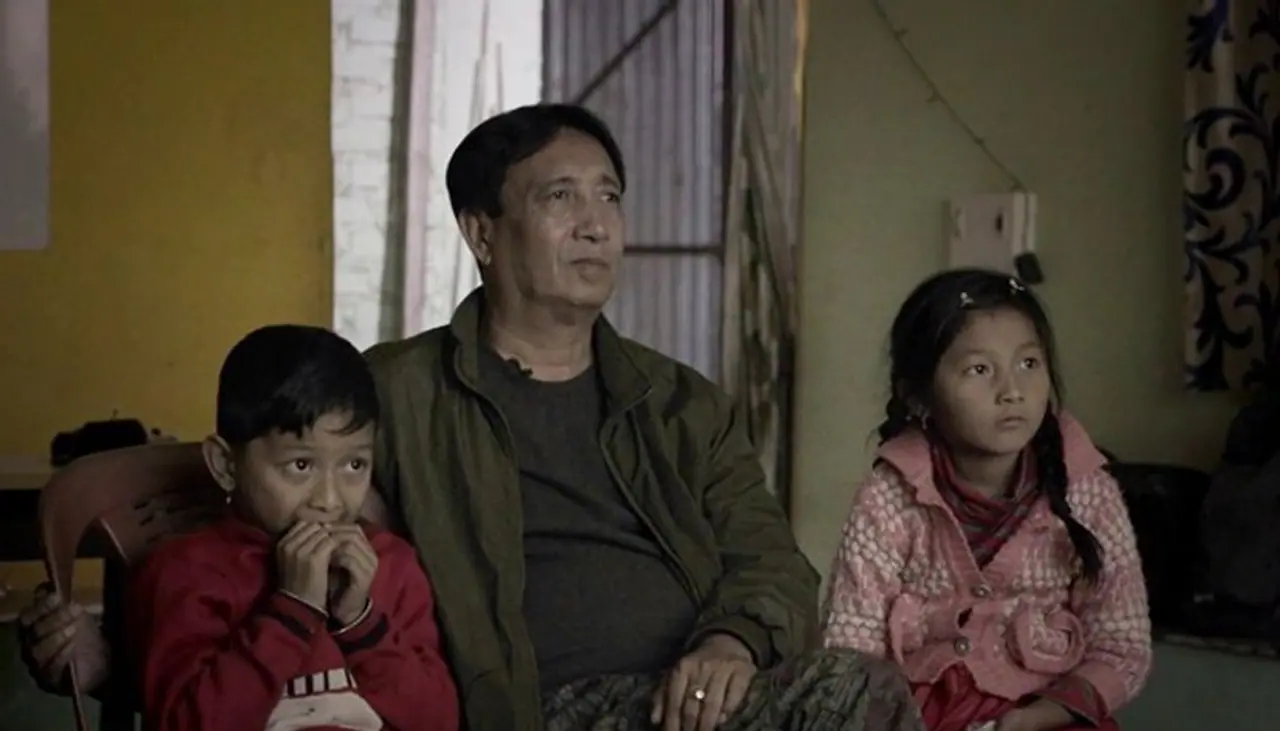
Image Credit: Rainshine Entertainment
'Borderlands' won the award for Best editing in the Non-Fiction category at the 68th National Film Awards. The 67-minute documentary by Samarth Mahajan follows the lives of people who live near the border and tries to capture their daily lives.
Asianet Newsable's Gargi Chaudhry reached out to Samarth Mahajan to understand more about 'Borderlands' and the message it intends to send across.
The lives of people living in border areas are complicated by the constraints the border imposes on them, Samarth said. "In the current context, when borders are being used as a divisive tool and depicted as hubs of violence, the film aims to humanise them and create conversations on cross-border relationships," he added.
Read the excerpts from the interview:
1. What inspired you to work on this concept for this documentary?
Samarth: I come from a border area myself, so conversations on borders and interactions with borderland citizens have been a part of my growing up. During my previous project, “The Unreserved”, I met a young Kashmiri guy who narrated how he supported Pakistan while his brother, being an Army-man, supported India. The conversation ended with him telling us that if he got a job in India, he’d start supporting India too. It taught me something about the fluidity that a borderland citizen might experience. It piqued my interest in researching stories from border areas. In the current context, when borders are being used as a divisive tool and depicted as hubs of violence, the film aims to humanise them and create conversations on cross-border relationships.


Image Credit: Rainshine Entertainment
2. From storyboard to filming... What sort of challenges did you encounter? How did you deal with them? Was it difficult to write and shoot with stories evolving around BSF?
Samarth: Gaining trust of the local communities and potential characters was a challenge, especially given some of the stories were in sensitive areas - and we did learn to accept “no” as an answer without getting demotivated. We were even asked to leave by a few villages as well. We did figure out a process which helped us gain access in most of the locations, after we’d approached a sufficient number of people. We ensured we met our potential characters without any equipment and laid out the norms before starting to shoot - that we were not from a news channel, we were not going to live-stream our conversations, and that we were not interested in sensationalising their stories.
Another big challenge was that we realised we will never get written permission to shoot near borders from the Ministry of Home Affairs, which overlooks the Border Security Force and Sashastra Seema Bal. After umpteen trips to the Delhi office, and follow up calls, we decided to take a more informal local approach. So we did a lot of ‘jugaad’ to either get permission on a local level, or found guerilla ways of shooting a few sequences, and in the more unfortunate cases skipped some potential stories.
However, the biggest challenge remained to raise funds for a documentary of this scale. So we tried raising funds through numerous international grants, and were invited to film markets across the globe. While our pitch would usually be well-received and we would get meetings with most of the important decision makers, the institutions (grants, commissioning editors, co-producers) were quite wary of investing in a project with six characters, with a structure which was not the standard hero’s journey. We were lucky that many people beyond our networks resonated with the core idea and supported our crowdfunding campaign. We ended up raising about Rs. 30 lacs in 45 days. Apart from being partly crowdfunded from 557 contributors, the film is fortunate to be a co-production between two caring Indian companies: Rainshine Entertainment and Camera And Shorts.
3. How did you choose the name 'Borderlands'?
Samarth: The idea here was to reclaim the word and populate its image with everyday people. This was important to me as the former image is often used to divert attention from the more pressing issues faced by common people in the nation. In the film, “Borderland” is used to imply any space where we can see the impact of a border prominently. In that sense, the word conveys both a reality and a metaphor - so half the characters live near borders, and the rest are in other spaces. Someone like Deepa (combating patriarchy in a Pakistani migrant colony) or Noor (confined in a Shelter Home while awaiting repatriation after rescue) are inherently residing in a ‘borderland’ , even if they are not living literally next to a border.
Image Credit: Rainshine Entertainment
4. You have shot the documentary using people and not actors. How did you prepare them?
Samarth: We usually first met our potential characters without any camera or equipment to explain our intentions and get their consent. This would also enable a certain comfort between the characters and the crew before the shoot. For the interviews, we identified spaces in their immediate surroundings, and usually spaces where they were already used to sitting, so that they didn’t feel awkward while talking to us.
We would follow their daily routine and notice patterns to plan our shots. We rarely asked them to do something for the camera. We also had a system where they could tell if something was making them uncomfortable, or if they wanted us to stop shooting for the day.
5. What are the takeaways for people from your work? How is it going to impact people?
Samarth: A film means different things to different people. For me, I feel there’s a whole world beyond our immediate circles which we refuse to engage with, based on our presumptions and comfort zone. Engaging with this India, which we have become used to not seeing and hearing, can teach us a lot about ourselves and our privilege.
As mainland citizens, it is quite easy for us to say that we want to wage war with another country, without having any idea of the effects on the lives of people on the borders. So I hope these Borderland narratives can shed a new understanding of fluidity in identities and movement across borders, and make people more empathetic.
Also Read | Vaathi first look: Dhanush plays a teacher in Venky Atluri's film (Read details)
6. The documentary is in Bengali, Nepali, Punjabi, Manipuri and Hindi. Is there a conscious reason to dub in border-specific languages alone? Will it be dubbed in other languages as well in the time to come?
Samarth: To me it was very important to preserve the linguistic authenticity and national diversity of the subcontinent in the film - that’s why we have characters speaking five languages and hailing from four different nationalities. To enable this, we recruited local Direction Associates for regions where I did not speak the language (Bengal, Nepal, Manipur). They then formed direct relationships with the characters, and got into intimate conversations which would have been diluted if a translator was mediating.
Image Credit: Rainshine Entertainment
7. What is your assessment of the lives of people living in border areas, especially around hostile neighbours?
Samarth: The lives of people living in border areas are complicated by the constraints the border imposes on them. Yet, the key takeaway is that like any other person, like you or me, they make the most of their conditions to find purpose, happiness and meaning.
8. Lastly, 'Borderlands' won the best editing award in the national film awards. How does it feel? What next?
Samarth: Anadi and I have been working together for almost 7 years, and he is like a mentor to me. He has the patience to surf through a lot of what I believe is really disorganised footage, and a knack of finding genuine intimate moments in it. He likes to bring his own storytelling quirks to the narrative - and in that way the edit becomes a collaborative process where we try and reach a story we both want to tell.
Also Read | MTV Video Music Awards 2022: BTS, Doja Cat and more dominate; here's the full list
When we started editing, Anadi suggested we break the stories into two parts - one for introduction of the characters, and second to illustrate the impact of borders on their lives. This way we could engage with the characters first as simple human beings, without any agenda, and then understand their socio-political situations. We did not cut the film with a typical three-act structure, or a single narrative spine. Since our edit grammar was unique, so this recognition feels special.
Currently I am wrapping up work on a true-crime based documentary series with Vice Studios. It is different from my previous projects, and has been a lot of learning. I am excited for it to release later this year
Catch all the latest Entertainment News from movies, OTT Release updates, television highlights, and celebrity gossip to exclusive interviews and detailed Movie Reviews. Stay updated with trending stories, viral moments, and Bigg Boss highlights, along with the latest Box Office Collection reports. Download the Asianet News Official App from the Android Play Store and iPhone App Store for nonstop entertainment buzz anytime, anywhere.