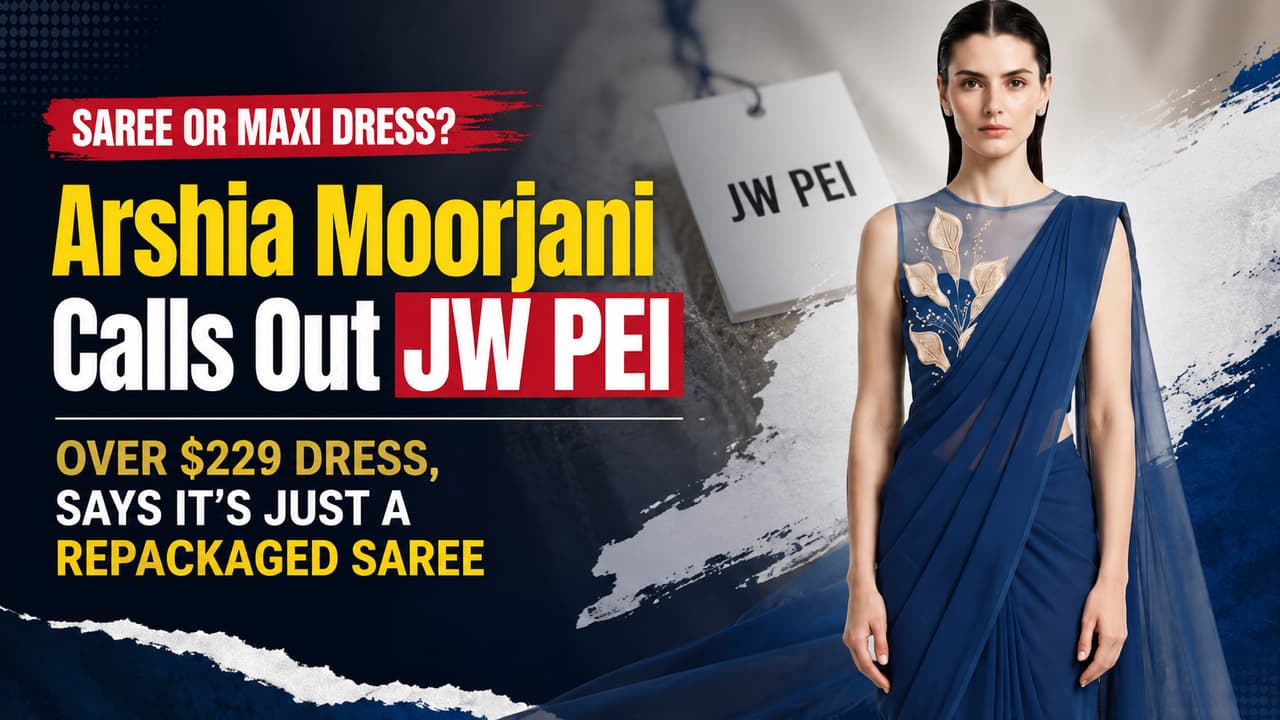
US fashion brand JW PEI faces backlash after Indian entrepreneur Arshia Moorjani questioned its $229 “maxi dress,” saying the garment closely resembles a traditional Indian saree.
An American clothing brand has been dragged into a new controversy over cultural appropriation following claims that it is passing off a traditional Indian saree as an innovative Western piece of clothing. It all kicked off online when Arshia Moorjani, an Indian beauty entrepreneur, raised questions over the naming and description of a piece of clothing by a US-based fashion brand, JW PEI.
‘This Is a Saree’: Arshia Moorjani Questions Fashion Brand Over Naming Of Clothing
Moorjani, who runs her own beauty brand Meri Stori, brought up the case of a clothing item marketed by JW PEI as the “Botanical Embellished Draped Overlay Maxi Dress” in an Instagram video. According to Moorjani, the clothing item resembles the traditional Indian saree so much, yet why was it described as a Western-style dress?
In the screenshot posted by Moorjani, the clothing item was priced at $229, or Rs 21,917.
Related Articles

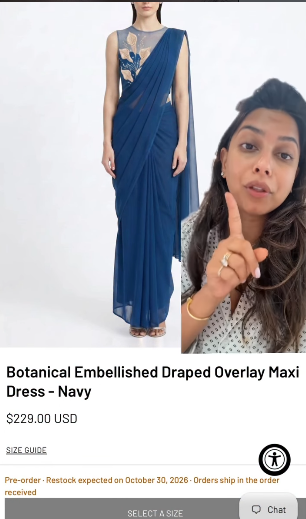
She clarified that while she is open to seeing Indian designs on international fashion lines, there needs to be some recognition of where the cultural references come from.
“Give Credit Where It Is Due”
According to Moorjani, the discussion is also linked to diversity among fashion businesses. The writer argues that featuring diverse models in their ads and campaigns is not sufficient but representation needs to include the people who take part in designing, naming, and advertising products as well.
As Moorjani claims, involving Indian people in the backstage may allow brands to properly understand and label cultural clothing items.
Her statement was widely supported by social media users, especially those of South Asian origin who claim that this is one more example of Indian fashion and culture being repackaged for the western audience.
Social Media Users Speak Up
The video rapidly gained popularity, as users were trying to question the product’s description and protect the saree’s cultural value. Some of them claimed that this product is still available on the brand's official site and mentioned that there were some other products that also look like sarees and dupattas.
Some of them associated this controversy with previous online discussions related to Indian fashion items such as dupattas being renamed into “Scandinavian scarves” or Prada's Kolhapuri shoes.
Also read: Rakhi 2026 Outfit Ideas: 10 Elegant Ethnic Looks for Picture-Perfect Celebration