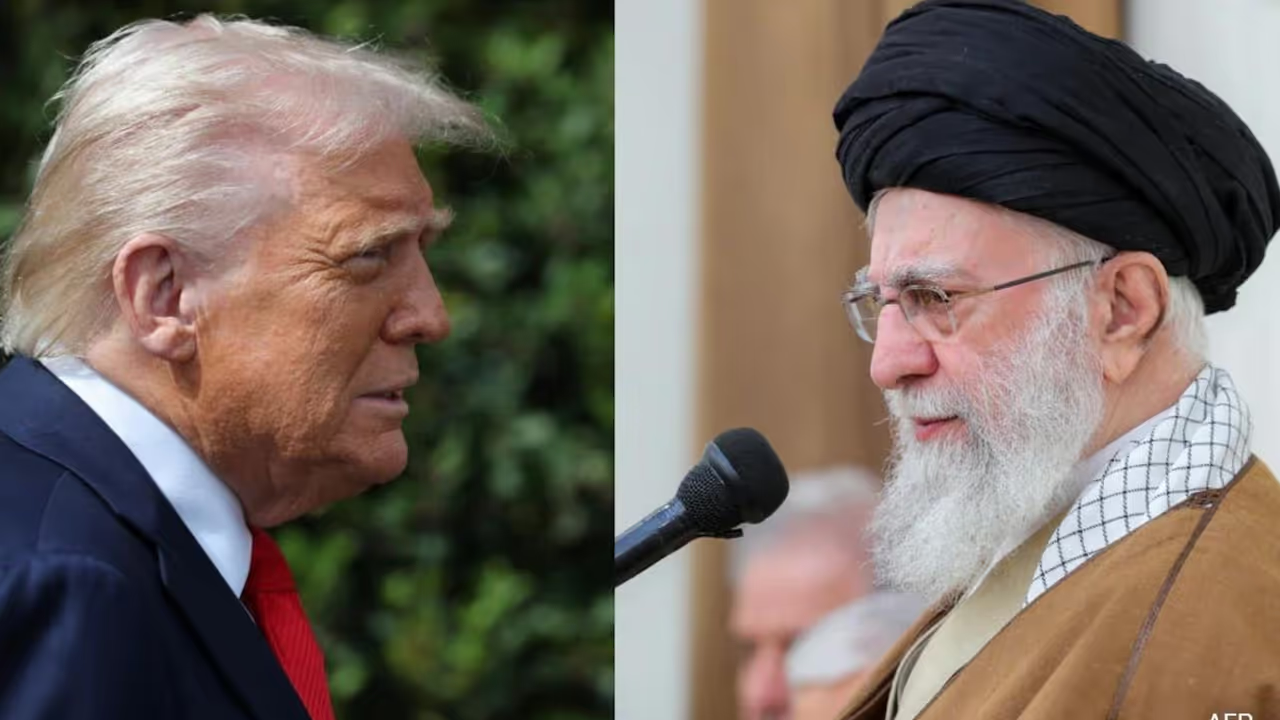
Donald Trump's decision to impose a 25% tariff on countries trading with Iran has raised concerns for India’s rice export sector. Iran is a major buyer of Indian Basmati rice and the move could disrupt payments, banking support and buyer confidence.
US President Donald Trump's announcement of a 25 per cent tariff on any country continuing business ties with Iran has created fresh uncertainty in global trade. The decision, which Trump said would take effect immediately, could have serious indirect effects on several countries, including India.
The move could disrupt India's trade channels linked to Iran. India's agriculture export sector, especially Basmati rice, is expected to face growing pressure due to payment risks, banking hurdles and reduced buyer confidence.
Iran's key role in India's Basmati rice trade
Iran has long been one of the largest and most important markets for Indian Basmati rice. A large share of India's premium rice exports is shipped to Iran every year, supporting thousands of exporters, traders, and farmers.
Related Articles

According to industry data, India's Basmati rice exports to Iran during April-November 2025-26 stood at USD 468.10 million, with shipments of 5.99 lakh metric tonnes. This makes Iran one of the top destinations for Indian Basmati rice during the period.
Any disruption to this trade route can have a ripple effect across India's rice supply chain, from exporters to farmers at the ground level.
How Trump's tariff move affects India indirectly
Trump's announcement targets countries that 'continue to do business with Iran' by imposing a 25 per cent tariff on all their trade with the United States. Even though the measure does not directly name India, it creates fear among banks, insurers, and shipping companies involved in Iran-linked trade.
Experts say that payment mechanisms could become more complicated, as global financial institutions may avoid Iran-related transactions to reduce risk. This can delay payments, increase transaction costs, and weaken trust between buyers and sellers.
For Indian rice exporters, this means higher uncertainty, especially for shipments based on deferred or unsecured payments.
Industry warns of rising stress in rice trade
The Indian Rice Exporters Federation (IREF) has warned that the rice trade linked to Iran is already under stress. The body pointed to Iran’s internal instability and financial disruptions, which have slowed payments and affected trade confidence.
According to ANI, Prem Garg, National President of IREF, said Iran has historically been a pillar market for Indian Basmati rice. However, he noted that the current situation has started showing visible impact on Indian markets.
He said that delays in payments and buyer hesitation have already affected trade flows, making exporters more cautious about new contracts.
Basmati prices fall in Indian markets
The impact of these developments is already visible in domestic markets. According to industry sources, Basmati prices in Indian mandis have fallen sharply in recent days.
Exporters say buyer hesitation and delayed contracts linked to Iran have reduced demand. This has pushed prices down, hurting farmers who depend on stable export demand for better returns.
If uncertainty continues, experts warn that farm-gate prices could come under further pressure, while exporters may face higher inventory holding costs.
Fear of banking and insurance withdrawal
One of the biggest concerns arising from Trump’s announcement is the possible withdrawal of international banking and insurance support for Iran-linked trade.
Even though food items are essential commodities, banks and insurers often take a cautious approach during geopolitical tensions. Many may avoid handling transactions connected to Iran to prevent exposure to US penalties.
This could force Indian exporters to rethink their exposure to the Iranian market, especially where payments are not fully secured in advance.
Prem Garg underlined the need for a careful and balanced approach. He said the federation is not raising alarm but urging exporters to act wisely.
He pointed out that in times of geopolitical tension and internal unrest, trade is often the first casualty. He stressed that protecting exporters and farmers must remain a priority.
According to him, India’s rice sector is strong and resilient, but it needs timely information, risk assessment, and responsible trade practices to manage such challenges.
Advice to exporters: diversify and secure payments
In response to the situation, IREF has advised exporters to prefer secured payment mechanisms and avoid high-risk transactions.
The federation has also urged exporters to diversify into alternative markets across West Asia, Africa, and Europe. Exploring new destinations can help reduce dependence on any single market and cushion the impact of sudden disruptions.
Experts say diversification will be key if uncertainty around Iran continues for a long period.
Trump's announcement and global reactions
Trump announced the tariff decision in a post on Truth Social, stating that the order would be 'final and conclusive' and would apply immediately. He said any country doing business with Iran would face a 25 per cent tariff on all trade with the US.
US Republican Senator Lindsey Graham praised the decision, calling it strong leadership aimed at isolating Iran economically. He also made strong remarks against the Iranian leadership and urged tougher action.
Unrest inside Iran adds to uncertainty
The tariff announcement comes amid widespread unrest inside Iran. Reports suggest large demonstrations across several provinces, driven by inflation, economic hardship, and anger over governance.
According to human rights groups, hundreds of people have reportedly been killed and thousands arrested during the unrest. Such instability further weakens Iran’s ability to conduct smooth international trade.
Talks hinted, but uncertainty remains
Trump has also said that Iranian leaders have reached out to Washington seeking negotiations. He confirmed that talks were discussed but warned that the situation inside Iran could force the US to act before any agreement is reached.
For Indian exporters, this means uncertainty may continue in the near term, making planning and risk management even more important.
(With inputs from agencies)