Iran is facing protests over economic hardship and anger at leadership. Demonstrations have spread to over 220 locations nationwide. US Republicans say regime's grip is weakening while ex-Crown Prince Pahlavi calls it historic opportunity for change.
Iran is facing one of its most serious waves of unrest in years. Large protests have spread across the country, driven mainly by economic pain and anger at the ruling system. From small towns to major cities, people are marching, chanting and demanding change.
In recent days, US Republicans have openly said that these protests are weakening the Iranian regime's hold on power. Former Iranian Crown Prince Reza Pahlavi has also claimed that Iran now has a rare chance to break free from what he calls a tyrannical system.
At the same time, the Iranian government is trying to control the situation with security forces, arrests and limited economic steps. The situation remains tense, uncertain, and closely watched around the world.
Iran Protests Escalate as Security Forces Crack Down Nationwide
Security forces fired tear gas at protesters in Tehran’s historic bazaar on Tuesday as demonstrations over rising living costs spread across Iran. The protests began on December 28 after bazaar merchants shut down in anger over economic hardship and the falling value of the Iranian rial, which hit another record low. According to the Human Rights Activists News Agency, at least 34 protesters and two security personnel have been killed in 10 days. Large crowds also gathered in Abdanan, chanting pro-monarchy slogans. Exiled Crown Prince Reza Pahlavi has issued his first call to action. The unrest is Iran’s most serious since the 2022 Mahsa Amini protests.
US Republicans Say Protests Are Weakening the Iranian Regime
On Wednesday, the US Republican-led House Committee on Foreign Affairs highlighted the growing protests in Iran. The committee said that anti-regime demonstrations are flaring up across the country and are loosening the government’s grip.
In a post on X, the committee claimed that protesters are taking control of entire cities. It said Iranians are fed up with the rule of Supreme Leader Ayatollah Ali Khamenei and the country’s religious leadership.
The committee described the Iranian system as tyrannical and said its control is slowly unravelling. These comments show growing support among US Republicans for the protesters and rising pressure on Iran’s leadership.
Reza Pahlavi Says Iran Has a Historic Opportunity
Iran’s former Crown Prince, Reza Pahlavi, has strongly backed the protests. Speaking to Fox News host Sean Hannity, he said the current moment is unlike anything he has seen before.
Pahlavi said that Iranians are more committed than ever to ending Khamenei’s rule. He claimed protests have spread to more than 100 cities, with millions of people on the streets. He pointed to slogans such as “death to the dictator” and “end this regime” as signs of deep anger. According to him, the scale of demonstrations is unprecedented. He said Iran finally has a chance to free itself from a tyrannical regime.
Reza Pahlavi's Calls to Join Coordinated Nationwide Protests
Exiled Crown Prince Reza Pahlavi, the son of Iran’s last monarch, has issued his first public call to action amid the ongoing nationwide protests. In a message released during the unrest, Pahlavi urged people across Iran to take part in a coordinated show of defiance. He called on Iranians to begin chanting at exactly 8 pm on Thursday and Friday, January 8 and 9, whether they are on the streets or inside their homes. Pahlavi said the response would help shape his next steps and future calls to action.
Protests Spread Despite Heavy Security Presence
Protests began on December 28 due to worsening economic hardship. Since then, they have spread rapidly across the country.
According to the US-based Human Rights Activists News Agency, protests have taken place in more than 220 locations across 26 of Iran’s 31 provinces. This makes the unrest one of the most widespread in recent history.
Al Jazeera reported that protests are spreading “like wildfire” even as armed security officers are deployed in large numbers. Government efforts to control the situation have so far failed.
What Is Happening in Ilam and Abdanan
Some of the most striking scenes have come from the western province of Ilam.
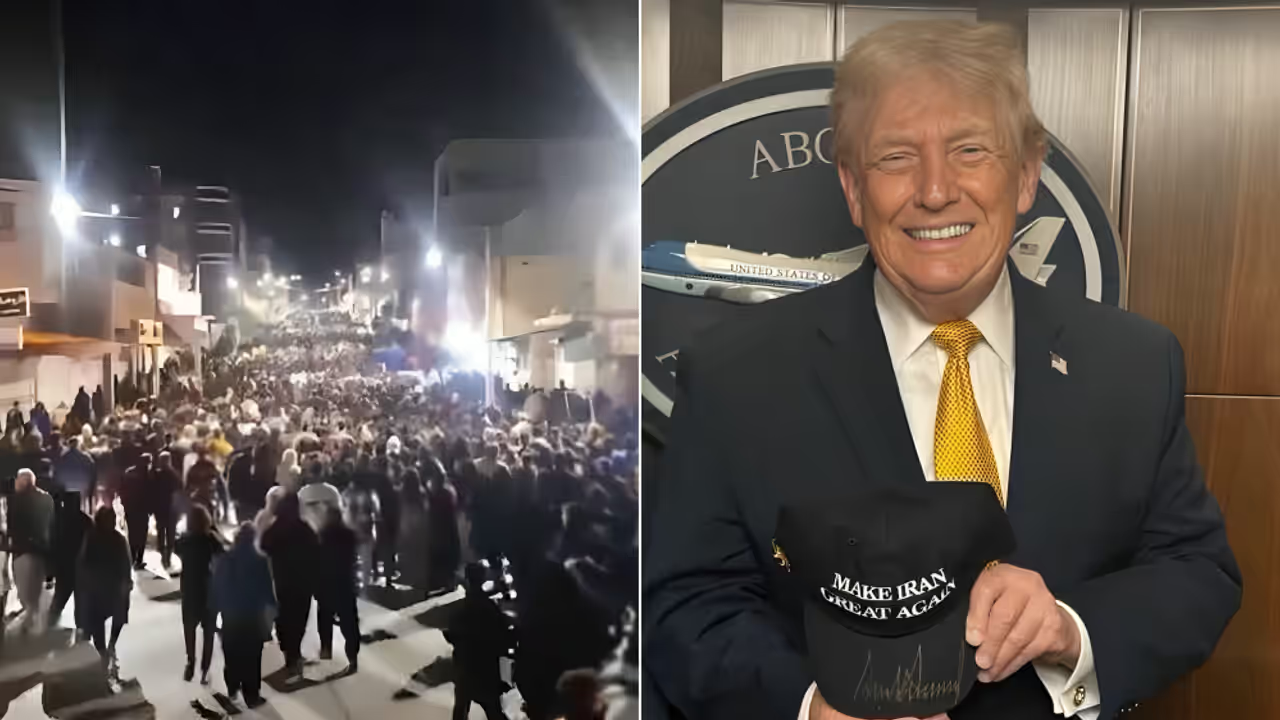
Footage seen by Al Jazeera showed huge protests in the city of Abdanan. Thousands of people, including children walking with their families, filled the streets at night. Protesters were chanting slogans while helicopters flew overhead.
Despite the heavy security presence, protesters appeared to outnumber the forces sent to control them. Similar demonstrations have taken place repeatedly in the area over the past week.
In Ilam city, videos showed security forces storming the Imam Khomeini Hospital to arrest protesters. Amnesty International said this action violates international law and shows how far authorities are willing to go to crush dissent.
Deaths, Arrests and Rising Violence
The human cost of the protests is increasing.
State-linked Iranian media confirmed that at least three people were killed. Later reports said at least 20 people have died since the unrest began. More than 990 people have been arrested.
Authorities also reported that a police officer was shot dead during clashes that followed funeral processions for slain protesters. In several cities, including Malekshahi, security forces opened fire on crowds. At least four protesters were killed near a government compound there.
Supreme Leader Ayatollah Ali Khamenei has dismissed the protesters as “rioters”. The government has vowed to respond firmly while claiming it will listen to legitimate grievances.
Iran’s Economic Crisis at the Heart of the Protests
The protests are deeply linked to Iran’s worsening economy.
Iran has one of the highest inflation rates in the world. Inflation is around 40 per cent. Prices of basic food items like meat and rice have surged sharply, making daily life extremely hard for ordinary families.
The country’s currency, the rial, has collapsed further. On Tuesday, it was trading at over 1.47 million rials to one US dollar on the open market in Tehran. This marked a new all-time low and showed deep public and investor distrust.
President Masoud Pezeshkian’s government has said it is trying to stabilise the economy, but conditions continue to worsen.
Government Tries Limited Economic Reforms
According to a report by the Institute for the Study of War, protest activity slowed slightly on January 5 and 6 compared with earlier days.
The report said the government may be trying to calm anger by approving economic reforms. Iran’s parliament passed a revised second edition of the 2026–2027 budget bill on January 5.
This included steps such as subsidies for basic goods. However, analysts say these measures may be too small and too late to stop public frustration.
Trump, Republicans and “Make Iran Great Again”
As protests continued, US President Donald Trump was photographed holding a signed black hat reading “Make Iran Great Again”. He stood alongside Republican Senator Lindsey Graham.
Graham shared the photo on X and praised Trump’s leadership. He said he was proud to be an American and offered support for the “brave people of Iran” standing up to tyranny.
Later, Graham was seen wearing the same hat. He said he hoped that 2026 would be the year Iran becomes “great again”.
Trump also warned Iran’s leaders against killing protesters. He said the US was watching closely and that severe action could follow if violence increased.
Protests Across Cities Nationwide
Video footage from BBC Persian showed demonstrations in many cities, including Tehran, Yasuj, Sari, Ilam, Arak, Hamedan, Amol, Lahijan, Kermanshah, Malekshahi, Semnan and Noorabad.
Protesters were chanting slogans such as 'Freedom, freedom, freedom' and 'Death to the dictator'. The scale and spread of protests highlight deep dissatisfaction across regions and communities.
The current unrest is the largest since the 2022 protests sparked by the death of Mahsa Amini in custody. That movement led to more than 550 deaths and 20,000 detentions.
(With inputs from agencies)