
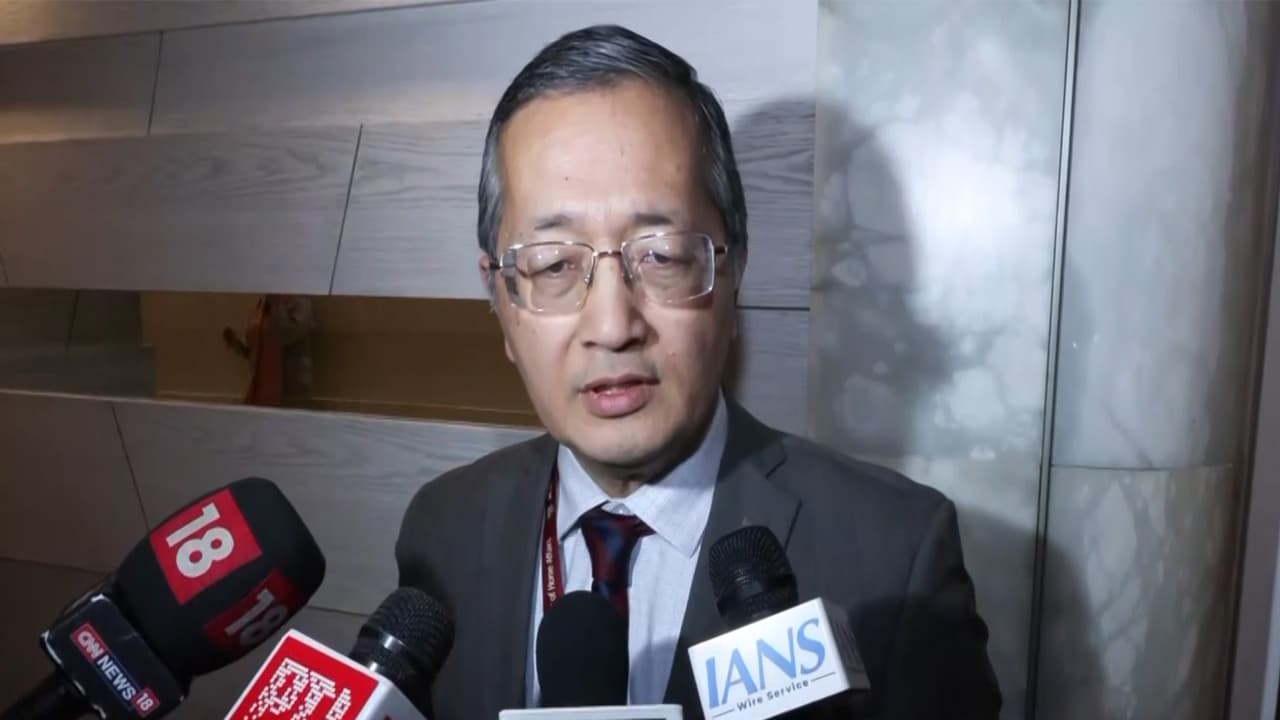
Expenditure Secretary V. Vualnam detailed the budget's priorities, including a sharp Rs 12.2 lakh crore Capex hike for infrastructure. A new rural employment scheme with a Rs 95,000 crore outlay will replace MGNREGA to boost rural livelihoods.
Focus on Infrastructure and Macroeconomic Stability
Capital expenditure (Capex) outlay has been raised sharply to Rs 12.2 lakh crore, reflecting the government's focus on infrastructure-led development, said V. Vualnam, Expenditure Secretary while outlining key Budget priorities.
The Expenditure Secretary said the capital expenditure has a strong multiplier effect on growth and plays a crucial role in nation-building. "The implementation will be closely monitored to ensure timely creation of infrastructure assets on the ground," he said. "At the same time, the government remains focused on maintaining macroeconomic stability. The fiscal deficit is on a consolidation path, inflation is moderating, and debt-to-GDP has been adopted as a key indicator for monitoring public finances," he said.
New Rural Employment Scheme to Replace MGNREGA
On rural employment, the Expenditure Secretary highlighted that the Budget has allocated Rs 95,000 crore for the Viksit Bharat - Guarantee for Rozgar and Ajeevika Mission (Gramin), a new wage employment scheme that will replace MGNREGA. "The allocation is based on estimates prepared at the time the new legislation was passed by Parliament and is higher than the previous year's outlay," he said.
Under the new framework, rural households will be assured up to 125 days of wage employment. States will have a more active role in both implementation and financing, which is expected to improve efficiency, streamline delivery, and ensure timely employment for eligible households.
Vualnam said the transition from MGNREGA will be completed after clearing all committed liabilities under the old scheme. "Existing provisions have been made to settle pending payments once verified by the Ministry of Rural Development. With the repeal of the MGNREGA Act, the scheme will formally end once past dues are cleared, and a single unified rural employment programme will operate from the next financial year," he said.
Emphasis on Outcome-Based Spending
Highlighting the government's focus on outcome-based spending, he said all ministries follow an Output-Outcome Monitoring Framework, with regular reviews conducted in coordination with NITI Aayog. "In addition to tracking capital expenditure and revenues, the government is closely monitoring fiscal deficit and debt indicators to ensure sustainable public finances," he said.
Digital Reforms in Subsidy Distribution
On subsidies, particularly fertilisers, Vualnam said, "several digital reforms are helping improve targeting and reduce leakages. Fertiliser distribution is now fully digitised through point-of-sale systems and online platforms. The Agriculture Stack, including digital farmer IDs covering nearly eight crore farmers so far, integrates data on soil health, crops, and input requirements."
"This digital ecosystem, along with the Bharat Vistar Scheme linking farmer data to ICAR's knowledge base, is expected to rationalise fertiliser use by aligning consumption with actual soil and crop needs," he highlighted. However, he emphasised that the government's commitment to ensuring adequate fertiliser availability for farmers remains unchanged to support rising foodgrain production. (ANI)
(Except for the headline, this story has not been edited by Asianet Newsable English staff and is published from a syndicated feed.)