Confused about white and yellow road lines? Learn what different road markings mean, how they affect lane changes and overtaking, and why understanding these lines is essential for safer driving.
We see them every day while driving—white lines, yellow lines, broken lines, solid lines. Most of us just pass them by, thinking they're just road decoration. But each line has a specific meaning. They tell us where to change lanes, where not to overtake, and where to stop. Think of them as the road's own language. After this, you'll see them in a whole new light.
White line vs. Yellow line – what's the difference?
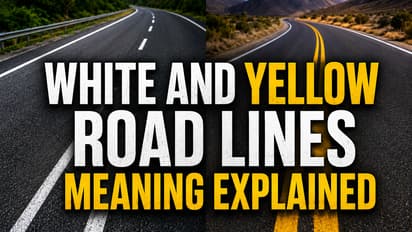
On Indian roads, white markings generally guide traffic and separate lanes. They might show you the edge of the road or divide lanes moving in the same direction. Yellow lines, on the other hand, usually signal restrictions. For example, a solid yellow line at the edge of the road with a 'No Parking' sign means you can't park there. Yellow lines are also used in the middle of the road to separate traffic moving in opposite directions. So, remember, the colour alone doesn't tell the whole story.
If you see a broken line on the road, it means you are allowed to cross it to change lanes or overtake, but only when it's safe. This gives drivers some flexibility. But if it's a solid line, you are generally not allowed to cross it. This means no lane changes or overtaking. When you see two lines together—one solid and one broken—the line on your side is what counts. If the broken line is on your side, you can cross if it's safe. If the solid line is on your side, you must not cross. This is a very important road rule.
Two solid lines together mean you cannot cross or overtake from either direction. This is a strict rule used in high-risk areas or places with poor visibility. We all know the solid white line (the stop line) near traffic signals or junctions. When the signal is red or a traffic cop tells you to stop, you must stop your vehicle before this line. And of course, the zebra crossing is for pedestrians to cross the road. You must always give way to people on a zebra crossing. All these markings are there to help keep our roads safe.
The square box with yellow criss-cross lines, often found at junctions, is called a yellow box junction or a 'keep clear' marking. You must never stop your vehicle inside this box. You should only enter the yellow box if your exit path is clear. Don't enter and block the junction if there's no space ahead. This is a crucial marking to prevent traffic jams. So, the next time you see these lines, remember they aren't just for decoration. To put it simply, “Understanding these road lines is an essential part of understanding road rules.”