Ever Wondered Where Each Dish Goes on a Banana Leaf? Here’s Traditional Serving Order
Published : Aug 26, 2026, 03:12 PM IST
Ever wondered why dishes are placed in a particular order on a banana leaf? Discover the traditional serving method, from sides and pickles to curries, rice and desserts, and the cultural logic behind it.
17
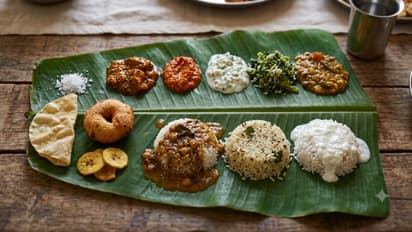
More than just a meal, it's a tradition.
Serving food on a banana leaf isn't just a habit; it's a tradition with its own set of rules. There's a specific spot for salt, pickle, poriyal, and kootu, and a fixed order for serving them. Let's see how it's done.
Also read: These 5 Balcony Plants Need Less Fuss: Peepal Baba’s Tips For Greener Home
Explore the latest Lifestyle NewsFood and RecipesHealth NewsAsianet News Official App
Read more