The US and Israel launched a joint offensive on Iran under “Epic Fury” and “Lion’s Roar,” targeting key military sites, including missile and drone facilities in Tehran and Isfahan.
A major military escalation has unfolded in the Middle East as the United States and Israel launched a coordinated wave of strikes against Iran under two dramatic operation names—Israel’s “Lion’s Roar” and the US-led “Operation Epic Fury.” The joint offensive marks one of the most significant combined military actions by the two allies in recent years, targeting key Iranian military and regime-linked infrastructure across multiple cities.
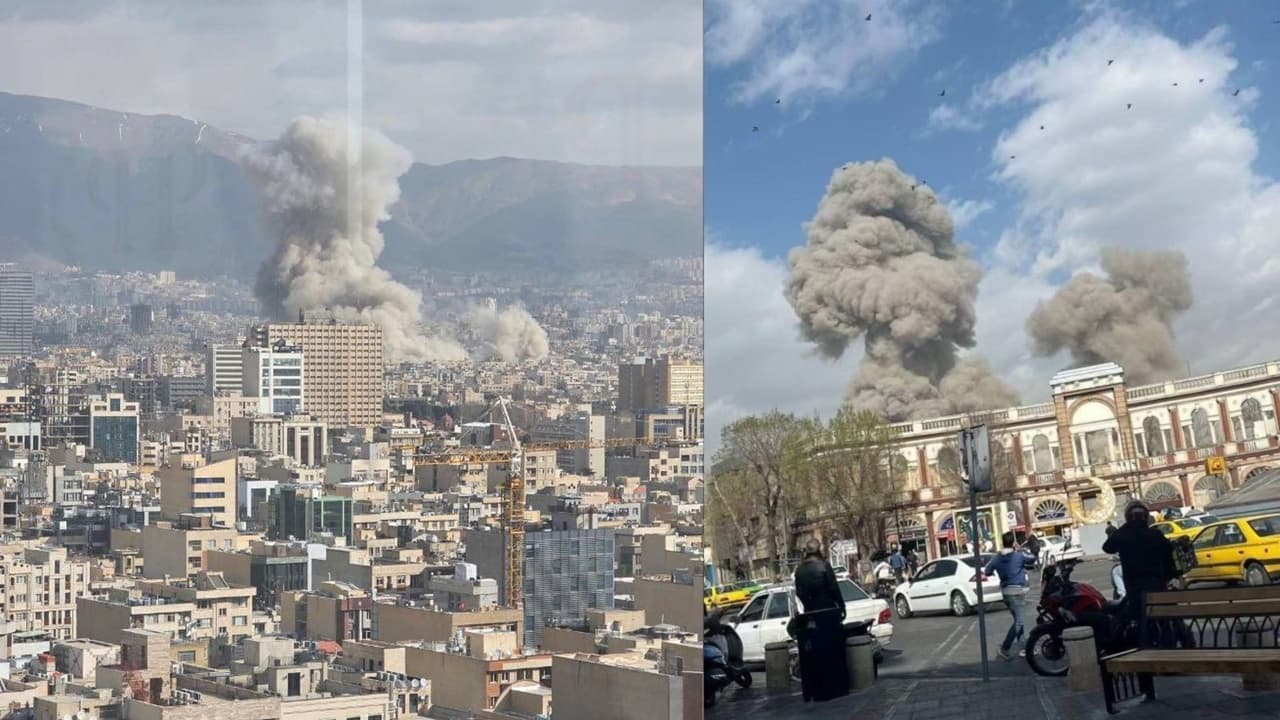
Reports indicate that the strikes hit strategic locations including Tehran, Isfahan, Qom, and other critical regions tied to Iran’s missile, drone, and defence capabilities. Explosions were reported in several areas, signalling the scale and intensity of the operation. The offensive was carried out through a combination of air and sea power, reflecting deep operational coordination between US and Israeli forces.
The dual naming of the campaign underscores both nations’ involvement. While Israel framed its offensive as “Lion’s Roar,” a symbolic and assertive codename, the United States labelled its parallel action “Epic Fury,” highlighting the scale and force behind the mission. Together, the operations represent a unified military front aimed at neutralising perceived threats from Iran.
Related Articles

Why the Operations Were Launched
The strikes come amid escalating tensions over Iran’s nuclear programme and its expanding missile and drone capabilities. Israeli leadership has long argued that Iran poses an existential threat, particularly if it advances toward nuclear weapons capability. This latest offensive appears to be a continuation—and escalation—of that strategic doctrine.
Targets reportedly included missile launchers, UAV bases, and military installations believed to be linked to Iran’s ability to strike regional adversaries. The objective, according to security assessments, was to degrade Iran’s offensive capabilities and reduce immediate threats to Israel’s homeland.
The US involvement reflects growing alignment with Israel’s security concerns. Statements from US leadership in recent days suggested frustration with stalled diplomatic efforts over Iran’s nuclear programme, with indications that military options were being considered if negotiations failed. The launch of “Epic Fury” signals that Washington has moved beyond deterrence toward direct action.
Additionally, reports suggest the operation had been planned over months, with careful coordination between intelligence and defence agencies. The timing—reportedly designed to achieve maximum surprise—points to a strategic effort to catch Iranian forces off guard and limit their ability to respond effectively in the initial phase.
Rising Fears of Regional War
The immediate aftermath of the strikes has triggered fears of a broader regional conflict. Iranian retaliation is widely expected, with defence sources warning of a possible response involving missiles or drones within hours or days. Given Iran’s past responses to similar attacks, including large-scale missile and drone barrages, the risk of escalation remains high.
Israel has already taken precautionary measures, including heightened national alerts and preparations for sustained conflict. Reports suggest that the initial phase of the joint operation could last several days, indicating that this is not a one-off strike but part of a prolonged military campaign.
The geopolitical implications are significant. A direct confrontation involving the US, Israel, and Iran could draw in other regional actors, destabilising an already volatile Middle East. Global markets, energy supplies, and international security frameworks could all be impacted if the conflict expands.
The dual-operation framework—“Lion’s Roar” and “Epic Fury”—also reflects a new phase in US-Israel military cooperation, where both nations openly coordinate offensive operations rather than acting independently. This shift could redefine strategic alignments in the region and alter the balance of power.
As the situation develops, the world watches closely for Iran’s next move. Whether this escalation leads to full-scale conflict or returns to a tense standoff will depend largely on how Tehran responds—and how far the US and Israel are willing to push their offensive.