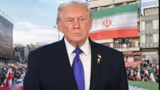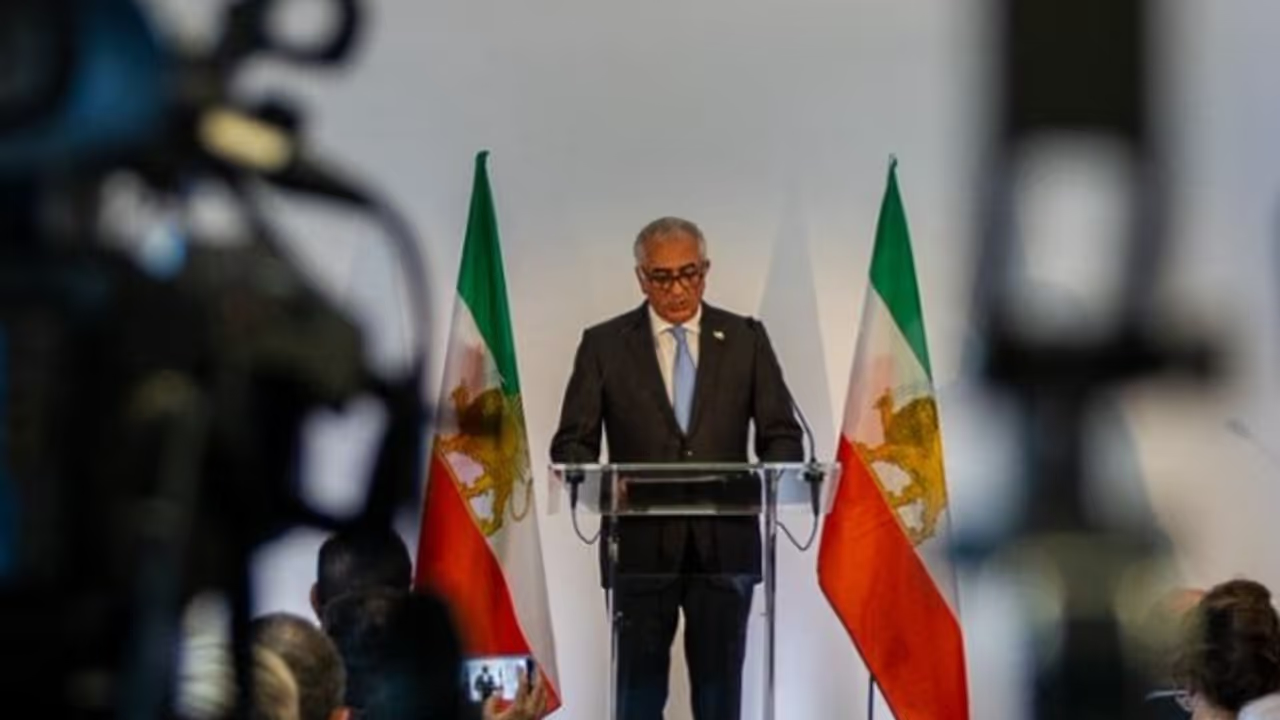
Trump commented on Iranian opposition figure Reza Pahlavi amid widespread protests and state repression in Iran. Trump expressed skepticism about Pahlavi’s ability to unite the country's fragmented opposition, stopping short of an endorsement.
US President Donald Trump has publicly weighed in on the role of Reza Pahlavi, a prominent Iranian opposition figure and son of the late Shah, amid one of the most intense waves of protest and state repression in Iran in decades. In a Reuters interview on January 14, 2026, Trump described Pahlavi as someone who “seems very nice” but cast doubt on whether he could actually rally significant political support within Iran’s deeply divided and embattled society.
Trump stopped short of fully endorsing Pahlavi as a future leader, saying, “I don’t know how he’d play within his own country,” and adding that the United States was “not up to that point yet” in terms of backing him. He continued, “I don’t know whether or not his country would accept his leadership, and certainly if they would, that would be fine with me.”
Reza Pahlavi, who has lived outside Iran since the 1979 Islamic Revolution, has emerged as a vocal voice supporting protesters calling for broader political change. But Iran’s opposition remains fragmented, with monarchists, republicans, ethnic minorities, and various factions struggling to unite behind a single agenda or leader. This lack of cohesion has limited Pahlavi’s organized influence inside Iran, despite his high profile abroad.
Related Articles

Trump’s comments also reflected broader geopolitical realities. While he acknowledged the possibility that Iran’s clerical government could collapse, he emphasized uncertainty, stating that “any regime can fail,” without committing to specific US policy actions tied to regime change.
The backdrop to these remarks is a widespread protest movement that has seen harsh crackdowns by Iranian security forces, with thousands reported killed and tens of thousands arrested. Iranian authorities have struggled to contain unrest driven by economic hardship, soaring inflation and demands for political freedom, and they have imposed measures such as internet blackouts and restrictions on communications.
Internationally, pressure on Tehran has intensified. Governments including the US have criticized Iran’s crackdown, and there have been diplomatic responses, evacuations of foreign nationals from the region, and discussions of sanctions or further measures should the situation deteriorate.
Overall, Trump’s remarks signal a cautious US stance: supportive of protest movements and critical of the clerical regime while remaining sceptical about the immediate viability of a singular alternative leader like Pahlavi. The coming weeks are likely to shape whether internal opposition figures can transform protest energy into a coherent political force.
(With inputs from agencies)