
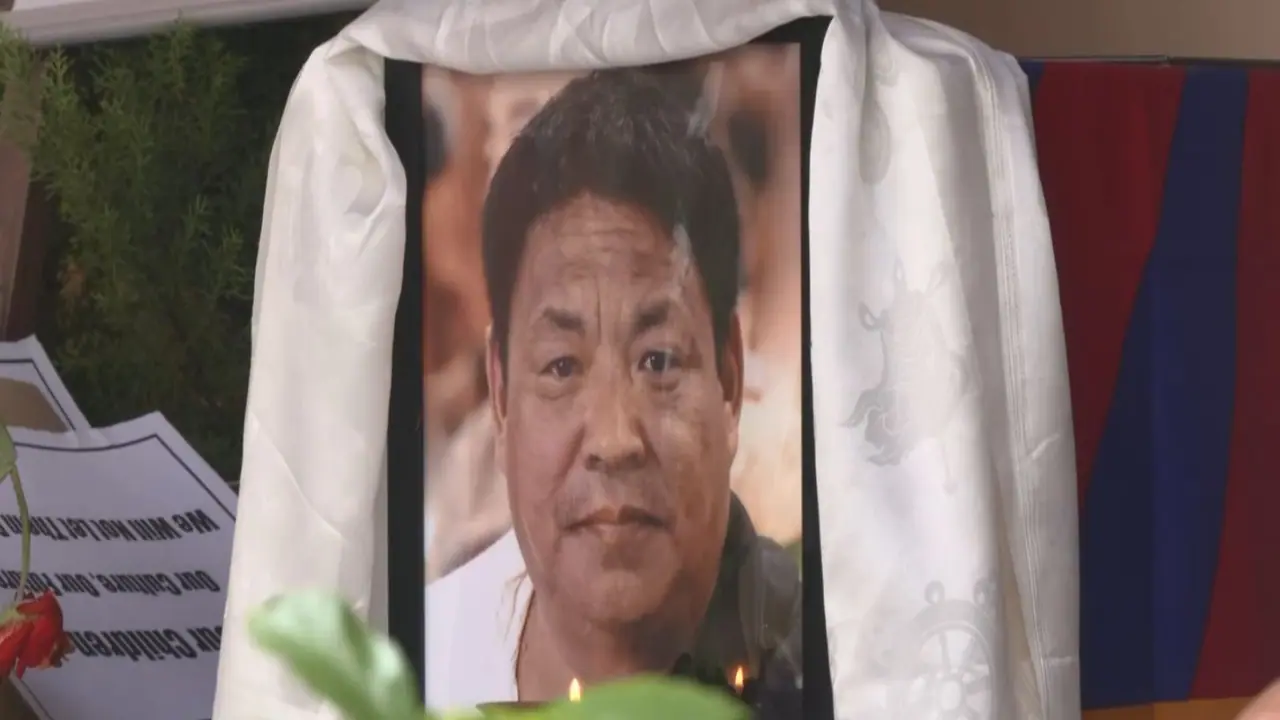
Tibetans in Dharamshala held a prayer service for activist Lobga Rangzen on the 49th day of his death. He self-immolated in New York to protest China's policies. The CTA President criticized Beijing's 'Promoting Ethnic Unity and Progress Law'.
The 17th Governing Council of Tibet, Kashag, and the 18th Tibetan Parliament in Exile on Thursday jointly organised a prayer service at the Dalai Lama Temple in Tsuglagkhang Complex, the main Tibetan temple in Dharamshala, to mark the 49th day since Tibetan activist Lobga Rangzen died after self-immolating in protest against China's policies against Tibet. The two-hour prayer service was held to honour Rangzen's sacrifice and commemorate Tibetans who have lost their lives in what Tibetan representatives describe as the struggle for the cause of Tibet.
Tibetans from Dharamshala and neighbouring areas attended the service, while Tibetan settlements and communities across the exile population were encouraged to observe the day and pay tribute to Rangzen. According to Tibetan Buddhist tradition, the 49th day after a person's death marks the completion of the traditional 49-day intermediate state, or bardo, and is considered an important occasion for prayers and remembrance of the deceased. Rangzen died after self-immolating in front of the United Nations headquarters in New York on July 2, according to Tibetan groups. They said his act was in protest against China's policies in Tibet and the recently implemented "Promoting Ethnic Unity and Progress Law".
CTA President on Rangzen's Sacrifice and China's Policies
The Kashag and the Tibetan Parliament in Exile expressed grief over the deaths of Tibetans inside and outside Tibet and conveyed solidarity with the families of those who had lost their lives. Speaking to ANI, the Central Tibetan Administration (CTA), the Tibetan government-in-exile, President Sikyong Penpa Tsering explained the significance of the 49th day in Tibetan Buddhist tradition. "According to the Tibetan tradition, after a person's demise, the seventh week, that is, the 49th day, is the day they are supposed to transmigrate into another form. It is considered a very important time for prayers for the deceased," he said.
Referring to Rangzen's death, Tsering said, "Lobga Rangzen sacrificed his life in front of the United Nations headquarters on July 2, American time, and today is the 49th day. So we are observing the day here to mourn the death of Lobga Rangzen, who sacrificed his life for the freedom of Tibet and against the policies that the Chinese government has adopted."
The Sikyong also criticised China's "Promoting Ethnic Unity and Progress Law", which he said was passed by the National People's Congress on March 12 and came into force on July 1. "Even though it has a very nice name, called the Ethnic Unity and Progress Law, this so-called law has a very sinister design to eradicate the identity of every nationality within China," Penpa Tsering said. He alleged that the legislation could have serious implications for Tibetans and other ethnic communities by accelerating what he described as the assimilation of distinct cultural, linguistic and national identities.
Pledge to Honour Tibetan Cause
The prayer service comes amid continued concerns among Tibetan representatives over what they describe as increased efforts by Beijing to strengthen its control over Tibet through legislation and other policies.
The Kashag and the Tibetan Parliament in Exile reiterated their commitment to remembering Tibetans who have sacrificed their lives for the Tibetan cause and urged communities in exile to honour their memory and stand in solidarity with their bereaved families. (ANI)
(Except for the headline, this story has not been edited by Asianetnews Editorial staff and is published from a syndicated feed.)