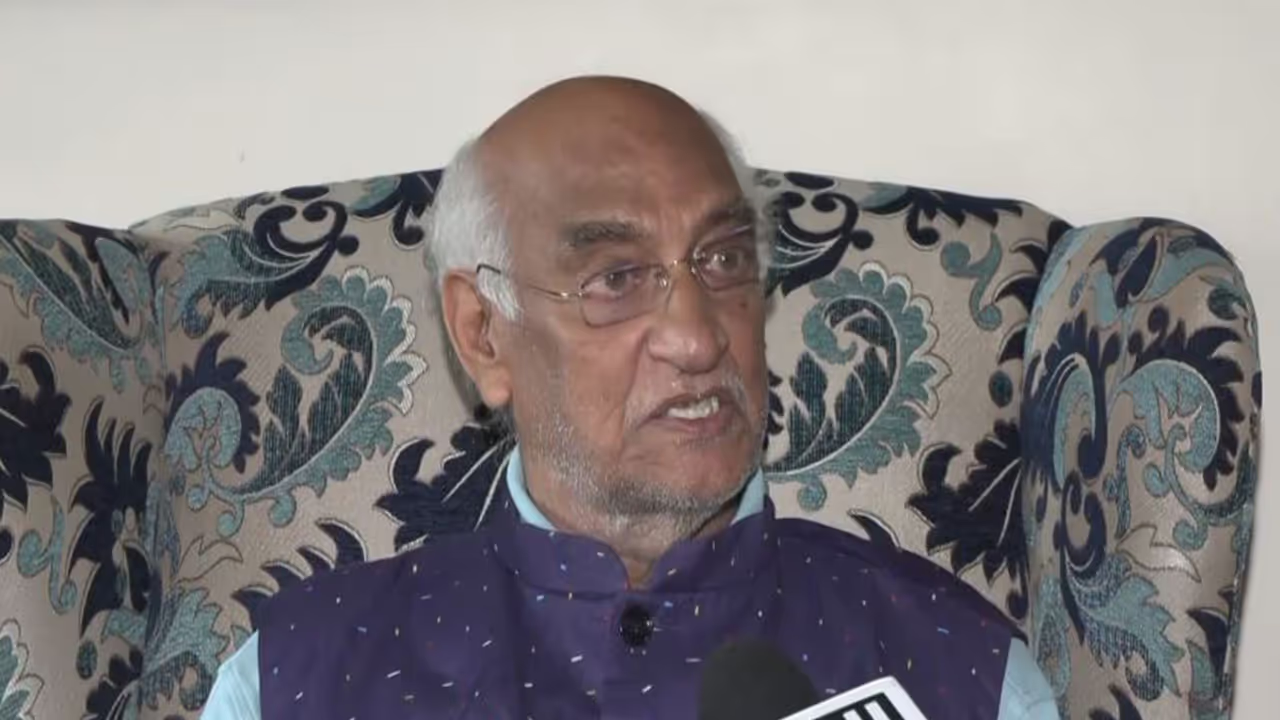
Former diplomat Vidya Bhushan Soni weighs in on the new Saudi Arabia-Turkiye-Pakistan defence pact, stating it reflects Washington's dimming influence in West Asia. He cautions New Delhi to monitor the situation for any future policy changes.
Former diplomat Vidya Bhushan Soni weighed in on the recently announced trilateral security arrangement between Saudi Arabia, Turkiye and Pakistan--and underlined that it reflects Washington's dimming influence in the region. He also cautioned that while the arrangement largely concerns the ambit of West Asia, New Delhi should monitor the situation considering a possible future evolution where they "change their policy." He made the observations in an interview to ANI while speaking about the newly announced Mecca Joint Defence Agreement between Pakistan, Turkiye and Saudi Arabia.
'Shaky US position'
Soni, in his remarks, termed the timing as "interesting", noting that the announcement of the grouping comes when America's position as a global security provider is being tested, especially in the wake of the continued conflict in the West Asia region. "I think the defence pact is interesting, and its timing in particular. It is a reflection of the shaky US position, because the US was the guarantor globally of security and safety of various regions. There has been a shift during the last year and a half... People are not very confident about whether the US's commitment to regional peace and security, and whether it can be relied upon. So some of the regional powers in this case in West Asia, particularly Saudi Arabia, are very concerned about it," the former envoy said.
Regional powers seeking own security arrangements
He reflected on how Iranian strikes are targeting American bases and facilities present in several West Asian countries, which has affected them. "Now those countries feel that since US commitment is not complete, let us think of a regional arrangement between the powers who are who can be contributing to that kind of security."He said that the forming of the pact "reflects US's vulnerability and its weaknesses, and so it is a reflection on the US's waning influence and interest in the region. And that's why the three powers and the things in which they specialise can get together and make sure that no outsiders can come and do anything."
Roles of Saudi Arabia, Turkiye, and Pakistan
He noted that among the three players, Saudi Arabia, with its petrocurrency, has the financial resources; Turkiye, with its defence production units, has the capability for supply of such equipment; and Pakistan, along with nuclear capability, can also provide boots on the ground. "Saudi Arabia has the maximum interest in maintaining it (alliance). They have the money, oil power and can provide the amount of money which is needed. Turkey has a lot of defence production units, and they are the ones who are supplying all kinds of equipment to all over combat zones, like in the case of Pakistan. Last year they provided them with all kinds of items which were used against India. So far as Pakistan is concerned, apart from the nuclear capability, it can provide the troops on the ground," Soni said.
Implications for India
He cautioned that the response to the alliance must remain guarded. "It's not directed against India at all. For a start, it is against Iran. But there is no stopping at a given time in future that they will include other countries too... We have to see what the implications are. Today it may not seem that India is the target, but you can never tell it at a given time in the future, things happen where they change their policy. We have to continue to guard the situation. It may not be against India."
Details of the Mecca Joint Defence Agreement
The Mecca Joint Defence Agreement seeks to strengthen defence cooperation and collective deterrence among the three countries. According to the summit statement, an armed attack against any one of the three signatories would be regarded as an attack against all three.While the pact does not specify detailed operational or military commitments, it establishes a framework for enhanced defence cooperation and identifies peace, stability and security in the region and beyond as its broader objectives. The grouping, however, appears to have failed its first major test after the Iran-backed Houthi rebels from Yemen struck an Aramco refinery in Jazan, with the newly formed alliance offering no visible military response or threat to the attack, said an analysis written in the Jerusalem Post. (ANI)(Except for the headline, this story has not been edited by Asianet Newsable English staff and is published from a syndicated feed.)
Check the Breaking News Today and Latest News from across India and around the world. Stay updated with the latest World News and global developments from politics to economy and current affairs. Get in-depth coverage of China News, Europe News, Pakistan News, and South Asia News, along with top headlines from the UK and US. Follow expert analysis, international trends, and breaking updates from around the globe. Download the Asianet News Official App from the Android Play Store and iPhone App Store for accurate and timely news updates anytime, anywhere.