
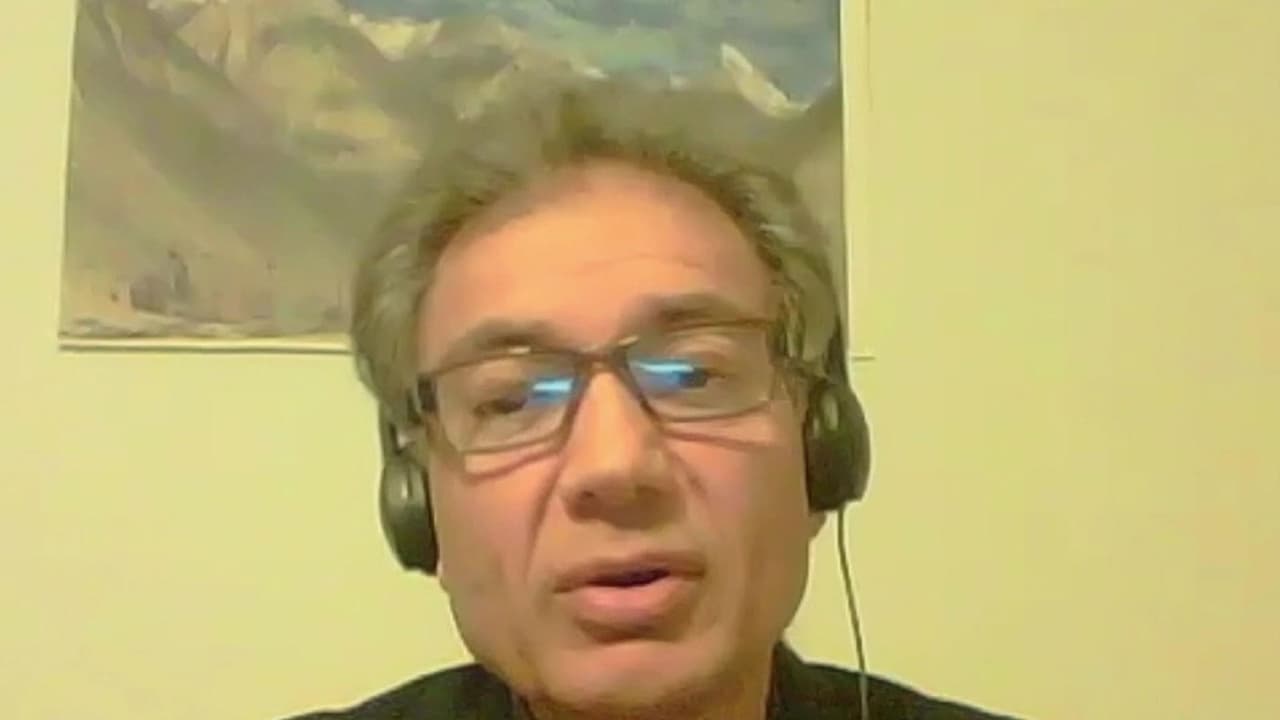
Political discourse in PoGB has shifted from demands for provincial status to concerns over land occupation by Pakistan and China, says Senge Sering. He highlights resource exploitation, CPEC's colonial nature, and the region's lack of rights.
With elections in Pakistan-occupied Gilgit-Baltistan (PoGB) expected in 2026, political discourse in the region has shifted sharply from demands for provincial status within Pakistan to growing concerns over land occupation, resource exploitation, and cultural erosion, according to Senge Sering, President of the Institute for Gilgit Baltistan Studies, Washington DC.
In an exclusive interview with ANI, Sering said while the exact timeline for the elections remains unclear, the local population has participated in what he described as "ad hoc political processes" for over five decades without receiving meaningful political or constitutional benefits. He noted that earlier electoral demands in PoGB centred on seeking provincial status within Pakistan, legal citizenship, and recognition of land as Pakistani territory. "There was a sense of loyalty and emotional attachment to Pakistan," Sering said, adding that this sentiment has significantly changed over the last four to five years.
Land Occupation and Resource Exploitation
According to Sering, local lands have been occupied and communities deprived of revenue from natural resources and trade routes. He alleged that Pakistan and China have taken control of vast areas of land under the guise of development and multinational investment.
"Land occupation by Pakistan and China has now become the most important issue," he said, adding that voters expect their representatives to raise concerns about forcible land acquisition and denial of local decision-making powers over resources.
Addressing PoGB's lack of constitutional status, Sering asserted that Pakistan does not have a legal claim over the region. He said Gilgit-Baltistan is historically part of India, Ladakh. He further alleged that control over land and resources remains with the Pakistani military and Chinese companies, leaving local institutions without authority or representation.
CPEC as a 'Colonial Tool'
On the China-Pakistan Economic Corridor (CPEC), Sering described the project as a "colonial tool rather than a developmental one," alleging that local people have been excluded from decision-making processes.
He said PoGB serves as China's only land bridge to the Indian Ocean and the Persian Gulf, making the region strategically critical. According to Sering, changing geopolitical dynamics in the Middle East could further increase China's dependence on this route, prompting efforts to establish a permanent presence in the region.
He alleged that under the second phase of CPEC, land is being confiscated in the name of agricultural development, while foreign investments are being encouraged without local consent.
"No development under CPEC will benefit local people," he claimed, adding that projects are driven by China's strategic interests and Pakistan's military objectives rather than local welfare.
Media Blackout and Lack of Representation
Sering also alleged a media blackout on issues affecting PoGB, Balochistan, and Pashtun regions, claiming that Pakistani media remains silent on local resistance and grievances.
He urged the international community to pay attention to the situation, stating that local voices lack representation through political institutions or mainstream media platforms. Sering concluded that unless Pakistan withdraws from the region, constitutional rights and local governance will remain unattainable. (ANI)
(Except for the headline, this story has not been edited by Asianet Newsable English staff and is published from a syndicated feed.)