
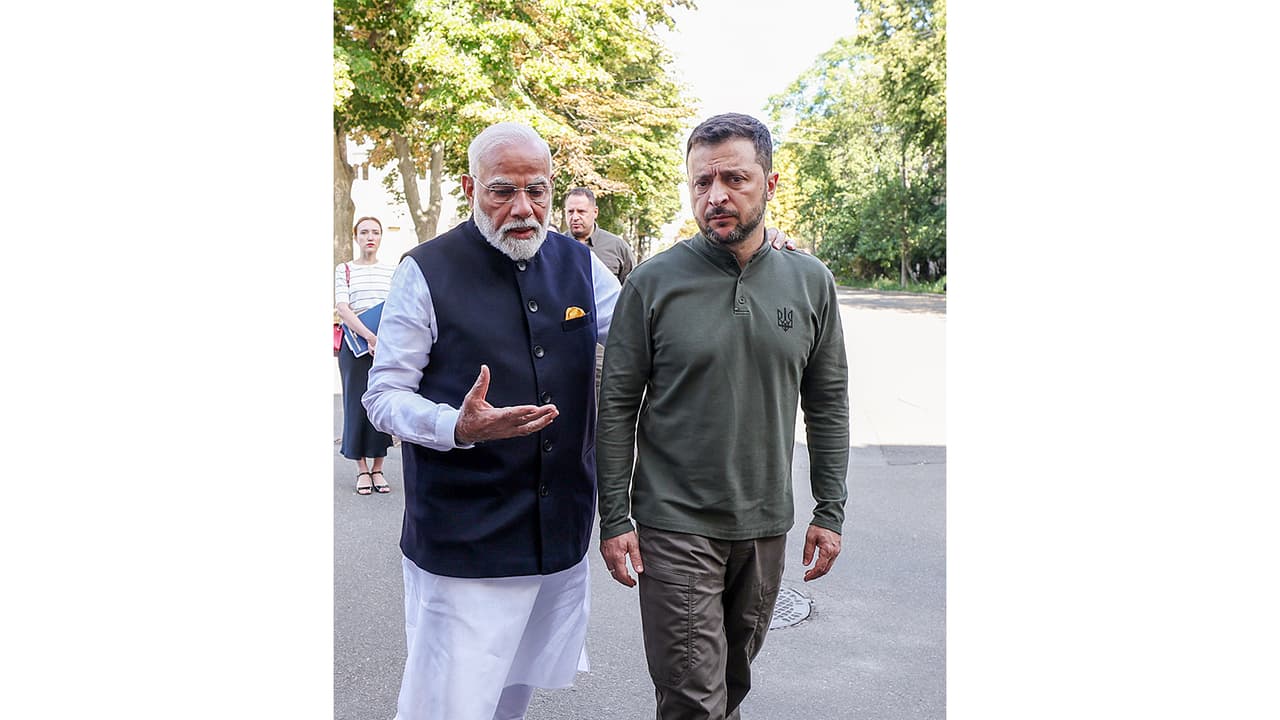
PM Modi and Zelenskyy discussed strengthening bilateral ties and peace efforts in Ukraine. Meanwhile, External Affairs Minister S Jaishankar highlighted India's diplomatic role in protecting energy infrastructure and civilian shipping.
PM Modi and President Zelenskyy Discuss Bilateral Cooperation
Prime Minister Narendra Modi on Monday held a telephone conversation with Ukrainian President Volodymyr Zelenskyy, during which the two leaders discussed the ongoing conflict and ways to strengthen India-Ukraine bilateral cooperation. As per the Prime Minister's Office (PMO) statement, President Zelenskyy shared his perspective on recent developments related to the ongoing conflict. During the conversation, PM Modi reaffirmed India's "human-centric approach" and reiterated India's consistent position that the conflict must be resolved through "dialogue and diplomacy". He also conveyed India's readiness to "contribute to all efforts aimed at peaceful resolution of the conflict", according to the PMO. The two leaders also discussed measures to further strengthen India-Ukraine bilateral cooperation in various sectors for the mutual benefit of the two peoples, the press release added.
Following the telephonic call, PM Modi in a post on X wrote, "Glad to have had a productive telephone conversation with President Zelenskyy. We reviewed our wide-ranging bilateral cooperation and agreed to further strengthen India-Ukraine ties." "I thanked President Zelenskyy for sharing his perspectives on the ongoing conflict, its humanitarian aspects and various efforts to restore peace. Reiterated India’s firm commitment to contributing in every possible way towards a peaceful resolution," he added.
Ukraine Seeks EU Emergency Support Amid Energy Crisis
Zelenskyy also held a conversation with European Commission President Ursula von der Leyen as numerous cities and communities grapple with severe challenges regarding electricity, water and heating services stemming from ongoing Russian attacks. In a post on X, Zelenskyy said, "I spoke with President of the European Commission Ursula von der Leyen. Right now, many of our cities and communities are facing a very difficult situation with power, water, and heating supplies due to Russian strikes. The situation is most difficult in Kyiv, the Dnipro, Sumy, and Donetsk regions, and Kherson."
The Ukrainian leader continued, "I told Ursula about the challenges, and we agreed that the European Union would activate a special emergency mechanism. This will make it possible to quickly provide Ukraine with funding for what is needed most right now. Our teams are already working on this." The dialogue also covered additional energy and humanitarian assistance to prepare for the winter period, alongside matters relating to European integration. Referring to the recent release of the European Commission's annual EU Enlargement Package, Zelenskyy noted, "This week, the European Commission published its annual EU Enlargement Package, which gave a positive assessment of Ukraine’s progress. It is important to open all the clusters and begin closing the chapters."
India's Diplomatic Engagement and Regional Concerns
Earlier on October 31, Union External Affairs Minister S Jaishankar said Prime Minister Narendra Modi had discussed the Ukraine conflict with Russian President Vladimir Putin in New Delhi and before that in Bishkek, as India continues diplomatic engagement with Russia, Ukraine and the United States on measures to prevent attacks on civilian shipping, restore grain exports and protect energy infrastructure.
Speaking exclusively to ANI on the sidelines of the G20 Foreign Ministers' Meeting in Atlanta, Jaishankar said India had held discussions with Russia, European countries and Ukraine on three key aspects of the ongoing conflict. "Prime Minister himself had a discussion with President Putin in Delhi and before that in Bishkek," Jaishankar said, referring to India's diplomatic engagement on the Ukraine conflict. He said India had been discussing the matter with the Russian and Ukrainian sides, adding that he had visited Moscow earlier and subsequently travelled to Kyiv. He also said he had discussed the issue with Russian Foreign Minister Sergey Lavrov. "We have also been coordinating this with the Americans because they have their own peace mediation initiative. So Secretary Rubio knows properly what is going on here," Jaishankar said.
Elaborating on the issues under discussion, he said the priority was to ensure that civilian shipping and seafarers were not attacked. The second was to find a way to restore grain exports from Russia and Ukraine, both major suppliers to global markets, which have been sharply affected by disruptions in the Black Sea. "One not to attack civilian shipping and seafarers. The second is to find a way by which the grain exports from both Russia and Ukraine. Then these are two major exporters of grains for the global markets. Find a way of restoring that flow because that flow has cut down very sharply in the Black Sea," he said.
Jaishankar said the third issue concerned energy, including preventing attacks on energy infrastructure and shipments. "Non-attack on energy is probably the most complicated piece because it means different things to the different players," he said, listing refineries, electricity grids and ships carrying fuel among the concerns. He added that India had been trying to bring the sides together to address these issues, but said he would not be in a position to share details of the current state of discussions publicly.
(Except for the headline, this story has not been edited by Asianetnews Editorial staff and is published from a syndicated feed.)











