
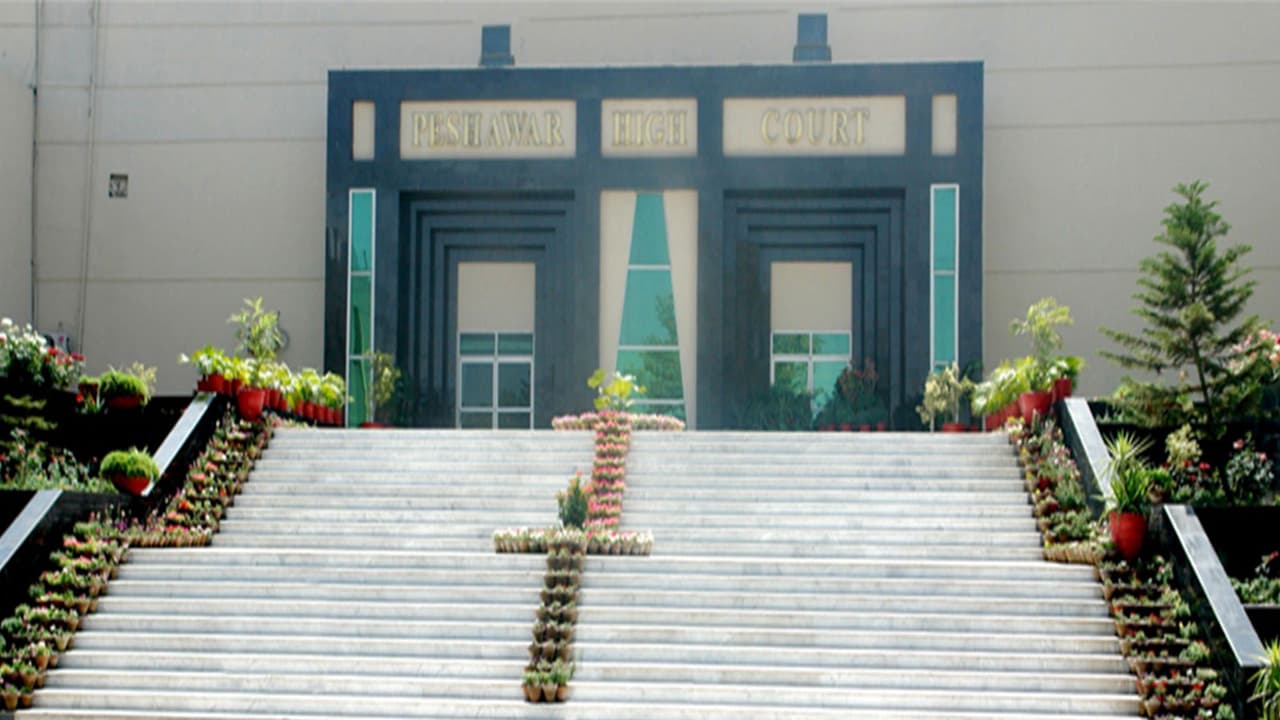
The Peshawar High Court upheld the Pakistan government's ban on the Pashtun Tahafuz Movement (PTM) and its leaders. The court rejected petitions challenging the proscription, which PTM argued was illegal and violated constitutional rights.
A bench comprising Justice Sahibzada Asadullah and Justice Khurshid Iqbal issued a short order rejecting two petitions that challenged the 2024 proscription of PTM and its leadership under the Anti-Terrorism Act. The court said a detailed judgment would be released later, after having reserved its verdict on January 21, following arguments from both petitioners and the government.
Petitions Challenge Proscription
One of the petitions was jointly filed by Manzoor Ahmad Pashteen and nine other leaders, seeking to declare the ban on PTM under Section 11B of the Anti-Terrorism Act and their inclusion under Section 11-EE as illegal. They also requested the removal of PTM from the First Schedule of banned outfits and their names from the Fourth Schedule.
In their plea, the petitioners argued that Sections 11-B and 11-EE, amended in 2014, violated Article 10-A of the Constitution, guaranteeing fair trial and due process. They further sought to make Section 11-D, which deals with placing organisations under observation, a mandatory step before proscription under Section 11-B.
Separately, another petition filed by PTM member Masoom Shah challenged the October 6, 2024, notification issued by the Ministry of Interior proscribing the movement. The ban was imposed just days before the Pashtun National Jirga held in Jamrud, Khyber district, from October 11 to 13, 2024.
Government's Stance
During the proceedings, Additional Attorney General Sanaullah argued that the petitions were not maintainable, pointing to statutory remedies under Section 11-C of the Anti-Terrorism Act, 1997. He said petitioners could first seek a review through the Ministry of Interior and then approach the high court if their application was rejected, Dawn reported.
He further alleged that PTM leaders were involved in anti-state activities through hate speeches and questioned why the movement had not registered with the Election Commission of Pakistan if it claimed political status. He also submitted a sealed report containing sensitive material for the court's consideration.
PTM's Defence as a Non-Violent Movement
Responding to these claims, petitioners' lawyers, including Attaullah Kundi, Jehanzeb Mehsud and Shah Mohammad, maintained that PTM was a civil and non-violent social movement advocating Pakhtun rights since 2014. They said the movement drew inspiration from non-violent advocate Khan Abdul Ghaffar Khan and had consistently opposed violence.
Lead counsel Attaullah Kundi argued that the 2014 amendments empowered the government to impose bans without granting organisations a hearing, violating principles of natural justice and Article 10A. He said this rendered Sections 11B and 11EE unconstitutional under Article 8.
He also told the court that PTM organised the Pashtun National Jirga in 2024 to demand justice and accountability for Pakhtuns, but the government issued the October 6 notification proscribing PTM and its leaders without disclosing cabinet decisions or providing grounds for the ban.
The counsel added that PTM, being a movement rather than a political party, did not require registration with the Election Commission. He said that despite repeated requests, the government failed to share any information regarding the basis for the proscription. (ANI)
(Except for the headline, this story has not been edited by Asianet Newsable English staff and is published from a syndicated feed.)