
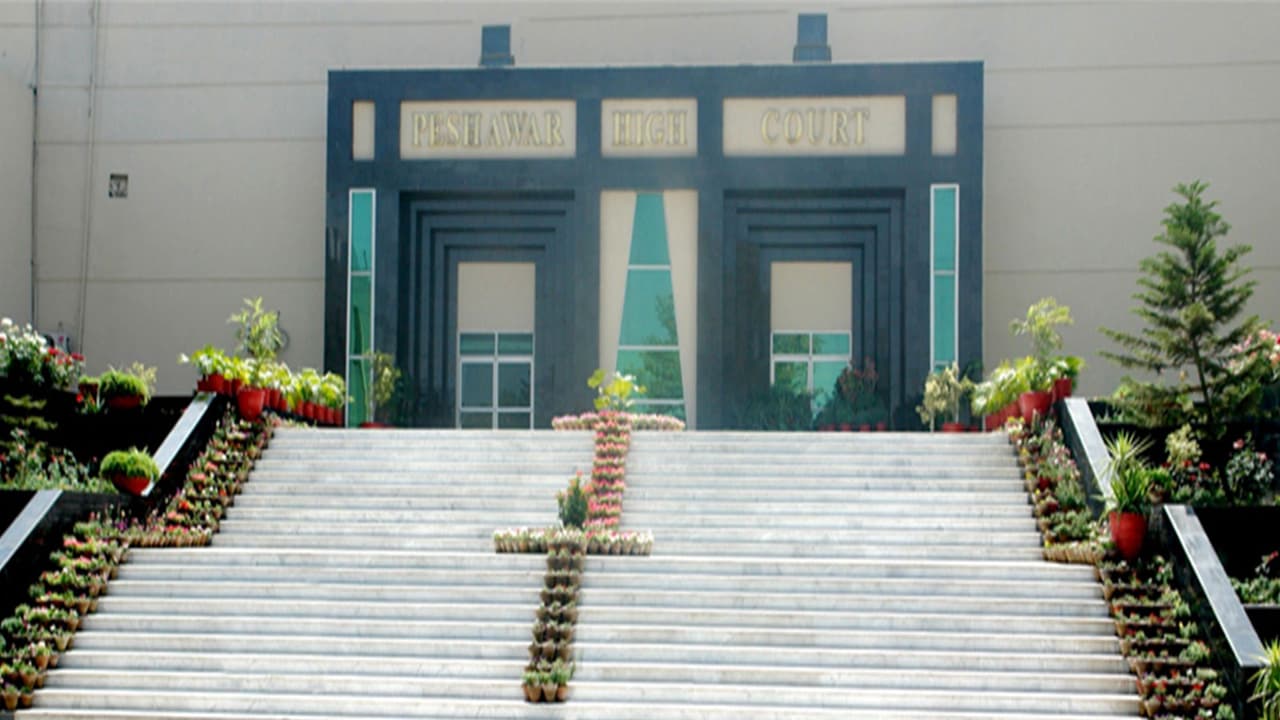
The Peshawar High Court questions the legality of a Tirah Valley military op after federal & KP govts denied approving it. A petition claims it's unconstitutional. The court is examining the case and ordering relief for over 70,000 displaced people.
The Peshawar High Court sought clarification from the federal and Khyber Pakhtunkhwa governments regarding a military operation in Tirah Valley, reported Dawn.
On Friday, the governments denied approving the operation, with the KP Advocate General stating that no approval was given to the military. The denial from both federal and provincial governments came before a bench of the Peshawar High Court (PHC) comprising Justice Wiqar Ahmad and Justice Mohammad Faheem Wali at the hearing of a petition filed by Barrister Saud Javed Dawar, a member of the National Democratic Movement (NDM). The court has directed the Provincial Disaster Management Authority to provide relief to displaced people and summoned IDP representatives on Feb 12.
Constitutional Arguments Presented
The petitioner, Barrister Saud Javed Dawar, claims that the operation is unconstitutional because it lacks provincial assembly approval under Article 232. Barrister Dawar who appeared along with his counsel Mohammad Yaseen Orakzai sought from the court multiple relief, including declaration that any 'order and action' of launching Tirah military operation was "unconstitutional, unlawful and violative of fundamental rights," reported Dawn.
The Peshawar High Court is examining the case, focusing on constitutional provisions (Articles 232 and 245) and relief for displaced persons. The federal government cites Article 245, which empowers it to deploy the armed forces for internal security. The court will review the case, focusing on constitutional provisions and relief for displaced persons, reported Dawn.
A single-page reply from the interior secretary was also submitted to the court, stating that the deployment of the armed forces for internal security purposes was governed by Article 245, which empowers the federal government to employ the armed forces in aid of civil power. "The Ministry of Interior and Narcotics Control has not initiated, directed, commanded or operationally supervised any such operation, nor has it issued any formal order, directive or requisition in this regard," the interior secretary added.
Without the passage of a resolution by the KP Assembly under Article 232 and Parliament's approval, the military operation couldn't be launched, the petitioner reminded the PHC. The ministry explained that the constitutional framework clearly distinguishes between emergency powers under Article 232 and the deployment of forces under Article 245, Dawn reported. "Deployment under Article 245 does not require a proclamation of emergency, a resolution of the provincial assembly or approval of either House of the Parliament. "Matters concerning the protection, rehabilitation, repatriation, financial assistance, health, education, shelter and welfare of Internally Displaced Persons (IDPs) are primarily managed by the Provincial governments, NDMA, PDMA and other relevant civilian departments," the reply said.
Mass Displacement from Tirah Valley
Over 70,000 people, mostly women and children, have fled Tirah, a remote region in northwestern Pakistan near Afghanistan, in a military operation against the Pakistan Taliban. The exodus began after mosque loudspeakers urged residents to leave by January 23 to avoid potential fighting, Al Jazeera reported.
Military Justifies Continued Operations
Military officials maintain they will continue targeted intelligence operations against Tehrik-e-Taliban Pakistan (TTP). They claim many TTP fighters have found refuge in Afghanistan since the Afghan Taliban's 2021 return to power, with hundreds crossing into Tirah and using residents as human shields during raids. (ANI)
(Except for the headline, this story has not been edited by Asianet Newsable English staff and is published from a syndicated feed.)