
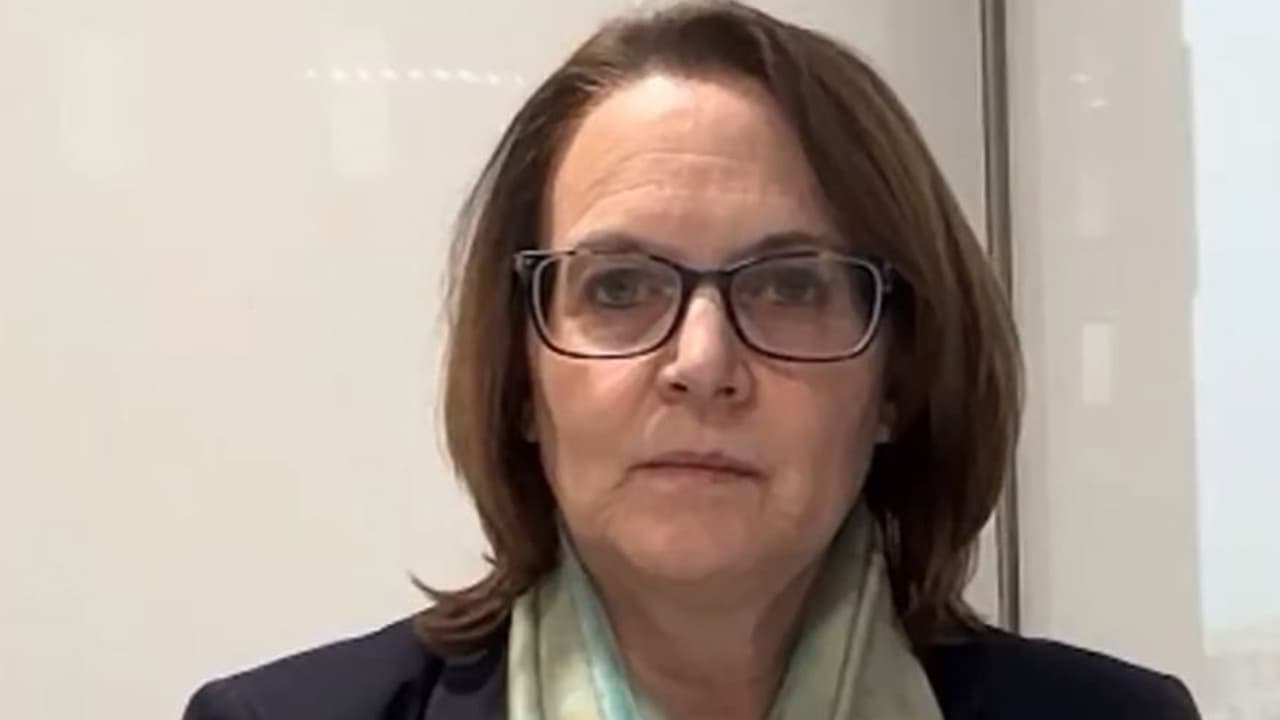
CNAS Director Lisa Curtis hails the India-US trade deal as a 'major step forward' for strained relations. She cautions full recovery will take time but notes the deal could pave the way for a Quad summit and a Trump visit to India.
A 'Major Step Forward' Amid Strained Ties
The Director of the Centre for New American Security (CNAS), Lisa Curtis, on Tuesday (local time) described the recently announced India-US trade deal, in which Washington reduced the tariff on Indian goods to 18 per cent, as a "major step forward" for bilateral ties, while also cautioning that the relationship will take time to fully recover after months of diplomatic strain.
Speaking to ANI about the agreement announced on Monday, Curtis said the deal would provide a significant boost to US-India relations but noted that trust between the two countries had been strained over the past 10 months due to trade disputes and differences over regional security issues. "The announcement of the conclusion of the trade deal was very welcome and will provide a major boost to US-India relations. This is a big step in the right direction. I don't think that the relationship will turn around overnight. There has been a lot of trust lost over the last 10 months, and there were not only trade problems, but also there have been disagreements between the US and India on the aftermath of the India-Pakistan conflict. While this is a major step forward, it will take time to get the US-India relationship fully back on track," she stated.
Factors Behind the Deal's Conclusion
Curtis outlined several factors that may have contributed to the agreement's conclusion, including efforts by US Ambassador Sergio Gor to convey the deal's strategic importance to US President Donald Trump. She also noted India's declining imports of Russian oil, particularly in December, which she said the US administration had noticed and appreciated. Another factor, Curtis said, was India's recent free trade agreement with the European Union, which concluded last month during the state visit of European Commission President Ursula von der Leyen and European Council President Antonio Costa, that demonstrated New Delhi's alternative economic options, potentially prompting Washington to accelerate its own trade engagement. "In terms of what led to this announcement, it could be several things. Number one, Ambassador Sergio Gor arriving in New Delhi on January 9th, making positive statements over the last several weeks. And that he probably was able to communicate with President Trump and indicate the benefits of the deal, and how important the relationship was, could be one contributing factor. The second contributing factor was the fact that India's imports of Russian oil had been going down, particularly in December, and that was noticed by President Trump and appreciated. And then the third point would be the fact that India concluded a free trade agreement with the EU just last week, which shows that India has some options on the table for its goods. That could have prompted the US to want to speed up its own trade agreement with India," the CNAS director added.
Mutual Benefits and Compromises
While speaking to ANI, Curtis claimed that the trade deal will benefit both sides, noting that tariffs on Indian goods would be reduced to 18 per cent, which she described as a major positive outcome for India. She added that while the US sought greater market access for American farmers, Prime Minister Narendra Modi remained firm on protecting Indian farmers. "This is a good deal for both countries... We're seeing India reduce Russian oil imports, which was a major demand from the United States. On providing US farmers access to the Indian market, Prime Minister Modi stuck to his guns on this one. He [PM Modi] was very clear that he was going to continue to protect Indian farmers. And that indeed seems to be what he has done. So neither side got everything it wanted. But that's the nature of a deal and the compromises that have to be made on each side," she noted.
Implications for the Quad and a Presidential Visit
On the Quad, Curtis said the signing of the trade deal could create renewed momentum, including the possibility of a Quad leaders' summit. She noted that Trump had previously indicated he would not visit India until the trade agreement was finalised. "With the deal now done, it does open the door to planning a presidential visit to India," she said, adding that such a visit could potentially include a Quad summit in New Delhi. "President Trump was clear that he didn't want to make a visit to India until the trade deal was signed. Well, that's now done. So it does open the door for starting that planning for President Trump's visit to India. And I think if that does happen, there will likely be a Quad summit in New Delhi, as was planned last fall," she said.
However, Curtis cautioned that time constraints, particularly President Trump's planned April meeting with Chinese President Xi Jinping, could complicate scheduling. "It's not clear if there is enough time to plan a major visit to India right now," the director added. (ANI)
(Except for the headline, this story has not been edited by Asianet Newsable English staff and is published from a syndicated feed.)