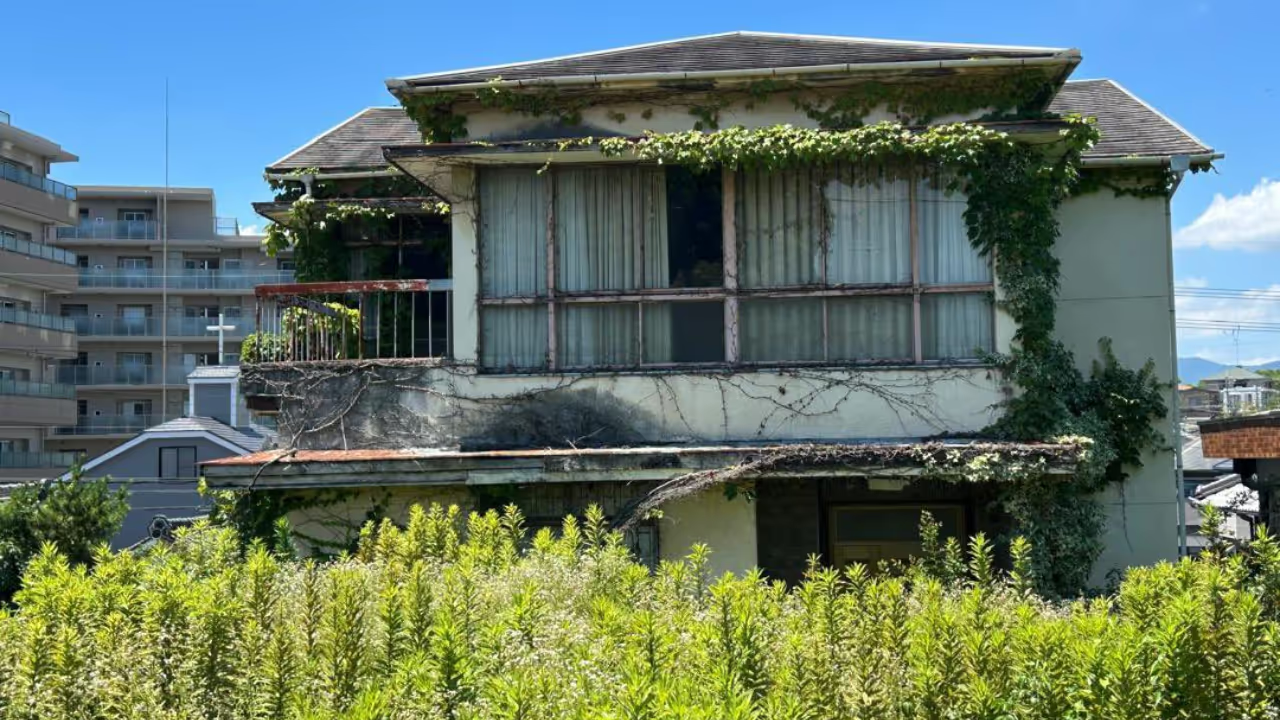
Japan's 'haunted' houses, known as jiko bukken, are attracting buyers and tenants with discounted prices. From apartments linked to suicides to homes where people died alone, these properties offer cheaper housing options.
As property prices and living costs continue to rise, some homebuyers and tenants in Japan are considering properties that many others would prefer to avoid. These homes, associated with incidents such as suicide, murder, fires or deaths that go undiscovered for days, are often available at significantly reduced prices. Known in Japan as jiko bukken, or stigmatised properties, they carry a history that can make them difficult to sell or rent, even when they are considerably cheaper than comparable homes.
According to a BBC report, the rising cost of housing is prompting some people to reconsider these properties as a more affordable alternative, despite the social stigma attached to them. While some buyers and tenants remain uncomfortable with the history of such homes, others are willing to overlook it in exchange for lower prices.
What Is Jiko Bukken?
The Japanese term jiko bukken refers to properties associated with incidents or circumstances that may make them less desirable to prospective buyers and tenants. These can include homes where a person has died by suicide or murder, where a serious accident or fire has occurred, or where someone has died alone and their body was discovered later.
Related Articles

Such properties are often described as stigmatised properties because their history can affect their market value and make them harder to sell or rent. As a result, landlords and sellers may offer them at lower prices than similar homes in the same neighbourhood.
Under guidelines issued by the Japanese government in 2021, estate agents are required to disclose certain deaths that have occurred in a property to prospective buyers and tenants.
According to the BBC, disclosures for rental properties are generally required for three years, while information about such incidents must be disclosed indefinitely when a property is being sold.
Tokyo, Tenant Pays Lower Rent For Apartment Linked To Suicide
The BBC report features Ryua, an entertainer who rents a 25-square-metre bedsit in Tokyo's Setagaya ward. She said she believed the apartment was haunted from the moment she first visited it.
"When I visited the place for a viewing there was a man standing there, glaring at me," she said.
"Since the estate agent couldn't see him, I realised he must be a ghost," she added.
Ryua was later informed that a man had died by suicide in the apartment. The property's history had contributed to a substantial reduction in its rent.
According to the BBC, she pays 45,000 yen a month, compared with the estimated usual rent of 62,000 yen, making it nearly 30% cheaper.
Despite the property's past, the lower rent made it an affordable option in an expensive city such as Tokyo. However, Ryua has said that she continues to experience what she describes as paranormal activity in the apartment.
Even after living there for four years, she reportedly continues to hear footsteps and what she believes is the sound of a ghost talking. She said these experiences occur on a daily basis.
American Woman Buys Discounted House In Kagoshima
The BBC also reported on Diane Tincher, a 69-year-old American woman who bought a three-bedroom house in Kagoshima, in southwestern Japan. Tincher, who has lived in Japan for nearly 40 years and works as a tour guide, reportedly paid 20 million yen for the property.
According to the report, similar houses in the area can sell for as much as 45 million yen, meaning Tincher paid less than half the price of comparable properties.
The estate agent informed her that an elderly woman had died alone in the house, a detail that had affected its market value. Tincher said she had found the property through Oshimaland, a website that lists homes associated with deaths and other incidents and provides information about their histories.
"I don't believe in ghosts. But I know that the Japanese are very superstitious. If there is a ghost I'm thankful to her every day... to live in such a splendid and affordable home," Tincher said.
Why Are Stigmatised Properties Difficult To Sell In Japan?
Tokyo-based estate agent Erik Oskamp told the BBC that Japanese buyers and tenants can be particularly reluctant to live in properties associated with deaths or other distressing incidents.
"[Even] an apartment next to a cemetery will be difficult to rent out, especially if you can see the tombs from the kitchen," Oskamp explained.
"The worst thing is if a suicide has happened in the apartment. Even if somebody has jumped from the roof, many renters will move out. Other issues are a serious crime or a lonely death," he added.
Such concerns can affect demand and prompt property owners to lower rents or selling prices to attract potential occupants. The stigma can also extend to properties located near cemeteries or places associated with traumatic incidents.
Oshimaland Lists Properties Linked To Deaths And Other Incidents
Oshimaland, which was launched in 2005, initially focused on properties in Tokyo before expanding its coverage across Japan and internationally in 2011, the BBC reported.
The website operates on a crowdsourced model, allowing members of the public to submit information about properties associated with deaths and other incidents. Its founder, Teru Oshima, told the BBC that such homes were once widely regarded as unattractive options for buyers and tenants.
However, rising property prices and the increasing cost of living appear to be influencing how some people view these homes. A 2025 survey cited by the BBC found that more than half of respondents in Japan would consider renting a jiko bukken property if the rent were sufficiently low.
Although these homes continue to carry a social stigma, their lower prices are attracting people looking for more affordable housing. For some, the financial savings may outweigh concerns about a property's past.