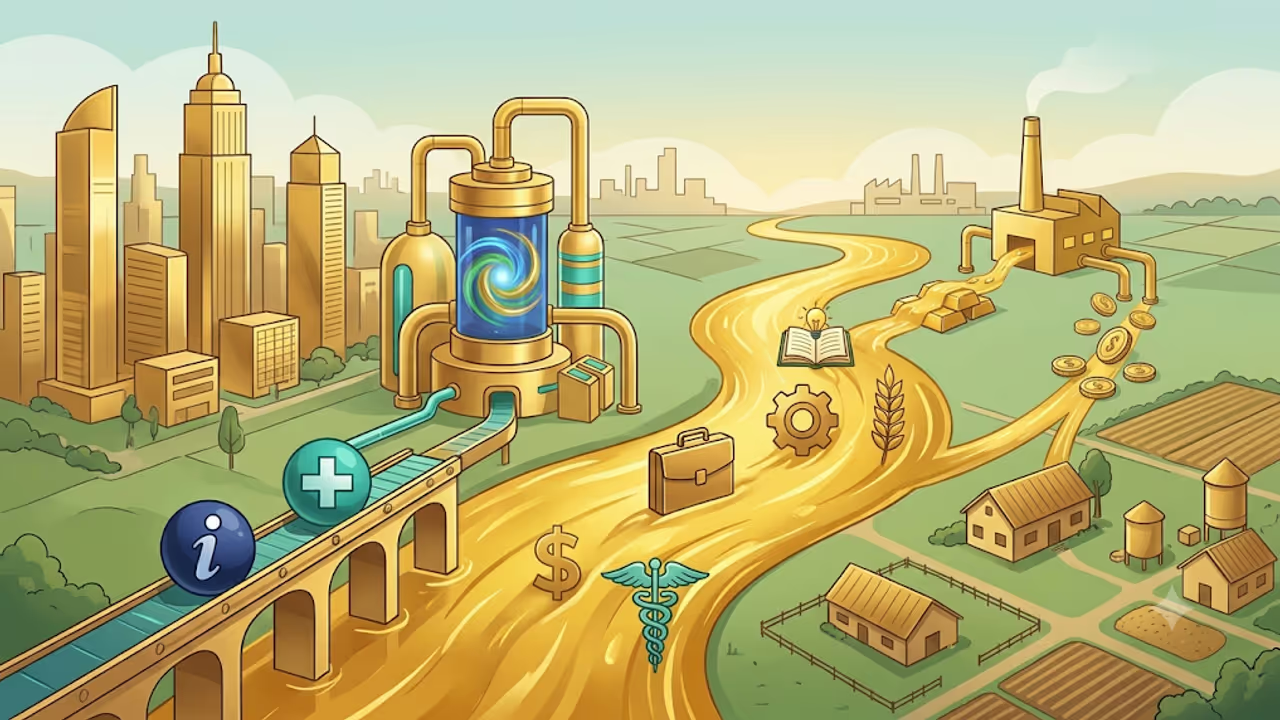
A study found COVID-19 vaccines generated returns of up to $809 for every dollar invested during their first year of rollout. Researchers estimated vaccine development and delivery cost $79.4 billion.
COVID-19 vaccines delivered enormous health and economic benefits during the first year of their rollout, generating returns of up to $809 for every dollar invested in their development and distribution, according to a new international study. However, the benefits were not shared equally, with wealthier countries gaining an advantage because they secured vaccines earlier and rolled them out faster.
The research, published in the journal PLOS Medicine on November 5, 2026, estimated that the global health and economic benefits of COVID-19 vaccination ranged between $6.43 trillion and $64.3 trillion. Against this, the worldwide cost of developing, manufacturing and delivering the vaccines was estimated at $79.4 billion. Researchers from the London School of Hygiene and Tropical Medicine, Imperial College London and New York University analysed data from 173 countries to assess whether the enormous investment made during the pandemic had paid off.
COVID-19 vaccines generated up to $809 per dollar invested
The study estimated that the return on investment ranged from $59.70 to $809 for every dollar spent on vaccine development and delivery, depending on the method used to calculate the economic value of the benefits.
Related Articles

Researchers used two approaches to measure the returns. The first, a cost-benefit analysis, placed a monetary value on lives saved, improved productivity and healthcare costs avoided. This produced the higher estimate of $64.3 trillion in benefits.
The second approach, a cost-effectiveness analysis, measured the value of improved health and quality of life, including deaths and hospitalisations prevented. Under this method, the benefits were estimated at $6.43 trillion.
The researchers said both approaches showed that the investment in COVID-19 vaccines generated returns many times greater than the money spent on developing and distributing them.
How were the economic benefits calculated?
The research examined the first year of the global COVID-19 vaccination programme, from December 8, 2020, to December 8, 2021.
Researchers compared the costs of vaccine research, development, manufacturing and delivery with the health and economic gains achieved through vaccination.
These included lives saved, years of life gained, improved quality of life through fewer infections and hospitalisations, increased work productivity and reduced healthcare expenditure.
The analysis estimated that vaccination prevented around 1.5 billion COVID-19 infections and 51.5 million hospitalisations worldwide during the period. It also helped save an estimated 14 million to 20 million lives, according to the underlying modelling used in the research.
Why did richer countries benefit more?
The study found significant differences in the benefits received by countries at different income levels.
High-income countries gained the greatest health benefits per person vaccinated. Researchers attributed this to their early access to vaccines, higher vaccination coverage and faster rollout programmes. Their older populations, who faced a greater risk of severe COVID-19 outcomes, also contributed to the higher health benefits.
In contrast, many low- and middle-income countries did not receive widespread vaccine access until late 2021. By then, large sections of their populations had already contracted COVID-19 and developed some immunity.
This delay reduced the potential benefits that vaccination could have delivered in these countries, particularly during the earlier stages of the pandemic.
However, the findings also highlighted an important distinction. Low-income countries recorded the highest savings in healthcare and productivity costs relative to their own economies and populations. This showed that vaccines delivered considerable economic value even in countries that received them late.
Researchers call for faster and fairer vaccine distribution
Lead author Hallie Benjamin of the London School of Hygiene and Tropical Medicine said the substantial upfront investment in vaccine development had delivered health and economic benefits that far exceeded its costs within a year.
Mark Jit, a professor at New York University's School of Global Public Health and one of the study's authors, said the experience highlighted the need to make vaccines available faster to countries that need them.
The researchers argued that vaccine research, development and equitable distribution should be prioritised before and during future global health emergencies.
What does the study mean for future pandemics?
The researchers said this was the first global analysis to examine the economic return on investment in COVID-19 vaccines by comparing development and delivery costs with their wider health and economic benefits.
However, the findings have limitations. The analysis covered only the first year of the vaccination programme and relied on existing epidemiological and economic models. The researchers also noted that some costs and longer-term effects, including the impact of long COVID, were not fully captured.
Despite these limitations, the study offers evidence that rapid investment in vaccine development can protect lives while also preventing substantial economic losses. It also highlights why ensuring timely and fair access to vaccines must remain a priority when the world prepares for another pandemic.
(With inputs from agencies)