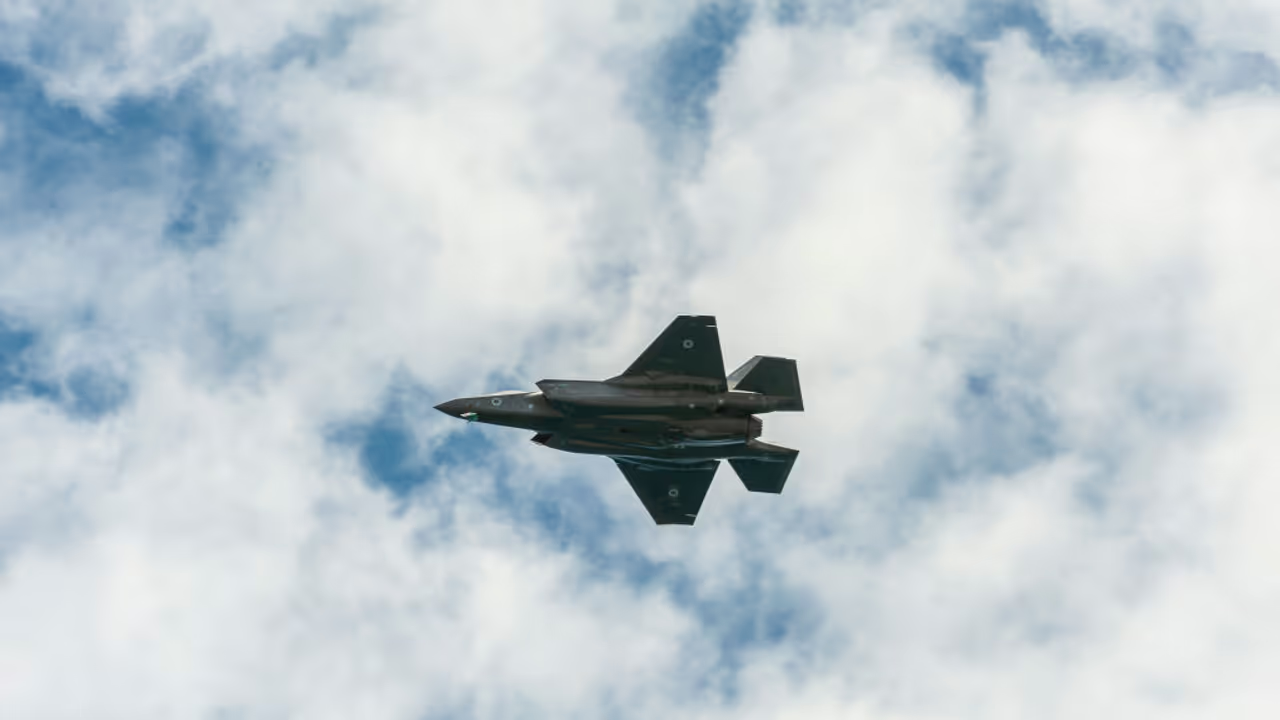
In a significant military development, the Israeli Air Force on Wednesday claimed that one of its F-35I fighter jets shot down a Russian-made Iranian Yak-130 aircraft over Tehran a short while ago.
The conflict between Israel, Iran, and regional allies intensified sharply on Wednesday, with new military developments unfolding across Iran, Lebanon, and the Gulf. From a historic aerial encounter over Tehran to mounting geopolitical tensions around the Strait of Hormuz, the war appears to be entering a more dangerous phase.
Historic Aerial Combat Over Tehran
In a significant military development, the Israeli Air Force claimed that one of its F-35I fighter jets shot down a Russian-made Iranian Yak-130 aircraft over Tehran a short while ago.
According to the Israeli military, the incident marks a major milestone in modern aerial warfare. It is the first-ever downing of a manned aircraft by an F-35 anywhere in the world.
Related Articles

The Israeli military also noted that this is the first time in around four decades that its jets have engaged enemy aircraft in air-to-air combat involving manned fighters.
The last such engagement dates back to November 24, 1985, when Israeli F-15 jets shot down two Syrian MiG-23 fighters over Lebanon.
A video circulating on social media claims to be the moment the historic downing took place. However, Asianet Newsable English cannot vouch for the authenticity of this viral video.
Iran Claims ‘Complete Control’ of Hormuz
Amid the fighting, Iran’s Revolutionary Guards claimed they now have “complete control” of the vital Strait of Hormuz, a critical global route for oil and gas shipments.
Iran warned that vessels attempting to pass through the waterway could face danger from missiles or drones. The statement came as tensions escalated across the Gulf and energy markets reacted with volatility.
Meanwhile, US President Donald Trump said the US Navy was prepared to escort oil tankers through the region if necessary.
Iran Moves to Appoint Khamenei’s Successor
Iranian officials signaled urgency in replacing the country’s late supreme leader, Ali Khamenei, who was killed in the US-Israeli strikes that triggered the war.
State television quoted cleric Ahmad Khatami as saying: "God willing, the leader will be appointed at the earliest opportunity. We are close, but the situation is a war situation."
Israeli Forces Enter Southern Lebanon
On the ground, Israeli troops reportedly entered the southern Lebanese town of Khiam during operations against the Iran-backed militant group Hezbollah.
Lebanese state media reported that expanded Israeli strikes across Lebanon killed at least 11 people, including in areas outside Hezbollah’s traditional strongholds. The incursion suggests the conflict is widening beyond Iran’s borders.
Drone Attack Targets Saudi Oil Facility
Saudi Arabia said it intercepted a drone targeting the massive Ras Tanura oil refinery, one of the world’s largest energy facilities. The attempted strike followed a separate hit on the same complex earlier this week, raising concerns about energy security in the Gulf.
The conflict is already disrupting international trade routes.
Chinese shipping giant COSCO, which operates one of the world’s largest oil tanker fleets, announced it is suspending services to and from several Gulf countries, including the UAE, Bahrain, Saudi Arabia, Iraq, and Kuwait.
Financial markets also reacted sharply. Stock exchanges in Dubai and Abu Dhabi reopened significantly lower after a two-day suspension triggered by Iranian missile and drone attacks across the region. Asian markets followed the downward trend, with Seoul shares plunging more than 12 percent while oil prices surged.
Iran Signals Long War Ahead
Despite heavy bombardment, Iranian officials said the country is prepared for a prolonged conflict.
Mohammad Mokhber, a senior aide to Khamenei, told state TV that Iran has no intention of negotiating with the United States and can sustain the war effort.
Iran can continue the war for "as long as we want."
Israel, however, insists Iran still has significant missile-launching capability even as it continues to target launch sites and weapons facilities across the country.
The Israeli military said overnight strikes hit a facility involved in the storage, production, and launch of ballistic missiles, including Ghadr missiles, in Isfahan.
War Spreads Across Multiple Fronts
Additional developments underline how quickly the conflict is widening:
- Hezbollah claimed it targeted the headquarters of Israel Aerospace Industries in central Israel with a drone strike and launched a missile at a drone control base.
- Sri Lanka reported an Iranian navy frigate with 180 crew sank after an explosion just outside its territorial waters, with dozens of critically wounded sailors rescued.
- Spanish Prime Minister Pedro Sánchez pushed back against criticism from Trump over Madrid’s refusal to allow US aircraft to use Spanish bases for strikes on Iran, saying: "No to war."
- Canadian Prime Minister Mark Carney questioned the legality of the US-Israeli strikes, stating they "would appear, prima facie... to be inconsistent with international law".