Israel has issued a stark warning to Hezbollah’s leadership after fresh attacks, with Defence Minister Israel Katz saying Naim Qassem could meet the same fate as Iran’s late supreme leader Ali Khamenei amid escalating regional war.
Israel sharply escalated its warnings against Hezbollah on Monday, with Defence Minister Israel Katz delivering a stark message aimed directly at the leadership of the Iran-backed group. Speaking during a visit to the Israeli Air Force operations centre, Katz warned that Israel would intensify its military response after recent attacks linked to the Lebanese armed group Hezbollah.
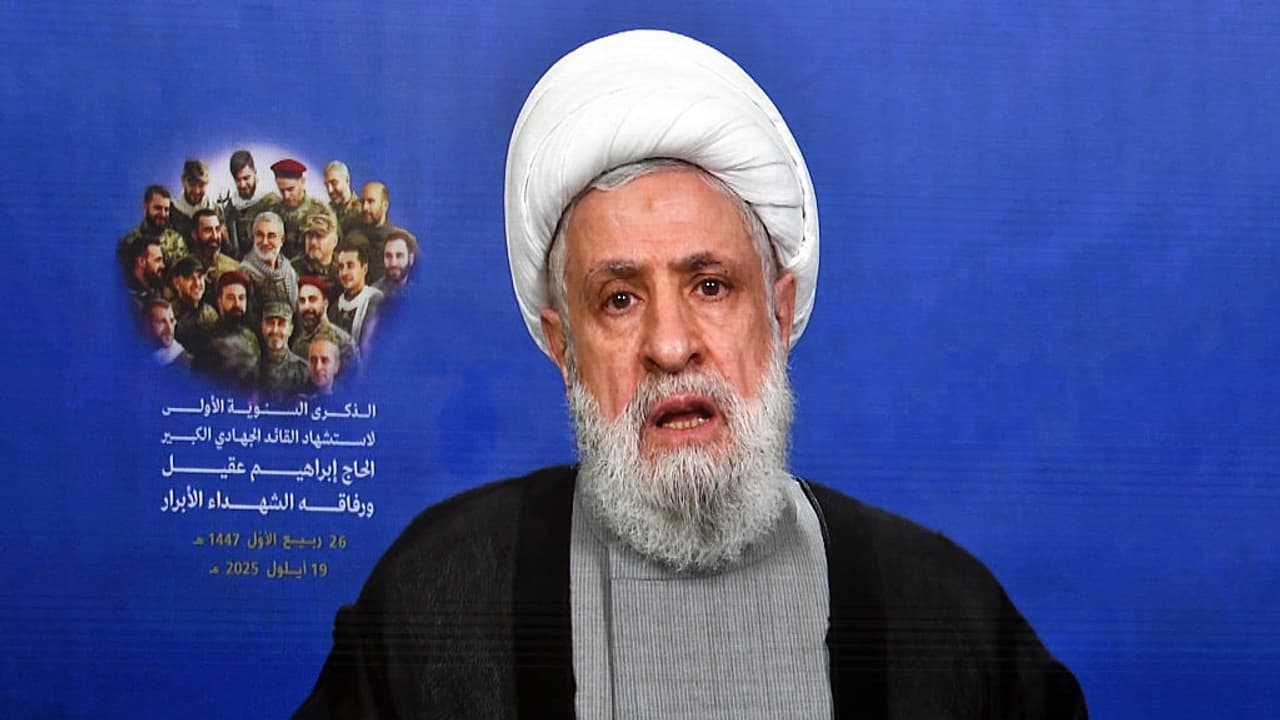
“We will strike Hezbollah hard, and Naim Qassem, chairman of the Hezbollah terrorist organisation, will discover that whoever follows Khamenei's path ends up like Khamenei -- at the bottom of hell,” Katz said.
The remark referenced the death of Iran’s supreme leader Ali Khamenei, who was killed in an attack on his compound in Tehran during US-Israeli strikes over the weekend — an event that has dramatically escalated tensions across the Middle East.
Related Articles

Israel expands strikes deep inside Tehran
As rhetoric intensified, Israel confirmed it had begun a new “broad strike” targeting what it described as key elements of Iran’s leadership structure in the heart of Tehran. Loud explosions were heard across multiple areas of the capital, with blasts strong enough to shake apartment buildings in central districts.
At the same time, the Israeli military said it was carrying out operations against Hezbollah targets in Lebanon. It also claimed to have killed a senior Hezbollah figure in Beirut, though officials stressed that a ground invasion was not currently planned.
Iran launches fresh missile retaliation
Iran responded with another wave of attacks, according to the Islamic Revolutionary Guard Corps, or Islamic Revolutionary Guard Corps. Officials said missiles were launched at Israeli targets including the office of Prime Minister Benjamin Netanyahu and sites in Tel Aviv, Haifa and east Jerusalem.
Explosions were also heard above Jerusalem as Israeli defence systems responded.
Iran described the operation as the “tenth wave” of retaliatory strikes following the joint US-Israeli campaign.
Conflict spreads across the Gulf
The conflict has begun spilling beyond Israel and Iran. Iranian forces said they launched 15 cruise missiles toward a US air base in Kuwait and vessels in the Indian Ocean.
Elsewhere in the region:
- A power plant in Qatar was hit.
- An oil tanker was struck off Oman, leaving one person dead.
- Projectiles struck a vessel in a Bahraini port.
- Authorities in Kuwait warned residents to stay indoors and away from windows.
- A drone also crashed into Britain’s RAF Akrotiri base in Cyprus, raising fears the conflict could widen further.
- European Commission chief Ursula von der Leyen urged urgent de-escalation after the strike on the base.
Mounting casualties and damage inside Iran
According to the Iranian Red Crescent, the impact of US-Israeli strikes has been extensive.
Officials said 131 cities have been affected, with 555 people killed so far. Iranian authorities also confirmed the deaths of three Revolutionary Guards members and five army personnel.
Local media reported damage to the historic Golestan Palace, a UNESCO-listed landmark in Tehran, where windows, doors and interior mirrors were reportedly shattered by the shockwaves from nearby blasts.
However, the head of the UN nuclear watchdog said there was no indication that Iranian nuclear installations had been hit.
Trump warns war could last weeks
US President Donald Trump signalled the confrontation may continue for some time, saying Washington was prepared for a prolonged campaign.
Trump also vowed retaliation after three US soldiers were killed during operations against Iran.
“America is with you,” he said while calling on Iranians to rise up, and warning Iran’s Revolutionary Guards to surrender or face “certain death.”
He added that the military campaign could last around four weeks.
Shipping disruption and global economic ripple effects
The conflict is already affecting global trade and energy markets.
Shipping giant Maersk announced it was suspending transit through both the Suez Canal and the Strait of Hormuz due to safety concerns, after Iran’s Revolutionary Guards declared the strategic waterway closed.
Energy markets reacted quickly, with European gas prices jumping more than 20 percent amid fears of supply disruptions from the Gulf, particularly exports from Qatar.
Diplomatic tensions rise as China calls for truce
China called for an immediate ceasefire and diplomatic talks, warning of a broader regional escalation. Beijing confirmed that one Chinese citizen had been killed in Iran during the conflict.
Meanwhile, Iran rejected any possibility of negotiations with Washington for now, with senior official Ali Larijani accusing the US administration of plunging the region into chaos.