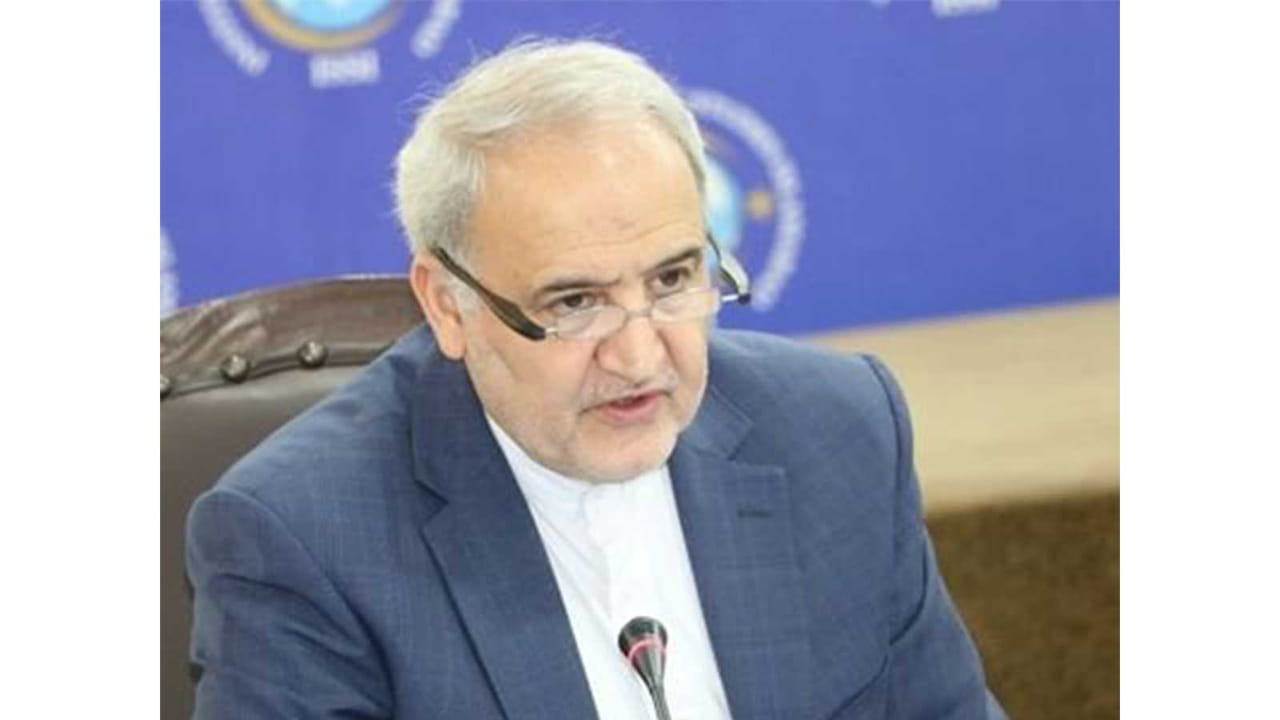
Iranian Ambassador to Pakistan Reza Amiri Moghadam has issued a warning to the US, claiming Iran has more surprises if large-scale military action resumes, as tensions over maritime blockades and naval control continue to escalate.
Tehran [Iran], November 28 (ANI): Iranian Ambassador to Pakistan Reza Amiri Moghadam has warned that Tehran has "more surprises" in store if the United States resumes large-scale attacks against the country, amid a slowdown in indirect communication between the two sides. According to CNN, Moghadam said exchanges of messages between Tehran and Washington through Pakistan and Qatar were continuing, although the process had slowed compared with previous rounds of talks. He said, "They put forward proposals, and we review them," indicating that Tehran was examining proposals put forward by Washington. Warning against any renewed large-scale military action, the Iranian envoy said Tehran was prepared for further escalation and had not remained inactive over the past year. "We have not been idle over the past year," Moghadam said, adding that Iran had "more surprises" in store if large-scale attacks resumed.
His remarks come amid continuing tensions between Iran and the United States, with diplomatic exchanges taking place alongside an escalating maritime confrontation over Washington's naval blockade against Tehran. Meanwhile, the Iranian Army has claimed that its Navy maintains control over strategic waters stretching from the eastern Strait of Hormuz to the northern Indian Ocean. According to Iran's state broadcaster IRIB, citing Brigadier General Mohammad Akraminia, spokesman for the Islamic Republic of Iran Army, the Navy is maintaining surveillance and guarding the maritime region with authority. Akraminia, in a post on X, claimed that the Iranian Navy had demonstrated its capabilities during an earlier conflict and was now maintaining control over the strategically important waters. "After 67 days from the beginning of the first imposed war, the Iranian Navy overwhelmed the Baathist Navy in such a way that it was unable to make any movement until the end of the war. In the current war, it controls and guards with authority from the east of the Strait of Hormuz to the north of the Indian Ocean," he said.
Iranian Navy Commander Admiral Shahram Irani has also dismissed the US naval blockade, calling it an indication of Washington's failure in the ongoing conflict. He claimed that Tehran's efforts to break the blockade were already underway and that Iranian ports remained operational. The maritime standoff has also seen competing claims from both sides. On Friday, US Central Command (CENTCOM) said its forces had disabled the Palau-flagged commercial vessel M/V Pacific Archer after its crew allegedly attempted to breach the blockade despite repeated warnings. CENTCOM said precision munitions struck the vessel's stern, disabling its propulsion system, while the civilian crew remained unharmed. The US military command added that its forces had redirected 158 commercial vessels complying with the blockade and disabled six that refused to comply. Separately, IRIB, citing the IRGC Navy, claimed that an oil tanker struck a naval mine and exploded north of Ghanam Island in the Strait of Hormuz while attempting to navigate an unauthorised route. (ANI)