
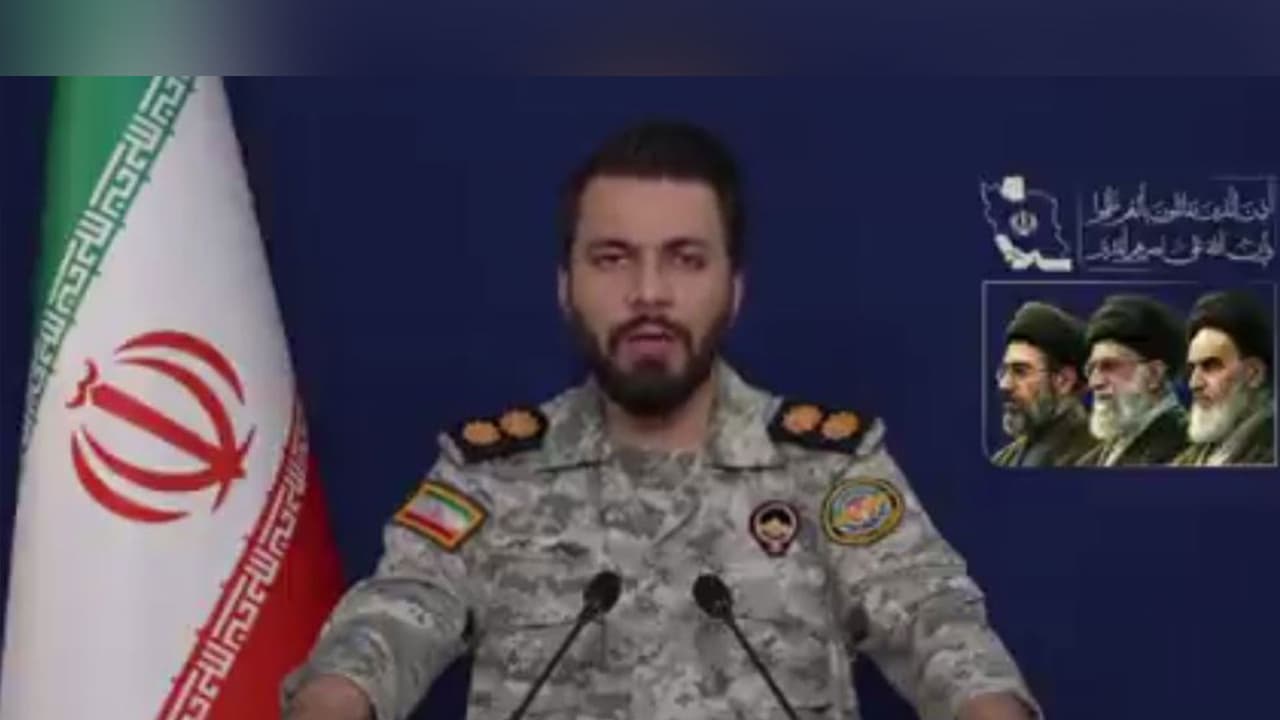
Iran's military has threatened a 'crushing response' if its energy infrastructure is attacked, vowing to destroy all Western-allied oil and gas facilities. Its Supreme Leader also advocated using the Strait of Hormuz as a pressure tactic.
As the West Asia Conflict enters day 14, Iran's Military Headquarters the Khatam al-Anbiya has warned of dire consequences if Iran's energy infrastructure is targeted by US-Israel.. The spokesperson for the Military said, "The slightest attack on #Iran's energy infrastructure and ports will result in our crushing and devastating response. In the event of such an attack, all the oil and gas infrastructure in the region, in which the United States and its Western allies have interests, will be set on fire and destroyed."
Strait of Hormuz as a 'Pressure Tactic'
Earlier, Iran's new Supreme Leader, Mojtaba Khamenei, indicated that the closure of the Strait would remain a pressure tactic, according to remarks broadcast on Iranian state television. "Dear fighter brothers! The desire of the masses of the people is the continuation of effective and regret-inducing defence. Furthermore, the leverage of blocking the Strait of Hormuz must certainly continue to be used," he said.
Khamenei said that Iran had identified sites which he claimed were vulnerable for future strikes from the Islamis Republic. "Studies have been conducted regarding the opening of additional fronts in areas where the enemy has negligible experience and would be highly vulnerable, and their activation will be carried out if the state of war persists and in accordance with the observance of interests," he said.
UN Envoy Offers Contrasting View
Later, Iran's UN Ambassador Amir Saeid Iravani however stated that Tehran has no intention to close the Strait of Hormuz amid the West Asia conflict but added that it is their "right to preserve the peace and security in this waterway." Amir Saeid Iravani also said Iran respects and remains committed to the principles of freedom of navigation under the law of the sea, adding that the situation of the Strait of Hormuz is "not the result" of Iran's action.
"We are not going to close the Strait of Hormuz, but it is our inherent right to preserve the peace and security in this waterway, and it is our right," he said, speaking at the UN stakeout. "Iran has no choice but to exercise its inherent right to self-defence under the UN Charter and international law. Iran fully respects and remains committed to the principles of freedom of navigation under the law of the sea. However, the current situation in the region, including in the Strait of Hormuz, is not the result of Iran's lawful exercise of its right of self-defence," he added.
Heightened Restrictions in Strait of Hormuz
In recent days, Iran has intensified its restrictions on the passage of ships through the Strait of Hormuz amid ongoing US-Israeli strikes. Iran says vessels not serving the interests of the United States and Israel can sail through safely. (ANI)
(Except for the headline, this story has not been edited by Asianet Newsable English staff and is published from a syndicated feed.)