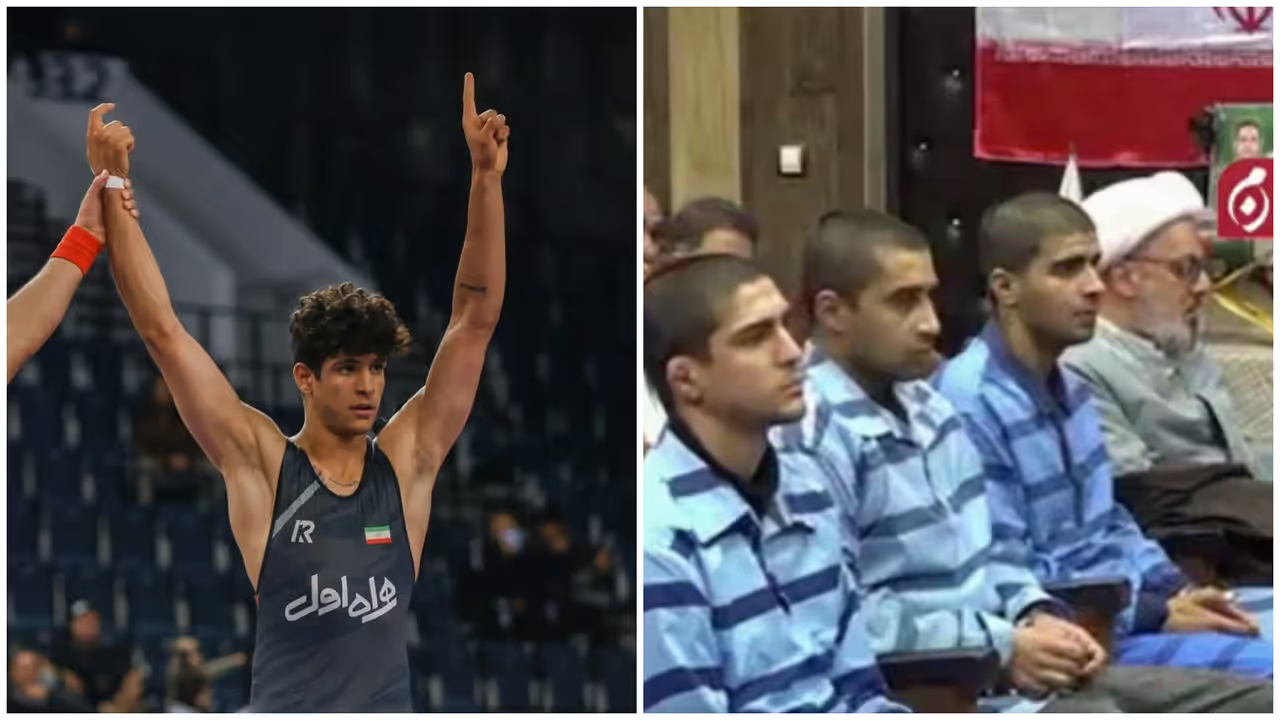
Iran has executed a 19-year-old champion wrestler along with two other protesters in public hangings in Qom, according to state media and human rights groups. Activists say the move signals a sharp escalation in the government’s crackdown on dissent.
A 19-year-old champion wrestler Saleh Mohammadi was executed by Iranian authorities along with two other protesters in public hangings in Qom, signaling a sharp escalation in the government’s crackdown on dissent. His death has drawn condemnation, with human rights groups warning that the teenager was executed following a deeply flawed legal process. Charged with moharebeh, or “enmity against God”, Mohammadi became yet another face of a controversial law increasingly used in protest-linked crackdowns.
From Rising Wrestler to Death Row
Mohammadi was known for his prowess in freestyle wrestling. He had built a reputation through domestic competitions and reportedly gained recognition beyond Iran’s borders. His arrest came in January 2026 amid protests in Qom, part of a broader wave of unrest that began in late 2025. What started as economic frustration had quickly spiralled into widespread anti-regime dissent.
Within days, Mohammadi found himself at the centre of a grave criminal case.
Related Articles

The Charges: ‘Enmity Against God’
Under Iranian law, moharebeh, or “enmity against God”, stands among the harshest accusations, historically reserved for armed rebellion but increasingly deployed in protest-related cases. The charge allows authorities to frame dissent not merely as political defiance, but as a religious and existential threat.
Prosecutors alleged that Mohammadi, along with Mehdi Ghasemi and Saeed Davoudi, was involved in the killing of security personnel during clashes in Qom. Officials described the case as violent insurrection, insisting their actions amounted to waging war against the state.
Critics, however, argue that the sweeping interpretation of moharebeh dangerously blurs the line between protest and rebellion, granting authorities expansive powers to pursue capital punishment in politically sensitive cases.
State media defended the executions as justice for slain officers and a necessary step to protect national security. The judiciary maintained that the Supreme Court had upheld the convictions, presenting the process as legally sound.
Last-Minute Appeals That Fell Silent
In the days leading up to the execution, urgent pleas poured in from global human rights organisations, including Amnesty International, urging authorities to halt the sentence.
Activists and members of the Iranian diaspora amplified Mohammadi’s case across social media, hoping global attention might force a pause. Appeals even reached out to prominent figures in the sporting world, echoing past campaigns.
But unlike previous high-profile cases, no major international intervention materialised in time. No decisive diplomatic breakthrough, no unified call from global sporting bodies. The execution went ahead.
Claims of Torture and an Unfair Trial
According to reports, Mohammadi was denied access to a lawyer of his choosing, held in isolation for prolonged periods, and subjected to coercion. In court, he reportedly withdrew earlier confessions, claiming they had been extracted under torture — allegations that, activists say, were dismissed without proper scrutiny.
The trial itself has been described as swift, opaque, and lacking meaningful opportunities for defence or appeal, raising serious questions about adherence to international legal standards.
A Wider Crackdown Taking Shape?
Since late 2025, Iran has witnessed sustained unrest, with thousands reportedly killed and many more detained.
Observers, including UN-linked experts, have flagged a sharp rise in execution, particularly those tied to protest activity. The use of charges like moharebeh has come under increasing scrutiny, seen by many as a strategy to deter dissent through fear and swift punishment.
Hundreds of detainees are believed to remain on death row, fuelling fears that Mohammadi’s case may be far from the last.
Echoes of Navid Afkari
The case has drawn inevitable comparisons to Navid Afkari, the Iranian wrestler executed in 2020 after participating in protests. His death triggered global outrage, with appeals from figures such as Dana White and Donald Trump failing to stop the execution.
For activists, Mohammadi’s fate suggests that little has changed — and that athletes, often seen as national icons, are increasingly becoming powerful yet vulnerable symbols in these crackdowns.
Sport, Silence, and a Global Question
The execution has reignited a debate: What role should global sporting bodies and high-profile athletes play in confronting human rights abuses?
Campaigners argue that silence risks normalising such actions, while others warn against politicising sport. Yet the slogan “No human rights, no real sport” is gaining traction.