
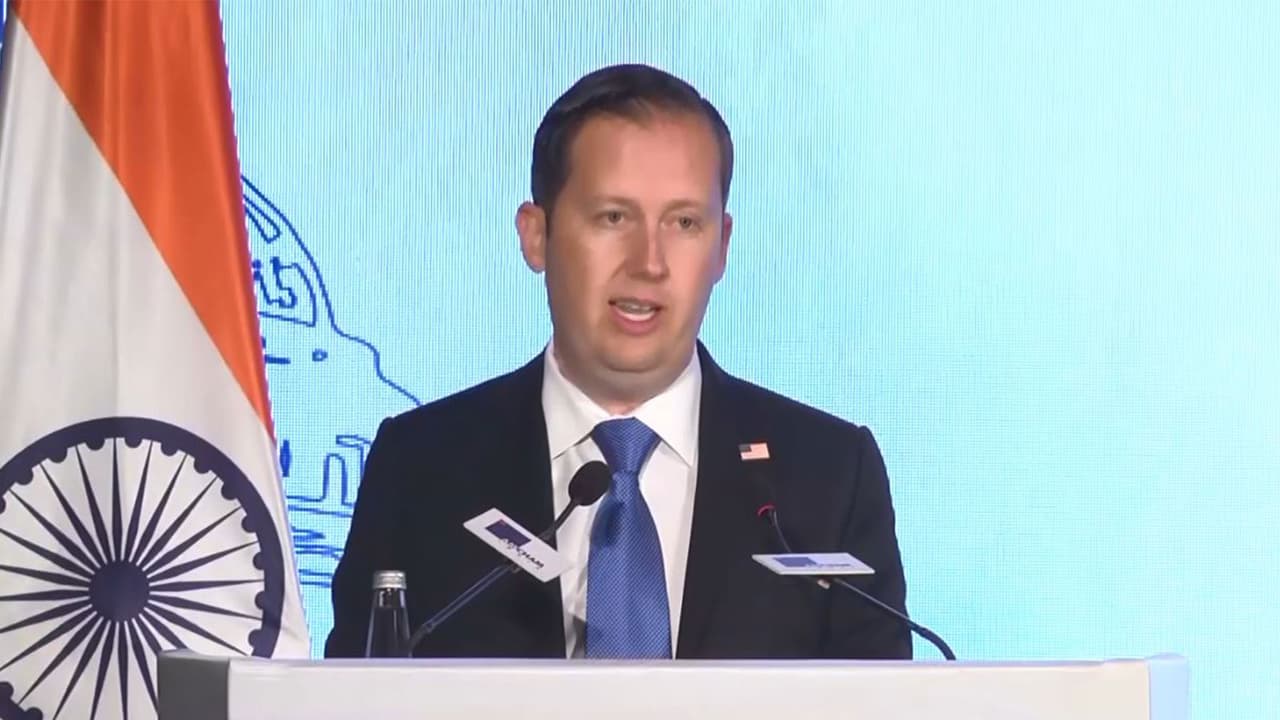
US Ambassador Sergio Gor praised Indian companies for committing over $20 billion in investments in the US. He and Union Minister Piyush Goyal confirmed that an interim trade agreement between the two nations is nearing finalisation.
United States Ambassador to India, Sergio Gor, on Thursday observed that commercial establishments from India are consistently scaling up their corporate footprint across America. Concurrently, the diplomat expressed absolute delight over Indian corporate entities pledging an astronomical sum exceeding USD 20 billion in domestic capital investments during the recently concluded annual Select Investment Summit.
Indian Firms Commit Over $20 Billion in US
Addressing a high-level gathering at the American Chamber of Commerce in India (AMCHAM India) in the national capital, Gor remarked, "I was thrilled to see Indian companies committing more than $20 billion in investments in the United States at the annual Select Investment Summit. Not only is $20 billion a significant figure, but all embassies compete to bring investment into the US and we were proud that our embassy, working with partners in India, ranked first in the world, an incredible achievement."
Interim Trade Deal and Bilateral Talks Gain Momentum
The American envoy further brought to light the expanding corporate presence of United States enterprises within India's rapidly expanding consumer and industrial markets. Articulating the foundational economic doctrine of the current Trump administration, Ambassador Gor explained that the US President remains deeply committed to generating highly profitable commercial avenues for domestic industries and the American workforce.
In a major policy disclosure, the diplomat also confirmed that the transitional commercial framework between the two global powers has entered its concluding phase and is primed for execution. Elaborating on the strategic goals of the administration, Gor noted, "President Trump's goal is to facilitate bilateral trade in a way that creates lucrative opportunities for American businesses and workers. Our current interim trade agreement is on the table to be finalised, unlocking prosperity for both nations."
This optimism was matched on the Indian side, as an official American delegation is anticipated to travel to India next month to participate in critical bilateral trade discussions, Union Commerce and Industry Minister Piyush Goyal announced on Thursday. Speaking to the media on the sidelines of the same AMCHAM India Annual Leadership Summit, the minister highlighted the active momentum of the talks, effectively mirroring the timelines outlined by the US envoy.
High-Level Diplomatic Visits to Bolster Ties
The upcoming technical exchange follows an in-person round of meetings conducted by an Indian delegation in Washington, DC, last April, which was specifically aimed at hammering out the finer points of an interim pact and driving forward deeper negotiations under the broader Bilateral Trade Agreement (BTA). These critical trade talks are set to occur alongside a broader wave of high-level diplomatic engagements between New Delhi and Washington.
When questioned on whether the chief US negotiator for the BTA would travel alongside US Secretary of State Marco Rubio during his upcoming trip, Goyal clarified that "he's not coming with him, but there is some plan for them to come next month".
Providing a substantial boost to this bilateral momentum, Rubio himself is slated to embark on a four-day official tour of India starting May 23, marking his inaugural visit to the country to consolidate cooperation across the pivotal sectors of trade, defence, and energy.
Navigating Background of Trade Challenges
The urgency surrounding these upcoming rounds dates back to a joint statement issued by India and the US on February 7, which finalised the foundational framework for an interim trade arrangement. However, the negotiation landscape shifted dramatically shortly after, when a US Supreme Court ruling struck down all reciprocal tariffs, effectively dismantling the primary diplomatic leverage utilised by the Trump administration to negotiate trade concessions with global partners.
Faced with this unexpected institutional shift, Washington had to rapidly adapt its trade policy mechanisms to regain its footing. In the wake of that judicial setback, Washington pivoted by executing a 10 per cent auxiliary duty on all inbound goods under Section 122 of the Trade Act for a 150-day window commencing February 24 this year.
Simultaneously, US authorities initiated dual investigations under Section 301 of the Act, scrutinising prominent exporters, including India, over excess industrial capacities and domestic labour practices. While Section 122 restricts emergency tariffs to a 15 per cent ceiling for a maximum duration of 150 days, Section 301 grants Washington uncapped authority to levy duties if an inquiry establishes that a trading partner's policies are actively damaging American commercial interests.
It is these very regulatory challenges and tariff hurdles that the upcoming delegation visits intend to resolve. New Delhi has already formally delivered its comprehensive responses to both active federal probes, and consultative dialogues between the two global economies remain underway to clear the path for the final deal.
(Except for the headline, this story has not been edited by Asianet Newsable English staff and is published from a syndicated feed.)