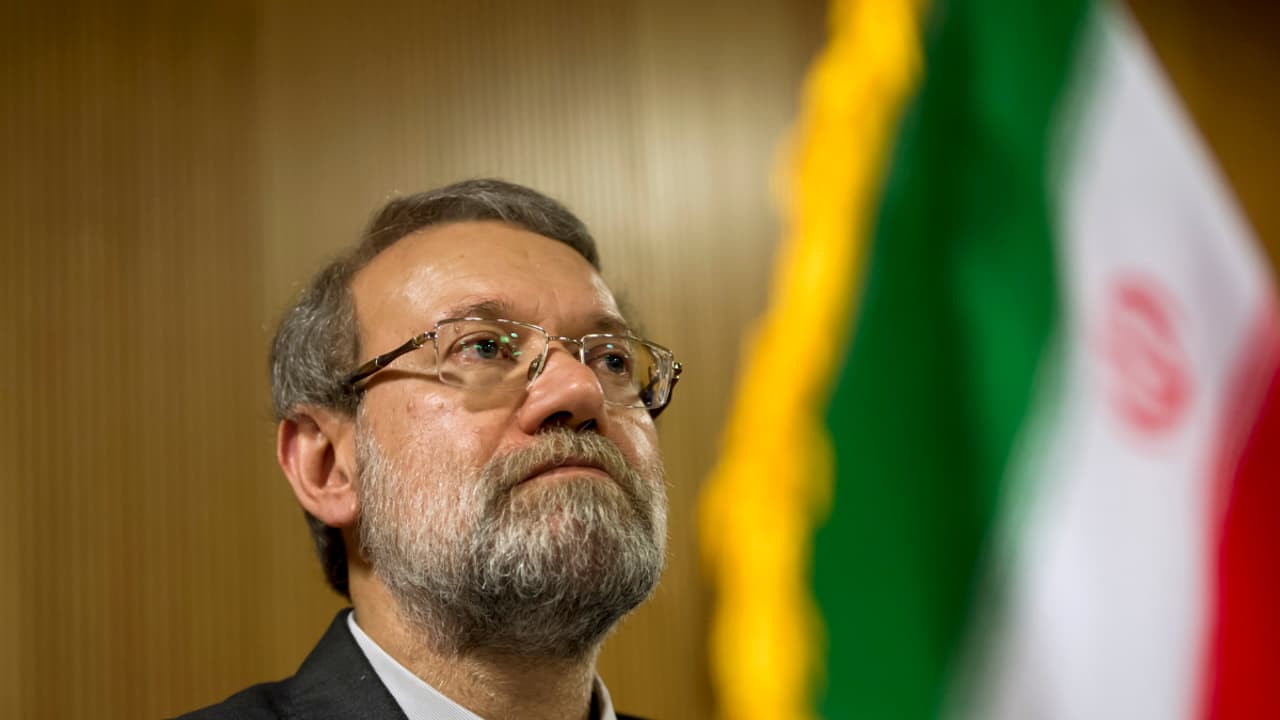
Ali Larijani, Iran's top national security official and de facto leader, was killed in a targeted Israeli airstrike near Tehran on March 17, 2026. After Ayatollah Khamenei’s assassination, Larijani became Israel's primary target. He was located at his daughter's home using intelligence from local informants.
Ali Larijani: Iran’s Most Powerful Figure After Khamenei
Iran’s top national security official Ali Larijani, widely regarded as the most powerful Iranian leader after Supreme Leader Ayatollah Ali Khamenei, was killed in an Israeli airstrike near Tehran on March 17, 2026.
Larijani, who served as Secretary of Iran’s Supreme National Security Council, had effectively become Iran’s de facto leader following Khamenei’s assassination at the end of February. His strategic influence over Iran’s defence and foreign policy made him a prime target for Israeli and US forces.
Larijani: Israel’s Second Top Target
Following the assassination of the influential Ayatollah Ali Khamenei, Iran’s security chief Ali Larijani became Israel’s “number one target,” according to The Jerusalem Post. However, locating him proved extremely difficult, as Khamenei’s death had driven senior Iranian officials to adopt elaborate security measures. Larijani was no exception, frequently moving between secret hideouts and implementing precautionary strategies to avoid detection.
Related Articles

For the two weeks leading up to his death, Larijani constantly shifted locations, making it nearly impossible for Israeli intelligence to track him. Ultimately, he was discovered while visiting his daughter on Tuesday. The strike on her residence in Pardis, a suburb of Tehran, killed Larijani, his son, a deputy, and several bodyguards, according to the Iranian semi-official Fars news agency.
Also Read: Israel Kills Iranian Intel Minister, Third Top Official in Two Days
Intelligence from Locals Played a Role
Reports suggest that Israeli intelligence received crucial information from residents of Tehran, which helped identify Larijani’s location. An Israeli official cited by Iran International described the tips as “valuable intelligence” that made the operation possible.
The official added that Larijani’s recent public appearances, including attending Quds Day rallies despite warnings of potential strikes, had exposed him to surveillance. These events, combined with media interactions, allowed Israeli operatives to pinpoint his whereabouts. He referred to Larijani’s visible presence at rallies as “arrogant behaviour” that ultimately contributed to his identification.
Larijani’s death sent shockwaves through Tehran and the Middle East, dramatically weakening Iran’s leadership structure. Described as a “backroom powerbroker” pivotal to Iran’s military and diplomatic strategy, analysts note that his removal “would decrease the chances of finding a low cost political solution to end the war.” Iran state media confirmed Larijani’s killing and honoured him as a martyr, while Tehran vowed decisive retaliation.
Iran’s Retaliation and Escalating Tensions
In response to the strike, Iranian forces launched missile attacks on Israeli territory, heightening fears of a broader regional escalation. Larijani’s killing, along with other prominent leaders like Basij militia commander Gholamreza Soleimani, represents a deliberate effort by US and Israeli forces to decapitate Iran’s leadership and alter the strategic balance in the Middle East war.
The Strategic Implications
With Larijani gone, Iran’s decision-making may become fragmented, creating opportunities for both diplomacy and further escalation. His death underscores the intensity of targeted strikes in modern warfare, illustrating how intelligence, local informants, and precision airstrikes can reshape regional power dynamics in a conflict already marked by unprecedented instability.