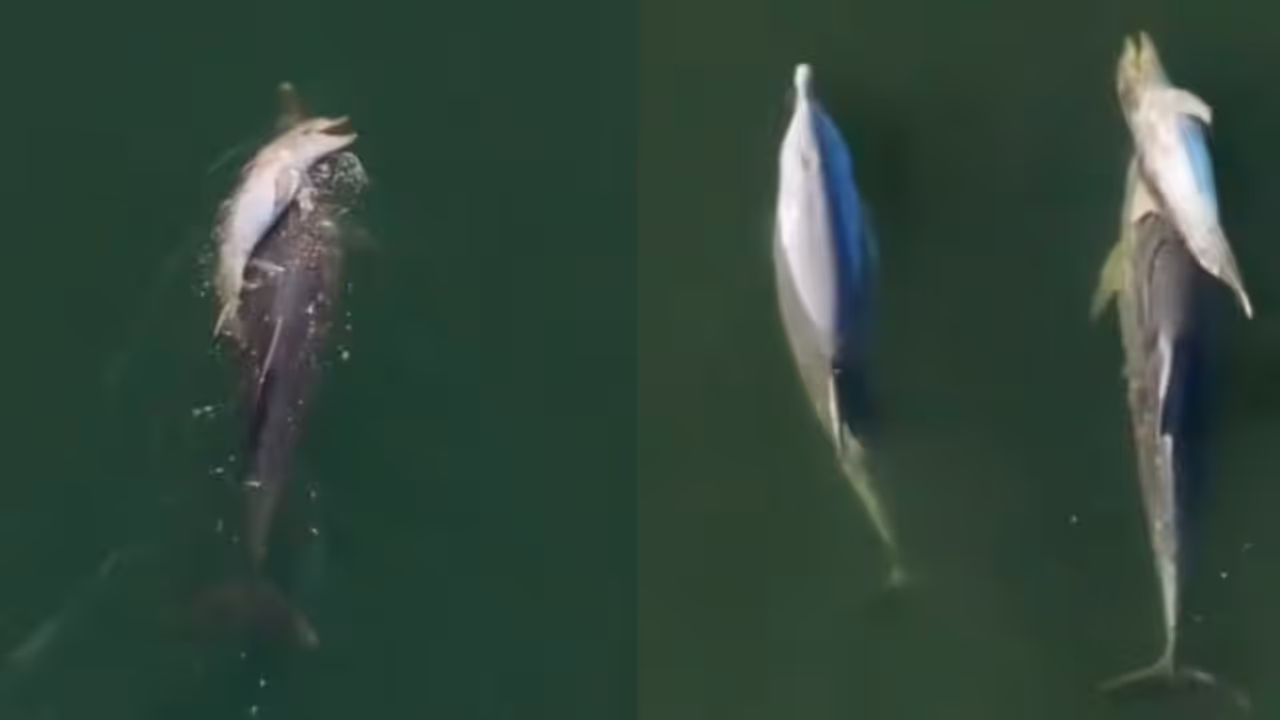
A heartbreaking video shows a bottlenose dolphin, Fraggle, carrying her deceased calf for over six days in the Indian Ocean. This tragic event, captured by researchers, has renewed discussions about whether animals like dolphins experience grief, especially given the supportive behavior of her pod.
Millions of people have been moved by a heartbreaking video of Fraggle, a bottlenose dolphin, carrying her deceased calf's body around the Indian Ocean for over six days. Discussions over whether animals feel sadness in ways that are similar to human feelings have been rekindled by the tragic scene.
The video, which was taken with a drone by the Australian conservation group Geographe Marine Research, shows Fraggle continuing to swim with her pod while carefully resting her calf on her body. It was estimated that the calf was barely two weeks old when it passed away. Researchers familiar with Fraggle's history revealed that this was not the first time she had suffered the loss of a calf. According to the conservation team monitoring the dolphins, she had previously lost four calves, making this latest tragedy especially heartbreaking.
Researchers have found that dolphin moms frequently utilise their head, back, or rostrum to keep a dead baby afloat. They may do this for a few days before releasing go.
Related Articles

The way the other dolphins in Fraggle's pod behaved was one of the most heartwarming scenes in the video. Instead of abandoning her, they stayed close by as she carried her calf, seemingly travelling with her.
Watch Heartbreaking Viral Video
Over the years, marine researchers have seen comparable behaviour in a number of whale and dolphin species. Researchers believe that cetaceans exhibit strong parental ties, intricate social interactions, and behaviours that are generally thought to be congruent with grieving or grief-like responses, even if they are hesitant to attribute human emotions to animals.
Dolphins are among the most intelligent marine animals. They are recognised for their complex cognitive abilities through advanced communication, long-term social bonds, collaboration, and the capacity to recognise themselves in mirrors. The emotional video quickly spread across social media, where thousands of viewers shared their thoughts on the remarkable display of maternal attachment.