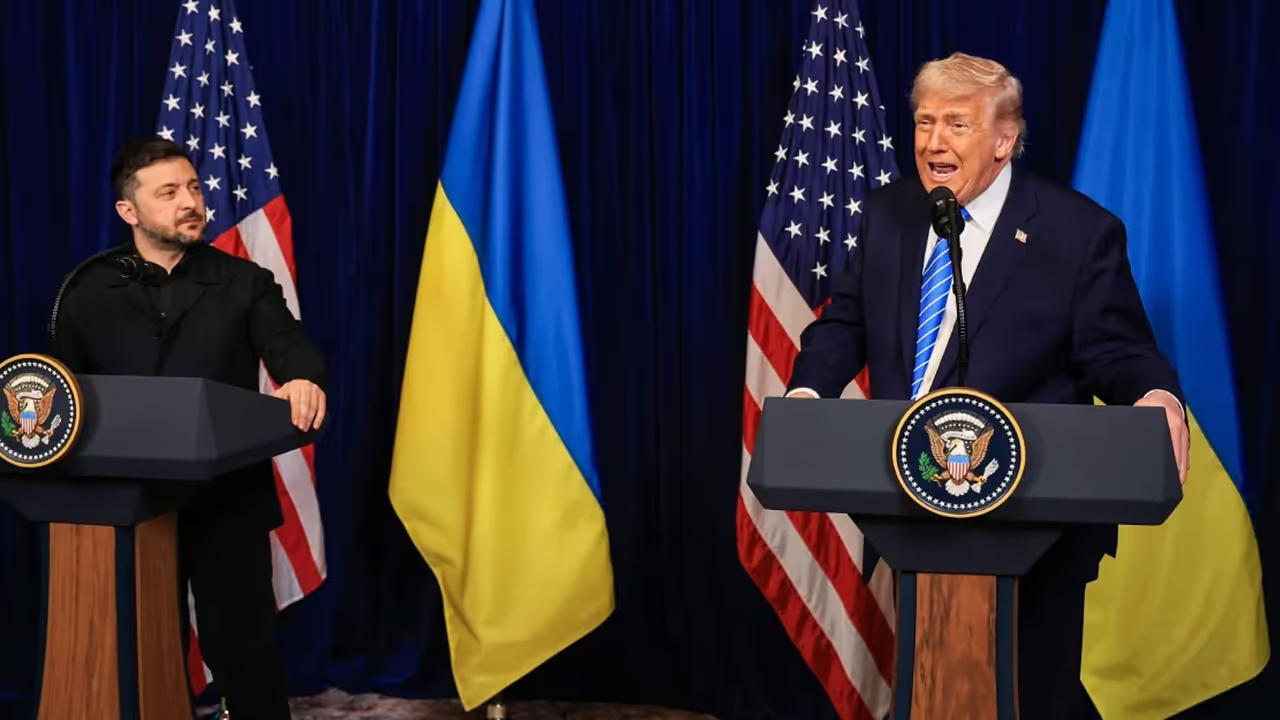
US President Trump and Ukrainian President Zelenskyy met in Florida, reporting substantial progress on a peace deal. They agreed on most of a framework, including security guarantees for Ukraine, with support from European leaders.
In a high-profile diplomatic effort to end the nearly four-year war between Russia and Ukraine, US President Donald Trump and Ukrainian President Volodymyr Zelenskyy met at Trump’s Mar-a-Lago estate in Florida on December 28, 2025. The meeting generated cautious optimism as both leaders described substantial progress toward a peace deal, but stressed that major issues - especially the status of the Donbas and other territorial disputes - remain unresolved.
Progress Made
The talks focused on a 20-point peace proposal that had evolved from earlier, more controversial drafts. According to the leaders, approximately 90–95% of the framework has been agreed upon. This includes broad consensus on security guarantees for Ukraine - a cornerstone for Kyiv’s willingness to pursue peace. Trump indicated that security arrangements are close to 95% complete, and both sides agreed that this element is a central milestone toward lasting peace. Zelenskyy echoed that key military and security aspects are fully aligned.
Beyond bilateral discussions, Trump and Zelenskyy also engaged in follow-up calls with several European leaders - including officials from the UK, France, Germany, Italy, Poland, and the European Commission - highlighting the multilateral dimension of the peace effort. These leaders reaffirmed their support for Ukraine’s sovereignty and role in shaping any final agreement.
Related Articles

Key Outstanding Issues
Despite the optimism, territorial questions remain the most significant sticking point. In particular, the future of the Donbas region - which Russia has occupied or claimed control over - has yet to be resolved. Both Trump and Zelenskyy acknowledged that Donbas remains “unresolved,” with competing visions for how it should be administered post-conflict. Trump said negotiations are progressing, but that more work is needed. Zelenskyy maintained Ukraine’s position that it will not relinquish territory without clear legal and political safeguards.
Another unresolved topic is the status and control of the Zaporizhzhia nuclear power plant, underscoring the breadth of complex technical issues tied to any peace arrangement.
Context: Conflict and Diplomacy
The talks took place against the backdrop of intensified Russian military activity, with recent strikes on Kyiv and other cities underscoring the fragility of the situation and the dire human cost of the war. Both leaders described the meeting as “productive,” but Trump was careful to note that no formal agreement has yet been signed and that the conflict could still stretch on unless remaining gaps are closed.
Next Steps
Trump and Zelenskyy both signaled that further negotiations are planned, including follow-up discussions in Washington in January involving US, Ukrainian, and European representatives. These sessions are expected to focus on ironing out the final details of the peace framework, particularly regarding territorial questions and security arrangements. Failure to resolve these could delay - or even derail - a comprehensive peace pact.
Conclusion
The Mar-a-Lago meeting represents a diplomatic milestone in the long-running effort to end the Russia-Ukraine war. While both leaders reported notable convergence on many elements of a peace plan, the deep-seated territorial disputes, especially around Donbas, pose major hurdles. Continued multilateral engagement with European partners and future negotiations will be critical in transforming this near-agreement into a lasting peace settlement.