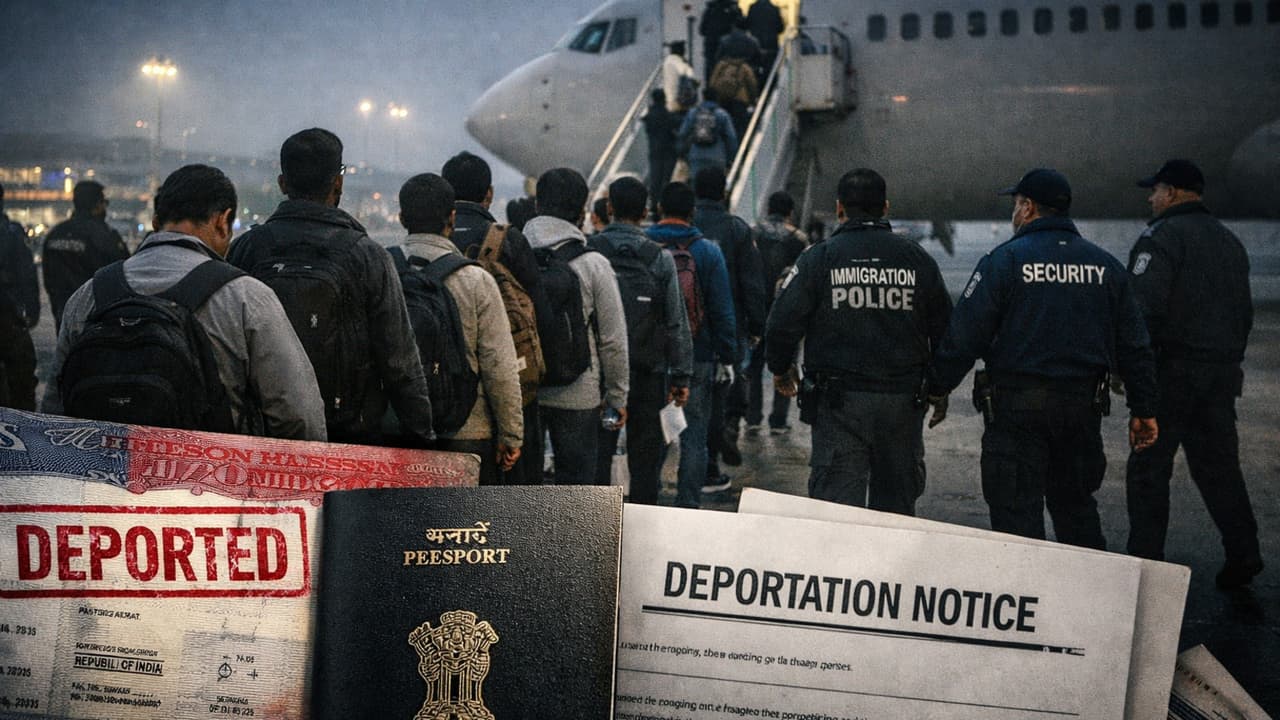
Data from India's Ministry of External Affairs shows Saudi Arabia deported the most Indian nationals in 2025, with over 11,000 cases. This number is significantly higher than the 3,800 deported from the United States, challenging common perceptions.
Recent data presented by India’s Ministry of External Affairs (MEA) in the Rajya Sabha has revealed a striking trend: Saudi Arabia has deported more Indian nationals than the United States and any other country in 2025.
According to the official figures, over 24,600 Indian citizens were deported from 81 countries this year, and Saudi Arabia alone accounted for more than 11,000 of those deportations - a number that eclipses the roughly 3,800 Indians deported from the United States in the same period.
The revelation challenges common perception. While the United States has often been viewed as the country that deports the most Indians due to its stringent immigration policies, the 2025 figures tell a different story.
Related Articles

Although the US figure of 3,800 is the highest it has seen in the last five years, it is still significantly lower than Saudi Arabia’s count. Most deportations from the US involved private-sector employees and occurred mainly from Washington DC and Houston, reflecting tighter scrutiny on documentation, visa status, work authorization, and overstays under the current administration.
The bulk of deportations from Saudi Arabia is linked to visa violations, overstays beyond the validity of visas or residency permits, working without proper permits, breaches of immigration or labour laws, absconding from employers, and involvement in pending civil or criminal cases. Saudi Arabia hosts a large Indian expatriate population, particularly in construction, caregiving, domestic work, and other labour-intensive sectors, which may partially explain the high numbers.
The MEA’s dispatch indicates that visa overstays remain the most common cause of deportations in Gulf countries. Across the region — including the United Arab Emirates, Bahrain, and other Gulf Cooperation Council (GCC) states — Indian workers are frequently sent back due to regulatory non-compliance or documentation irregularities. This trend highlights a broader challenge: many migrant workers may lack adequate information about host countries’ legal frameworks or may be recruited through agents who do not fully clarify immigration requirements.
Saudi Arabia’s dominance in deportation figures is also mirrored in historical data. Between 2021 and 2025, Riyadh recorded one of the highest cumulative counts of Indian deportations worldwide, even outpacing nations that Indians traditionally migrate to in large numbers for work or study.
Beyond Saudi Arabia and the United States, several other countries also recorded notable numbers of Indian deportations in 2025. These include Myanmar, Malaysia, the UAE, Bahrain, Thailand and Cambodia, each reporting between several hundred to over a thousand deportations.
Reasons vary
While visa overstays and documentation issues remain central, in Southeast Asian countries like Myanmar and Cambodia, deportation patterns have been associated with cyber slavery and fraudulent recruitment, where Indians are lured with promises of high wages only to be exploited in illegal activities and then deported when apprehended.
In addition to labour and work-related deportations, student deportations have also drawn attention. In 2025, the highest number of Indian students deported was from the United Kingdom, followed by Australia, Russia, and the United States.
The latest deportation figures underscore important implications for Indian policymakers, prospective migrant workers, and diaspora communities. They highlight the need for greater awareness among workers about immigration laws, more robust pre-departure training and legal guidance, and enhanced diplomatic engagement with host countries to protect the rights and welfare of Indian citizens abroad. Moreover, the data has prompted calls for stronger safeguarding mechanisms to help migrant workers understand and comply with foreign legal systems, reducing the risk of deportation due to inadvertent violations.
As India continues to engage with a globalized workforce, the evolving patterns in deportations - especially in major destination countries like Saudi Arabia and the United States - offer crucial insights into the current challenges faced by its overseas citizens.