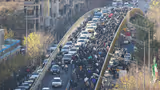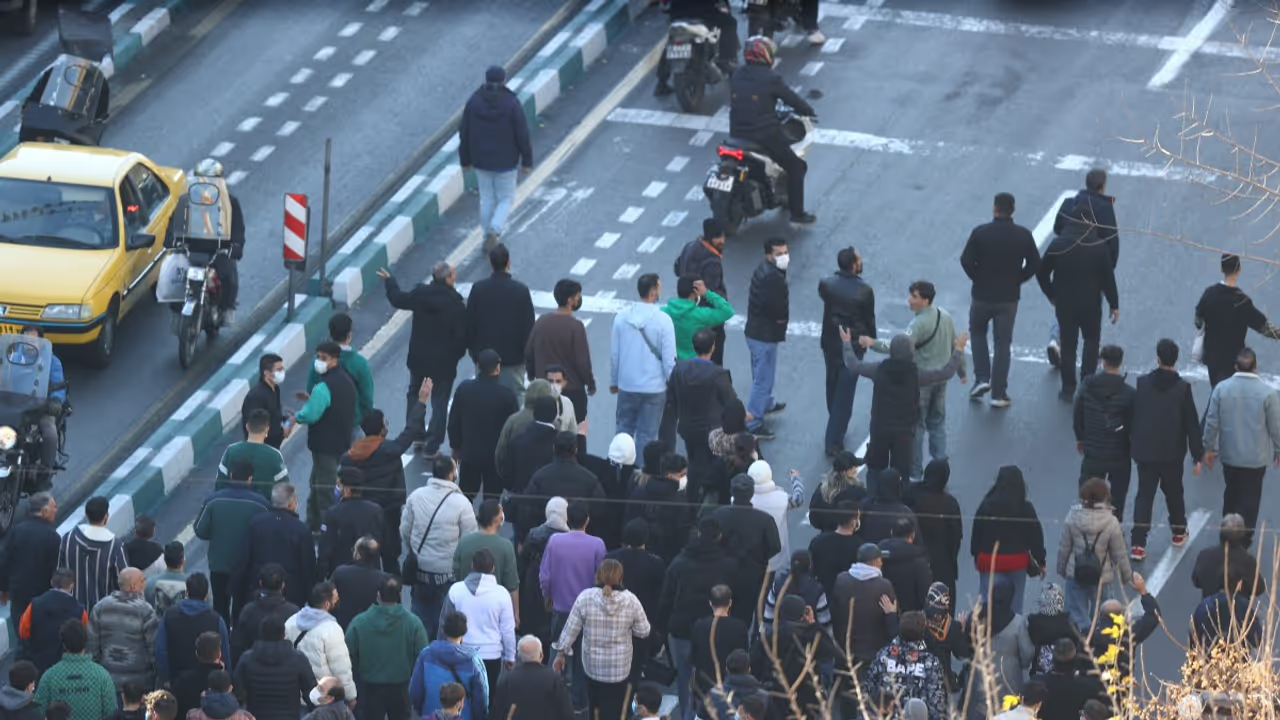
Mass protests have erupted across Iran, initially sparked by economic collapse, soaring prices, and a devalued currency. Starting with shopkeepers, the unrest has spread nationwide, involving students and workers.
A fresh wave of mass protests has engulfed Iran, drawing hundreds into the streets and echoing public fury over a collapsing economy, skyrocketing prices, and long-standing political frustrations. What began as local demonstrations over inflation and currency pain has quickly grown into sustained nationwide unrest, marked by clashes that have left several people dead and multiple buildings damaged.
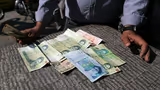
The protests initially ignited in Tehran late last week when shopkeepers walked out of bazaars and local markets in response to the government’s handling of the ailing economy and the steep fall of the Iranian rial against the dollar. Traders were furious after the currency plunged to historic lows, wiping out purchasing power and driving everyday costs beyond reach for ordinary citizens.
As demonstrations spread to cities such as Lordegan, Azna, and Kouhdasht, the movement began drawing students, merchants and ordinary urban workers, intensifying beyond purely economic grievances. In some areas, protesters shut down bazaars and chanted slogans against both economic mismanagement and the nation’s theocratic leadership, including references to Supreme Leader Ayatollah Ali Khamenei.
Related Articles

The scenes on the streets have been dramatic and, at times, violent. Hard-line semiofficial media reported that in cities like Lordegan, demonstrators attacked provincial government buildings, mosques and town halls, leading to “severe damage”, and prompting the arrest of alleged protest leaders. Tear gas and other crowd control measures have been widely deployed by Iranian security forces.
The unrest has taken a tragic toll. According to official and independent reports, at least seven people have been killed in ongoing clashes, including both protesters and security personnel. In some provinces, state media confirmed fatalities, while activist sources cite additional unverified deaths in several cities.
Iran’s government response has been mixed. Officials, including President Masoud Pezeshkian, have publicly acknowledged the protesters’ economic hardships and expressed willingness to engage in dialogue. On state television, Pezeshkian noted that without addressing “people’s livelihoods,” the situation could deteriorate further.
But the authorities have also moved to suppress unrest. Police have been deployed across urban centres, and reports of arrests — particularly in Tehran’s Malard district — show a firm security reaction. More than 30 people were reported arrested in the capital alone on charges of disturbing public order, according to regional news outlets.
The backdrop to this unrest includes years of economic strain. Long-standing US and Western sanctions, linked to Tehran’s nuclear ambitions, have crippled trade and foreign investment, while regional tensions and the cost of recent military conflicts — including a 12-day clash with Israel — have further weakened state finances.
Though rooted in immediate economic grievances, the protests have broadened in tone. Many demonstrators are now voicing broader discontent with Iran’s political system and the theocratic elite seen as resistant to meaningful reform. In videos circulating on social media platforms, crowds have been heard chanting against the regime’s leadership, blending economic outrage with political calls for change.
This blend of frustration has historical resonance. Iran last experienced major nationwide protests in 2022, following the death of Mahsa Amini in police custody — a moment that catalysed widespread anger over social freedoms and state repression. While the current demonstrations have not matched that previous scale yet, analysts see a clear overlap between economic desperation and deeper societal dissatisfaction.
Economic indicators reflect the severity of the crisis. Inflation in Iran officially exceeded 40 per cent last month, with price increases outpacing wage growth. The depreciated rial has eroded savings and accelerated the cost of essentials like food, fuel and healthcare, driving ordinary Iranians — including university students and small business owners — into the streets in protest.
For now, authorities are attempting to balance a dual strategy: concessions and crackdown. By acknowledging economic hardships and offering to listen, the civilian government seeks to calm angry crowds. Simultaneously, the use of security forces and the arrest of key figures signal a determination to contain dissent.
Whether this unrest will expand into a sustained challenge to Iran’s leadership remains uncertain. Yet the protests reflect profound public anger at economic stagnation, loss of trust in governance, and a widening disconnect between the state and the everyday realities faced by millions of Iranians.