
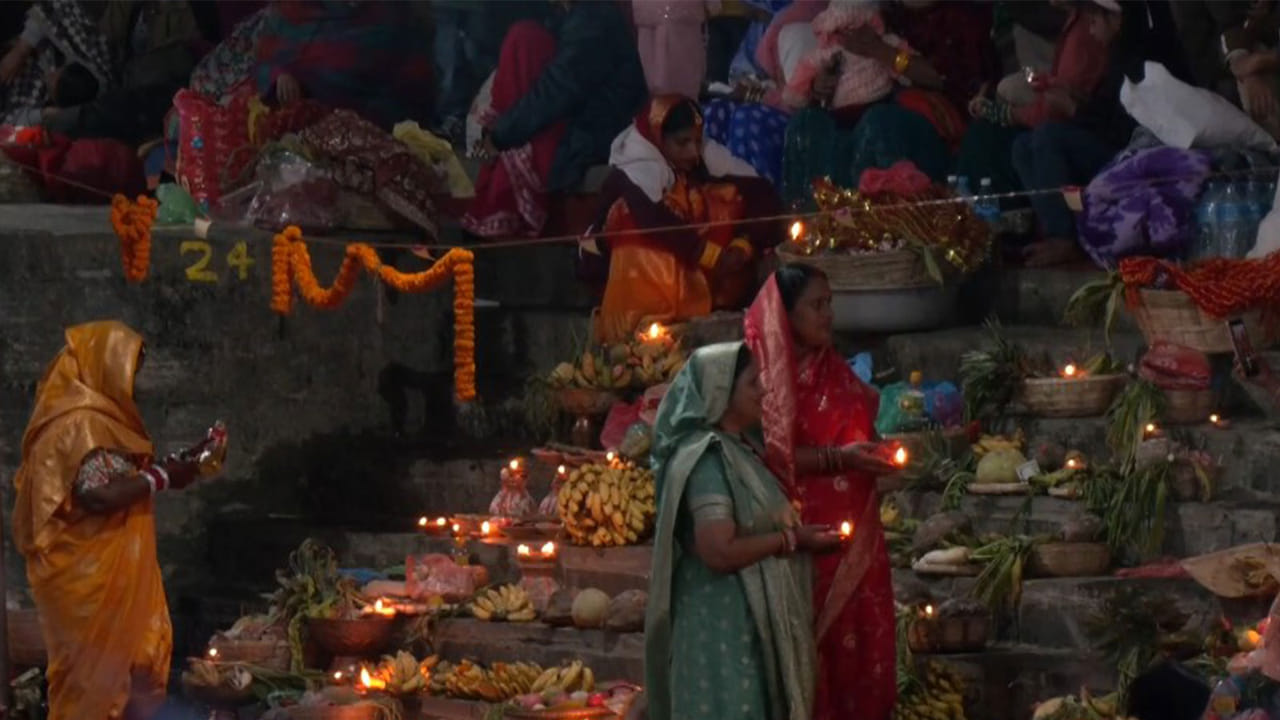
Devotees in Kathmandu observe the third day of Chhath, offering prayers and delicacies to the Sun God. Worshippers have gathered along the Bagmati River, seeking the well-being and long lives of family members during this sacred festival.
Devotees Gather In Kathmandu As The Arduous Chhath Festival Begins
Kathmandu [Nepal], November 15 (ANI): Devotees in Kathmandu thronged to nearby holy water bodies on Sunday evening, offering delicacies to Lord Sun as they prepare to stay awake for the whole night as the arduous fasting of Chhath enters its third day. The festival dedicated to the Sun sees devotees worshipping and making offerings to the setting and rising sun. On Monday morning, the fasting devotees would make offerings to the rising sun and break the fast which they have been observing for three days. Tents and arrangements have been made alongside the embankments of the Bagmati River in Gaurighat along the Pashupatinath Temple premises in the capital, Kathmandu, for those who celebrate Chhath.
“It’s a festival of religion; people have a lot of aastha (faith) in this festival. I know that Chathi Maiya is the daughter-in-law of lord Shiva and Parbati; they had the son Kartikeya, and she was married to her. We know that she is also the sister of Suryadev- the Sun God,” Preeti Labh, a devotee from Kathmandu, told ANI. Chhath, a festival of benediction to lord "Surya" – the Sun- starts from the day Kartik Shukla Chathurthi and ends on Shukla Saptami according to the lunar calendar. Thekuwa, Khajuri and Kasar along with verities of dry fruits, fruits and flowers constituent the basket popularly known as "Dhakri". Devotees especially take the fast and worship the sun for long lives and well-being of their family members, also praying for their expectations and attempts to come true. Chatth is celebrated for all the members of the family. Hindu religion adores and respects Lord Sun, who at the time of Chhath is also called "Chatti Mata" or the goddess of Chhath. Chatth, which was especially celebrated by elders or people from southern regions of Nepal in the past now have been able to drag the attention of the people from other regions and communities. Some of the people believe this festival will empower women. (ANI)








