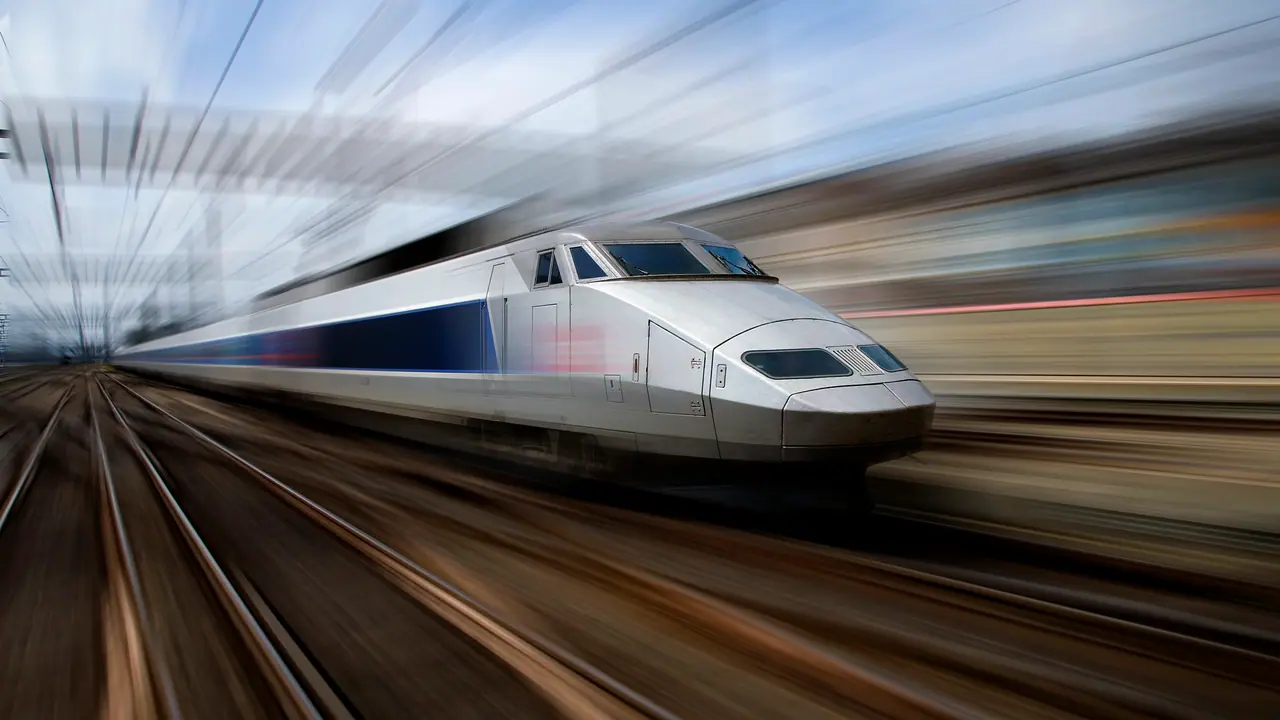
China has tested a new maglev train that touches airplane-level speed in seconds. Its silent, floating design hints at the future of ultra-fast travel.
In a massive leap for transportation technology, China has successfully tested a magnetic levitation (maglev) train that accelerates to 620 kilometres per hour in just seven seconds. The test marks the creation of the world’s fastest ground-level train, a major step forward in high-speed, low-noise travel.
The ultra-speed train functions without touching traditional tracks. Instead, it floats using powerful magnetic forces, eliminating the friction that limits conventional rail. This alleviation creates a smooth and virtually silent ride, while also reducing energy use and wear on the system.
The prototype was tested in a vacuum tunnel, an enclosed tube with drastically reduced air pressure. This environment allows the train to hit high speeds with minimal air resistance. In this case, the train touched 620 km/h (about 385 mph) in only seven seconds, a performance that inches closer to aircraft-like travel on land.
Related Articles

To put its speed in perspective, most current commercial aircraft, like the Boeing 737 cruise between 885 and 925 km/h. While this maglev train is not quite there yet, its rapid acceleration and floating design make it a strong rival for short-haul flights. Its developers even claim that with further testing, it could potentially reach speeds up to 1000 km/h.
The train’s current form is unmanned and still a prototype, but the effects of its success are wide-ranging. Presently, the world’s fastest maglev systems operate between 430 and 600 km/h. This test smashes through that ceiling, and places China ahead in the race for next-gen transportation.
Environment Friendly Floating Train

Beyond speed, the train promises an environmentally sound solution. The maglev system, combined with the vacuum tube, significantly cuts noise pollution and energy consumption. The result is a quieter, smoother, and more efficient travel experience, with less impact on surrounding environments.
Looking ahead, China plans to refine this technology for long-distance passenger and cargo transit. While no deployment date has been confirmed, the test shows the country's aggressive pace in developing high-speed travel options.
China’s new maglev prototype sets a new benchmark in the global competition among nations working on futuristic rail systems, including Japan, Europe, and the US.
If these plans succeed, this could eventually reshape how cities are connected, shortening cross-country travel time from hours to minutes and offering a new blueprint for inter-city transit.