
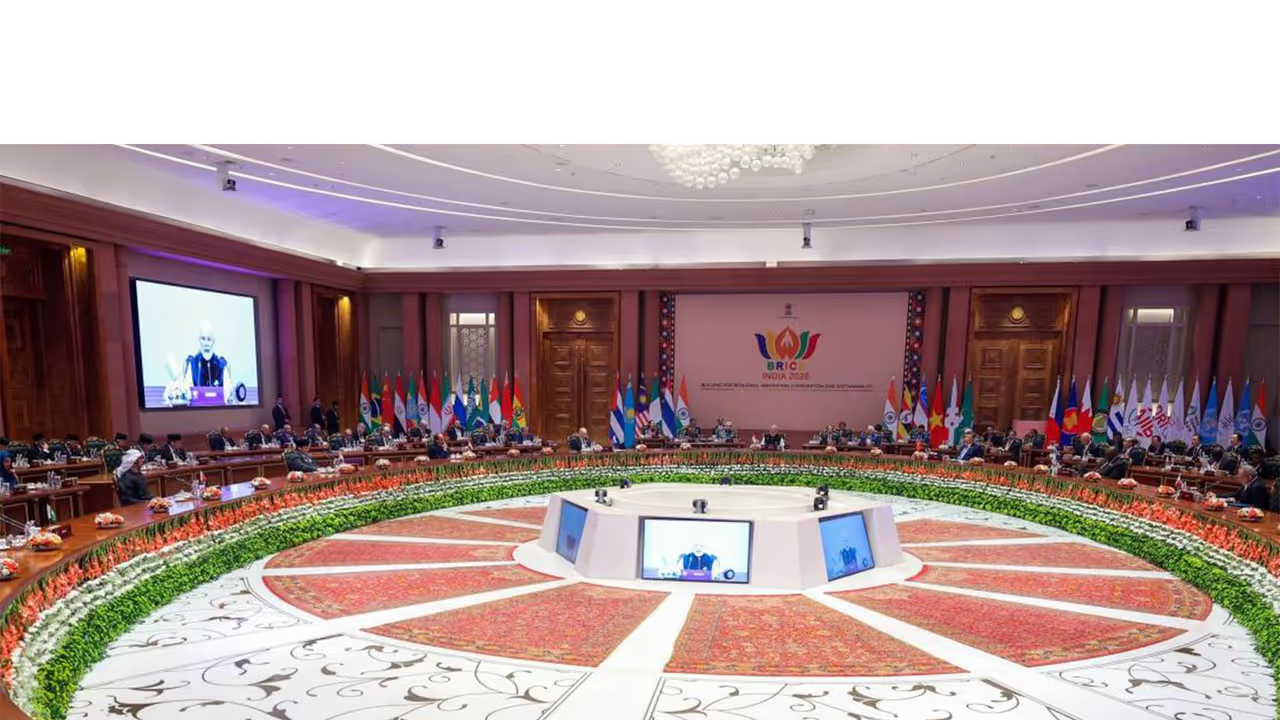
The BRICS New Delhi Declaration opposes unilateral climate measures like carbon border adjustments, arguing they harm developing nations. The group calls for greater financial and tech support for these countries to tackle climate change effectively.
Opposition to Unilateral Climate Measures
“We oppose unilateral, punitive, discriminatory and protectionist measures that are not in line with international law, such as carbon border adjustment mechanisms,” the BRICS declaration said. It added that the grouping was concerned that such measures “undermine efforts by countries, specifically the developing countries, aimed at addressing the adverse impacts of climate change, increasing adaptive capacity and resilience.”
BRICS reaffirmed its commitment to multilateralism in tackling climate change and said it would remain united in pursuing the objectives of the UN Framework Convention on Climate Change (UNFCCC) and the Paris Agreement.
Commitment to Multilateralism and Equity
The declaration called for the full and effective implementation of the Paris Agreement, including its provisions on mitigation, adaptation, loss and damage and the provision of means of implementation to developing countries. It stressed that climate action should reflect “equity and the principle of common but differentiated responsibilities and respective capabilities, in light of different national circumstances.”
Call for Financial and Technological Support
The grouping also highlighted the disproportionate burden of climate change on emerging markets and developing economies, noting substantial gaps in funding, particularly for adaptation measures. “Developed countries shall provide additional, adequate, predictable, accessible financial resources, capacity building support, technology development and transfer to developing countries for adaptation,” the declaration said.
BRICS further noted that high debt burdens are constraining climate and development investment in many developing countries and called for coordinated international action to enhance debt sustainability, expand fiscal space and support sustainable development and climate financing.
Areas of BRICS Cooperation
The grouping encouraged greater cooperation on people-centric and community-based adaptation, recognising traditional knowledge systems, indigenous and local practices, local innovations and community experiences as important to strengthening climate resilience. It also welcomed the BRICS Principles for advancing Climate Resilience through People-Centric and Community-based Adaptation based on Traditional Knowledge and underscored the importance of nationally determined just transitions and balanced mitigation and adaptation actions.
Disaster Resilience and Infrastructure
On disaster resilience, BRICS stressed that stronger infrastructure systems are vital for sustainable development and called for enhanced early warning systems and risk-informed planning to improve preparedness and response capacities.
Research, Trade, and Carbon Markets
The declaration highlighted the potential of the BRICS Climate Research Platform and the BRICS Laboratory for Trade, Climate Change and Sustainable Development in promoting climate action and building resilience among member countries. It also supported cooperation on carbon markets, particularly capacity building and exchange of experiences, and looked forward to implementing the Memorandum of Understanding on the BRICS Carbon Markets Partnership.
Forest Conservation and Land Restoration
BRICS also underlined the critical role of forests in conserving biodiversity, water basins and soils, combating desertification, land degradation and drought, and serving as vital carbon sinks. The grouping welcomed the adoption of the BRICS Principles for Integrated Landscape-Based Greening and Land Restoration and the Common Understanding for Wildfire Preparedness and Response across BRICS countries. It also welcomed the Tropical Forest Forever Facility launched at the Belém Climate Summit, describing it as an innovative mechanism aimed at mobilising long-term, results-based financing for tropical forest conservation.
Championing the Global South
At the broader global level, BRICS emphasised the role of the Global South in responding to major international challenges, including climate change, and said member countries would continue voicing the concerns and priorities of developing nations. “BRICS countries will continue playing a pivotal role in voicing the concerns and priorities of the Global South,” the declaration said, while calling for a more just, sustainable, inclusive, representative and stable international order based on international law.
The declaration comes as India hosts the 18th BRICS Summit in New Delhi on September 12-13, with India's Chairship guided by the theme “Building for Resilience, Innovation, Cooperation and Sustainability." (ANI)
(Except for the headline, this story has not been edited by Asianet Newsable English staff and is published from a syndicated feed.)