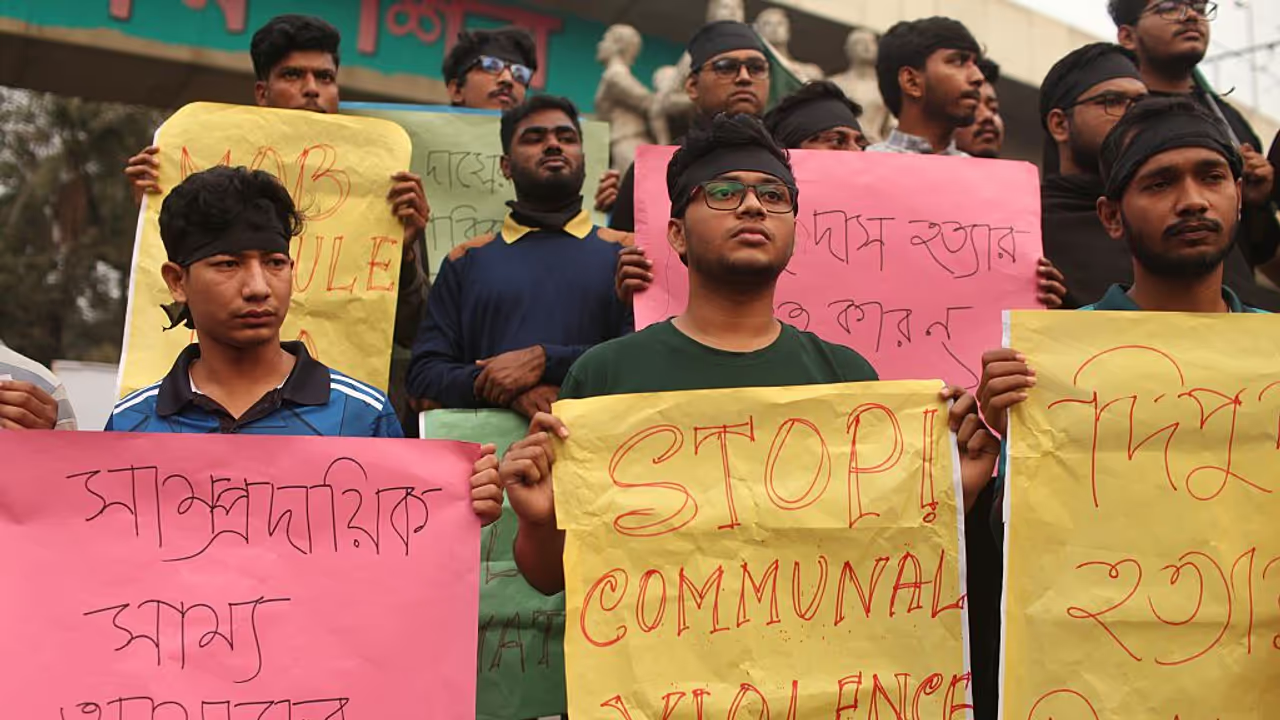
Minority groups in Bangladesh protest over the lynching of Hindu worker Dipu Chandra Das, media attacks, and rising mob violence, accusing the interim government of failing to protect minorities.
A wave of unrest is gripping Bangladesh as minority communities protest against the interim government’s inability to protect them from targeted violence. The latest protests follow the brutal lynching of Dipu Chandra Das, a Hindu garment factory worker, and a series of attacks on media offices and cultural groups, highlighting deepening fears among the country’s minorities.
A Human Chain Against Violence
In Dhaka, leaders of Hindu and other minority organizations formed a human chain outside the Jatiya Press Club, demanding justice and accountability for Das’ murder.
“He (Muhammad Yunus) claims he will build a humane Bangladesh, but in reality, he is an inhumane chief adviser,” said Manindra Kumar Nath, Joint Coordinator of the Minority Unity Front, addressing the protesters.
Related Articles

Das, a resident of central Mymensingh city, was dragged out of his factory by a mob last Thursday and lynched. His body was set ablaze, triggering widespread outrage. Factory workers, students, and human rights organizations joined protests, while India also expressed concern over the incident.
A Spike in Targeted Attacks
The Hindu population in Bangladesh has faced a surge in attacks following the ouster of former Prime Minister Sheikh Hasina in August last year. Authorities have been scrambling to respond. The Rapid Action Battalion (RAB) arrested 10 suspects connected to Das’ lynching, and two more were later taken into police custody.
A police headquarters spokesperson confirmed, “12 people are now in jail or custody as investigations continue into the killing of Das.”
The interim government also announced nine arrests related to violent attacks on the mass-circulation newspapers Prothom Alo and Daily Star, and cultural groups such as Chhayanat and Udichi Shilpi Goshthi.
“Police and other law enforcement agencies informed the Chief Adviser that they primarily identified 31 suspected perpetrators of these incidents, analysing video footage,” said a statement from the press wing of the Chief Adviser’s office.
Authorities also reported that video analysis detected three people attempting to create unrest outside the residence of India’s assistant high commissioner in Chattogram. The government has urged citizens to remain vigilant against hate-driven violence, arson, and destruction, emphasizing that those responsible will not be spared.
Political and Social Tensions Escalate
The wave of violence comes in the aftermath of the death of Sharif Osman Hadi, a radical right-wing cultural leader who was shot on December 12 in Dhaka. Hadi, known for his anti-Awami League and anti-India rhetoric, was also involved in the violent July 2024 uprising that led to the ouster of Hasina’s government.
Unrest continues in southwestern Khulna city, where unidentified gunmen shot Motaleb Shikder, another leader linked to the 2024 student-led uprising. Shikder remains in critical condition.
BNP secretary general Mirza Fakhrul Islam Alamgir called for national action against mob violence, stating, “Those of us who truly want to see Bangladesh as a genuinely independent, sovereign and democratic country cannot remain merely aware any longer; we must stand up. It is time to put up resistance against mobs.”
At a press conference of the Editors' Council and Newspaper Owners' Association of Bangladesh (Noab), Alamgir lamented, “I am 78 years old and the Bangladesh we are seeing today is not the Bangladesh I ever dreamed of.”
Journalists and Experts Raise Alarm
British journalist David Bergman, who has close ties to Bangladesh, criticized the extremist mindset driving these attacks. In a Facebook post, he wrote:
"There is a strong vocal group in Bangladesh, from the right and particularly the Islamic right, who think that unless you hate the people they hate (meaning, right now India, the Awami League, etc.) as much as they themselves hate them, you are their enemies, and you are friends and agents of those they hate. This extreme and uninformed mindset is not only the enemy of a free press but is helping to prevent anything remotely like due process to develop within the country’s criminal justice system."
A Country at a Crossroads
Bangladesh is navigating a delicate democratic transition ahead of upcoming general elections. The interim government has repeatedly called for unity, restraint, and responsibility. Yet, the surge in mob violence, targeted attacks on minorities, and assaults on journalists and cultural institutions underscore the fragility of law and order in the country.
For minority communities like the Hindus, these incidents are not just headlines—they are lived experiences marked by fear, grief, and uncertainty about their future in a changing Bangladesh. The human chain protests in Dhaka signal a community demanding not only justice for individual crimes but systemic protection and recognition of their rights in the nation’s evolving political landscape.