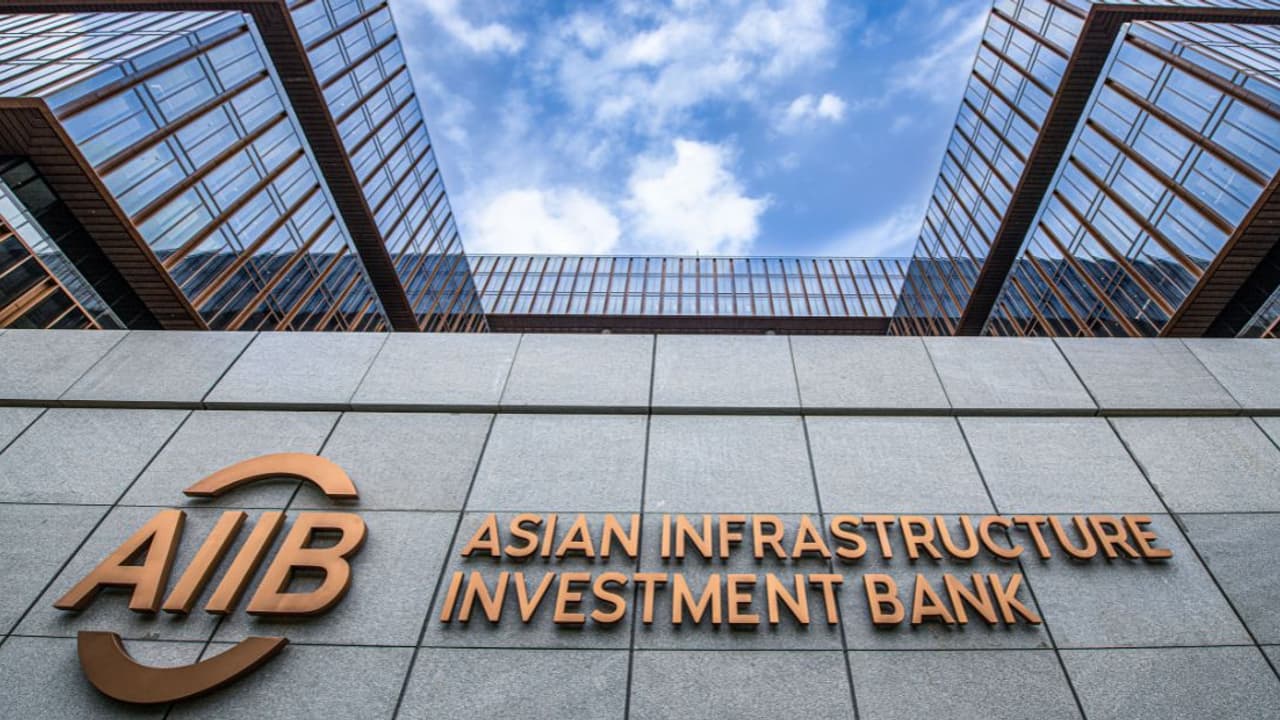
A planned return to the bond market could draw fresh attention to one of climate finance’s toughest challenges: funding resilience projects that deliver protection today while addressing long-term risks.
The Asian Infrastructure Investment Bank (AIIB) plans to return to the bond market in 2027 with another climate adaptation bond, reinforcing its focus on financing projects designed to help developing countries cope with the growing impacts of climate change.
The announcement follows the bank's latest climate adaptation bond issuance in February, when it raised AUD$500 million. The offering attracted strong investor interest, drawing demand that exceeded the available amount by 4.6 times and attracting participation from more than 40 investors. It was also priced more favourably than the institution's previous adaptation bond sale in 2025.
Speaking at an event organised with the Hong Kong Monetary Authority, AIIB Head of Funding Darren Stipe confirmed the bank intends to return to the market next year.
Related Articles

Since introducing the region's first climate adaptation bond in 2023, the Beijing-based multilateral lender has raised a cumulative AUD$1.5 billion through three separate offerings.
Stipe said the Australian market has proven particularly suitable because its benchmark transaction sizes align well with the volume of projects that qualify under the bank's adaptation financing criteria.
While the AIIB has not committed to a specific market, issuance size or maturity structure for the next offering, Stipe indicated that the institution would consider returning to a similar format if investor demand remains strong. Final decisions will depend on market conditions and the availability of eligible projects.
For climate finance observers, the announcement is significant because adaptation funding remains one of the most underfunded areas of the global climate response despite rapidly increasing climate risks.
What The Planned Bond Means For Climate Resilience Funding

Unlike many climate finance instruments that focus primarily on reducing emissions, AIIB's adaptation bonds are designed to support projects that help communities, economies and infrastructure withstand climate impacts.
Under the bank's framework, bond proceeds are directed toward projects where at least 20 per cent of total financing is dedicated to climate adaptation activities.
Current investments include water and electricity infrastructure in India, flood recovery programmes in China, climate policy reforms in Bangladesh and road reconstruction efforts in earthquake-affected regions of Türkiye.
The initiative comes at a time when the gap between adaptation needs and available funding remains substantial. Estimates cited by the AIIB indicate that Asia requires more than US$200 billion annually for climate resilience measures.
Existing funding flows, however, amount to only about US$19 billion each year.
According to Stipe, one reason adaptation projects often struggle to attract financing is that their financial benefits can be difficult to measure. Traditional infrastructure investments frequently generate direct and visible returns, whereas resilience-focused upgrades may deliver value by preventing future losses rather than producing immediate revenue.
That challenge is central to the broader policy debate around adaptation finance. Investments that strengthen water systems, protect communities from floods or improve climate preparedness can create major social and economic benefits, yet quantifying those benefits for investors is often more complex.
To ensure consistency, AIIB bases its adaptation classification on methodologies jointly developed by multilateral development banks and international development finance institutions.
The bank has also emphasised that projects must satisfy strict climate-resilience requirements, including comprehensive climate risk identification, assessment and management procedures.
Stipe argued that common definitions and standards are essential for the market's long-term development. Greater standardisation, he said, improves efficiency and helps investors evaluate projects more consistently.
The bank is also preparing an update to its sustainable development bond framework, originally introduced in 2021. The revised framework will align more closely with International Capital Market Association principles, providing clearer project eligibility requirements and more structured reporting.
Taken together, the planned bond issuance and framework update signal an effort to expand a financing model aimed at one of climate policy's most pressing challenges, which is, directing more capital towards protecting vulnerable communities before disasters occur rather than rebuilding after the damage is done.