
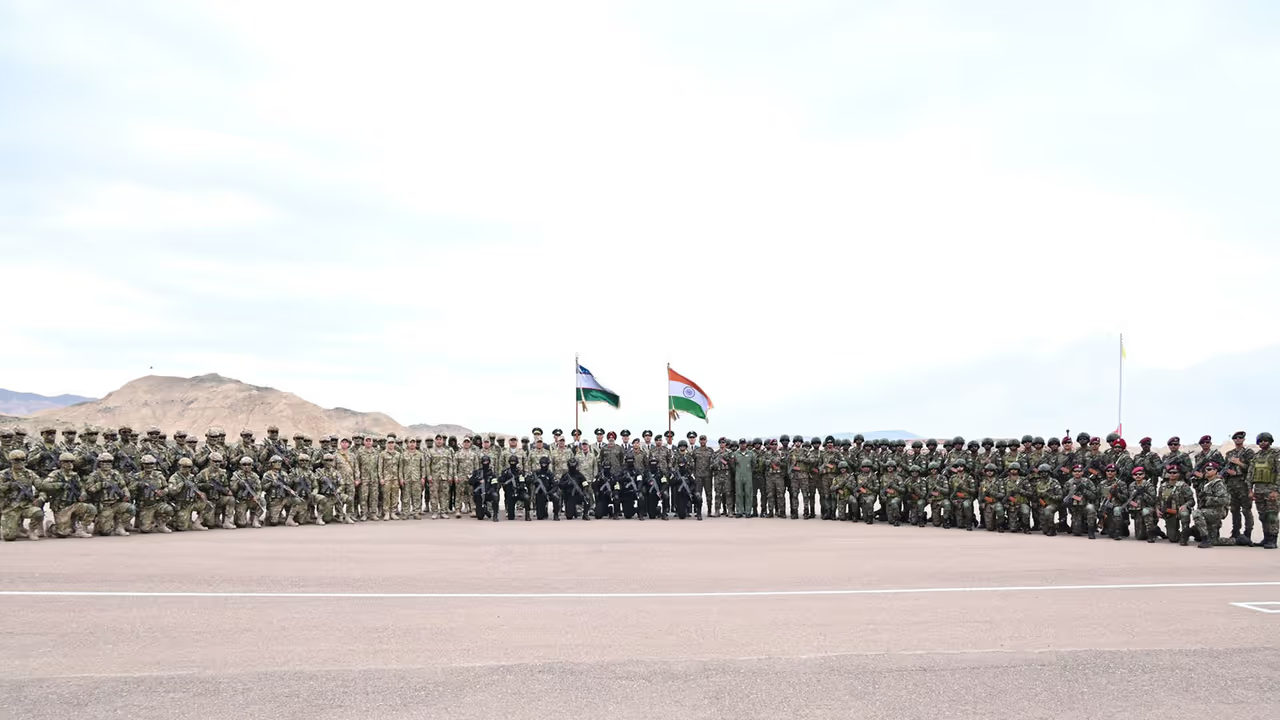
The 7th edition of the India-Uzbekistan Joint Military Exercise Dustlik has concluded in Namangan, Uzbekistan. The drill enhanced preparedness for joint operations, counter-terrorism, and reinforced military cooperation between the two armies.
The 7th edition of the India-Uzbekistan Joint Military Exercise Dustlik on Friday culminated at the Gurumsaray Field Training Area at Namangan in Uzbekistan, as per a statement by the Indian Army.
In a post on X, the Indian Army said, "The 7th edition of the India-Uzbekistan Joint Military Exercise Dustlik culminated with a final validation exercise and closing ceremony at the Gurumsaray Field Training Area, Namangan, Uzbekistan." The 7th edition of the India–Uzbekistan Joint Military Exercise Dustlik culminated with a final validation exercise and closing ceremony at the Gurumsaray Field Training Area, Namangan, Uzbekistan. The exercise enhanced preparedness for joint operations to neutralise unlawful… pic.twitter.com/EqPPJxXtL0 — ADG PI - INDIAN ARMY (@adgpi) April 24, 2026
Enhanced Military Cooperation
"The exercise enhanced preparedness for joint operations to neutralise unlawful armed groups, while providing an opportunity to exchange best practices in counter-terrorism. It reinforced military cooperation and improved interoperability between the Indian Army & Armed Forces of the Republic of Uzbekistan," it added.
Exercise Contingents
The Indian Army contingent departed on April 12 for the 7th edition of India-Uzbekistan joint military Exercise DUSTLIK.
The Indian Armed Forces contingent comprising 60 personnel was represented by 45 personnel from the Indian Army, majorly from a Battalion of the MAHAR Regiment and 15 personnel from the Indian Air Force.
The Uzbekistan contingent also comprises of approximately 60 personnel, from Uzbekistan Army and Air Force, as per a statement by the Ministry of Defence.
Objectives and Training Focus
Aim of Exercise DUSTLIK is to foster military cooperation and enhance combined capabilities to execute joint operations in semi-mountainous terrain.
It focused on high degree of physical fitness, joint planning, joint tactical drills and basics of special arms skills.
The Exercise also established a unified operational algorithm between the command-and-control structures of both the contingents for planning and execution of joint operations.
Key operational aspects that were practiced include land navigation, strike missions on enemy bases and seizure of enemy-held areas.
The Indian contingent took the opportunity to familiarise themselves with the operational procedures and drills of the Uzbekistan Armed Forces and share own operational experiences with the Uzbekistan contingent.
Final Validation Exercise
The joint training culminated in a 48-hour validation exercise aimed at validating the tactical drills for joint operations, emphasising on Preparation and Execution of Joint Special Operations, aimed at Neutralisation of Unlawful Armed Groups, the statement added.
(ANI)
(Except for the headline, this story has not been edited by Asianet Newsable English staff and is published from a syndicated feed.)