
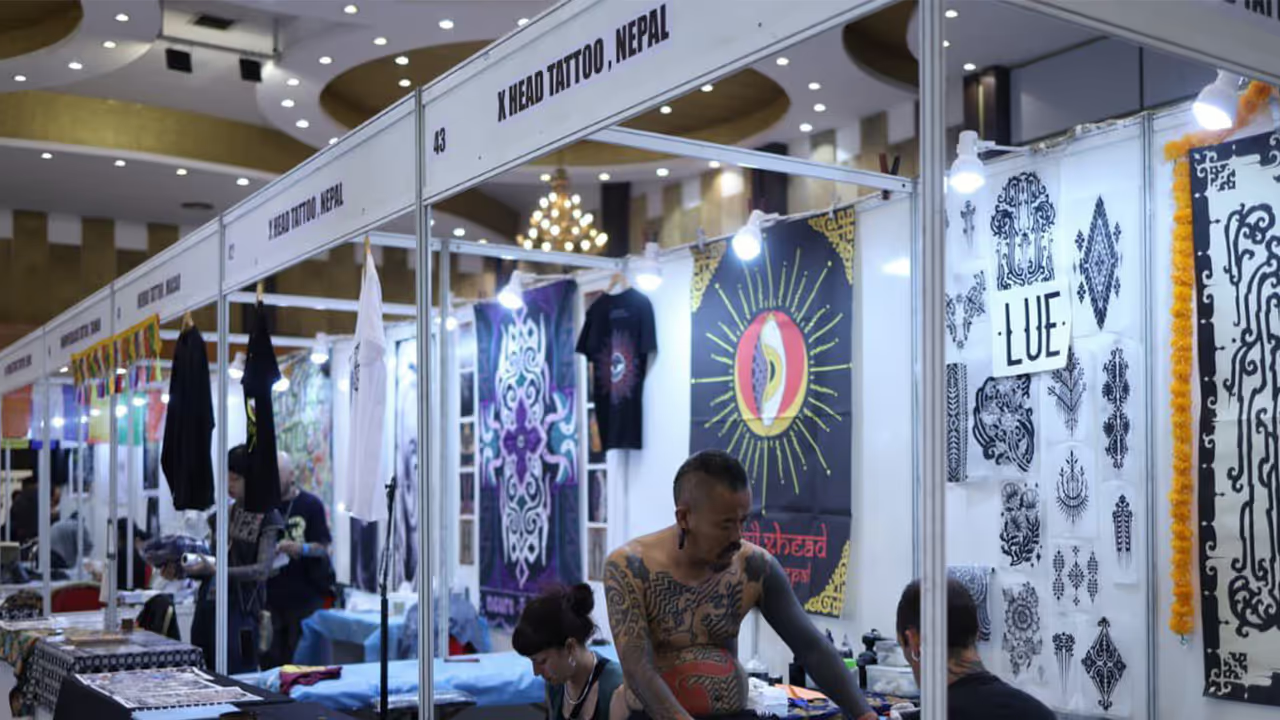
The 13th International Nepal Tattoo Convention in Lalitpur gathers 250+ artists from around 25 countries. It's a celebration of body art, blending traditional designs with modern concepts and fostering a global cultural exchange for tattooists.
The sound of buzzing tattoo machines filled the air at every stall as artists worked on intricate designs blending traditional deities with modern artistic concepts at the 13th International Nepal Tattoo Convention, which continues to celebrate body art and global tattoo culture in Lalitpur.
A Global Gathering of Artists
The ongoing convention has brought together over 250 tattoo artists from around 25 countries, showcasing a diverse mix of styles, techniques and cultural influences.
The event, which began on Friday, features artists inking a wide range of designs, including Hindu deities such as Ganesh, Hanuman, Lord Buddha, the Living Goddess Kumari, as well as contemporary and abstract concepts that fuse tradition with modern aesthetics.
Organisers said the event has become a major global platform for cultural exchange in tattoo artistry.
"We have around 250 tattoo artists from all around the world, about 25 countries, out of which we think it is around sixty per cent international and forty per cent national. Countries from Colombia, Mexico, Australia, New Zealand, China, Taiwan, there are about 25 countries, of course, from India and Nepal," Bijay Shrestha, Director at the International Nepal Tattoo Convention being held in Lalitpur, told ANI.
Creative Competitions and Showcases
Organised annually by Nepal Tattoo, the convention also features competitions among the exhibitors on a daily basis. Artists are assigned to their respective stalls to paint tattoos on the bodies of customers, following certain measurements and utilising permitted ink.
The competition broadens its scope with "Ornamental, Tribal, and Dot Tattoo," welcoming entries of any size and colour. This competition not only promises to be a feast for the eyes but also a testament to the artists' creativity and skill under pressure.
A Mission for Cultural and Artistic Exchange
"The whole point of doing this is to teach and show our national artists, because back then, it was not easy for them to travel to other conventions. So what we did was to have a convention here where we could bring artists from all around the world--different styles, techniques, and approaches to the tattoo world and art. Also, for them (international artists) to see what Nepal is all about, our rich culture and arts. It's a kind of exchange between the two sections, and that's how we have been doing it. In the past fifteen years, the quality of our artists has gone really high. Artists now travel to different conventions, countries, and they have guest spots around the world," Shrestha added.
The Deep-Rooted History of Nepali Tattoos
Tattoo culture in Nepal is one of the oldest traditions practised widely by Newa, Tharu, Gurungs, and Magar, the aboriginals of the Himalayan nation.
As per the younger generation, traditional tattoos lacked precise details, linking them more to communities and spiritual beliefs, but modern tattoo designs focus more on aesthetics. Being driven by aesthetic values, younger generations are now making a fusion of traditional beliefs with modern designs to ink on various parts of their bodies.
In the Kathmandu Valley, tattoos in earlier days were mostly done during Jatras (festivals) and Melas (carnivals) like Rato Machindra Jatra and Indra Jatra. Kathmandu's Tebahal and Bhaktapur's Thimi were famous for tattoo art, which is called "Lha: Chyogu" in the Nepali Bhasha or the Newa: language.
'Lha' in Newa: means 'flesh' and 'chyogu' means 'writing'; tattoos on the legs of Newari women symbolise their strength, and a belief follows that a person takes nothing but the tattoos on his or her body after death. On the way to heaven, if one faces hardships, he or she can sell the tattoos and thus make the journey more comfortable.
Earlier, coal and milk were mixed with plants to produce colours for the ink used to design tattoos. Now, inks are widely used, poured into machines, and then run over the sketched areas of the body.
Modern Expression and a Thriving Community
"It's really nice to be in a sense of community and getting to meet all the local artists and connect. It creates a nice community here and it runs for the art of creativity and hanging out, which is awesome. There is no feeling of too much pressure, not many expectations--go with the flow of the Nepali people and get connected," Jaya, a tattoo artist based in Australia, told ANI.
In Nepal, the trend of cultural tattooing has evolved and taken different forms. Nowadays, getting a tattoo is a way a person expresses themselves through art, words, or symbols. Nepal is now known as one of the best destinations for getting inked. Many Nepalese artists have gained international recognition for their artistic work and creativity. Nepal is a very affordable and special place for getting inked.
Global Tensions Impact Convention Turnout
However, the ongoing tension in the Middle East has had a ripple effect on this year's convention. As per the director of the convention, Bijay Shrestha, many artists are now absent.
"The last-minute cancellations because of the ban on flight routes meant people had to take different routes; even I had to take a different route. Many of my friends couldn't come because flight tickets are expensive and cancellations occurred. It has affected us--not in a big way, but it has. I miss some of my close friends who had been coming with us for the past ten years; they couldn't come because they couldn't fly," Shrestha told ANI.
(Except for the headline, this story has not been edited by Asianet Newsable English staff and is published from a syndicated feed.)