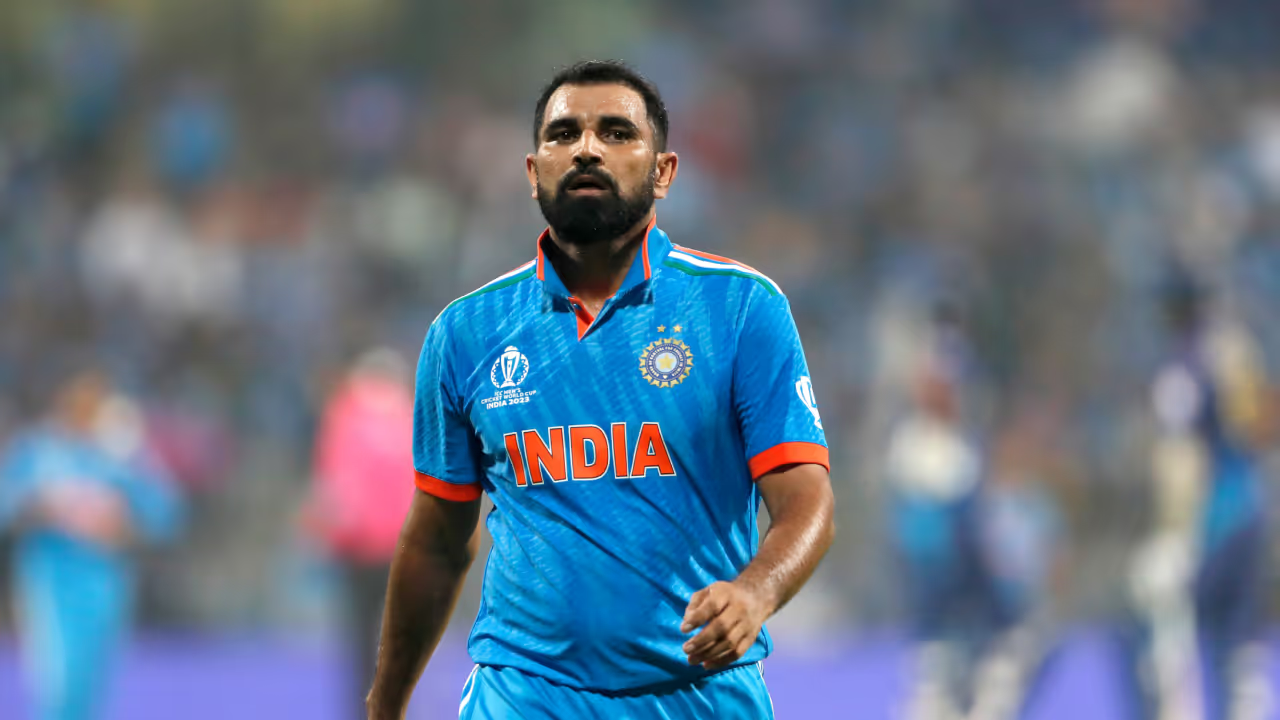
Mohammed Shami shines in domestic cricket but remains ignored by India. Fitness, form, or strategy—why is one of India’s best pacers left out ahead of New Zealand series?
Ahead of the New Zealand series, one name dominated conversations among fans and pundits alike: Mohammed Shami. Expectations were high. After all, Shami had been a consistent match-winner for India across formats. Yet, when the BCCI released the squad, there was a glaring absence—Shami’s name was nowhere to be found.
The questions came thick and fast. Why is a bowler of Shami’s caliber being denied the opportunities that stars like Rohit Sharma and Virat Kohli have enjoyed? Was the Champions Trophy his swan song for India? Or is there something deeper influencing his exclusion?
A Career That Speaks for Itself
Statistics rarely lie. In ODI World Cups, Shami has more wickets for India with a better strike rate and average than the legendary Glenn McGrath. In 2023 alone, he delivered key breakthroughs that swung games in India’s favour. Even in the last Champions Trophy, Shami was third on the wickets list, claiming nine scalps.
Related Articles

Skill-wise, Shami has arguably been the most gifted bowler India has seen in recent years. He combines pace, seam movement, and the ability to bowl under pressure—traits that make him a lethal weapon in any format. Yet, despite his record and reputation, Shami finds himself on the sidelines.
The Fitness Question
Chief selector Ajit Agarkar has previously suggested that Shami’s physical fitness has been a concern for the BCCI. Agarkar advised Shami to prove himself by performing in domestic cricket—a challenge the fast bowler took seriously.
Between the Australia, South Africa, and New Zealand series, Shami represented Bengal in the Ranji Trophy, the Syed Mushtaq Ali T20 tournament, and the Vijay Hazare Trophy. One would think that playing in three consecutive tournaments would prove fitness or at least raise eyebrows if he was unfit.
And Shami didn’t just participate—he excelled.
- Ranji Trophy: 20 wickets from four matches, including one five-wicket haul.
- Syed Mushtaq Ali Trophy: 16 wickets from seven matches, including two four-wicket hauls.
- Vijay Hazare Trophy (ongoing): 11 wickets from five matches.
In his last ten games, Shami has taken 24 wickets and has never gone wicketless. Both fitness and form, it seems, have been ticked off convincingly.
Looking Beyond Shami
So, if form and fitness aren’t the problem, what is? The answer may lie in India’s long-term planning and a shift in focus within the team.
Consider the last two ODI series and the upcoming New Zealand series. India’s star pacer Jasprit Bumrah has been absent, giving opportunities to others. On the Australian tour, the pace attack included Mohammed Siraj, Harshit Rana, Prasidh Krishna, and Arshdeep Singh. In the South Africa series, Siraj was rested, with Harshit Rana as the first-choice pacer and Prasidh Krishna as backup.
Now, for the New Zealand series, Siraj returns, Harshit Rana maintains his spot, and Prasidh remains a backup. It appears that the management is gradually testing younger pacers, particularly Harshit and Prasidh, with an eye on the 2027 ODI World Cup. On pace-friendly wickets like those in South Africa, “hit-the-deck” bowlers are preferred, and management believes these two fit that style.
Experience vs. Youth
Here’s the catch: while Harshit and Prasidh have potential, experience is invaluable in a World Cup scenario. Harshit has played just 11 ODIs; Prasidh, 21. Both are effective wicket-takers but are also prone to conceding runs, each maintaining an economy rate of over six.
When the World Cup arrives, it’s almost certain that Bumrah will lead India’s pace attack, with Siraj as the second pacer. The third spot could go to either Harshit or Prasidh—but given recent trends, Harshit appears to have the edge.
Coach Gautam Gambhir seems intent on giving Harshit Rana more exposure at the international level. If that is the plan, the door for Shami remains stubbornly closed, despite his proven ability and consistent performances.
The Silent Struggle
Mohammed Shami’s story is one of talent, resilience, and, at times, frustration. His contributions to Indian cricket, whether in World Cups or crucial bilateral series, have often been overshadowed by newer faces or strategic experiments.
Unlike Rohit Sharma or Virat Kohli, Shami’s efforts rarely make headlines beyond match reports. Yet, his absence is felt on the field—a reminder that experience, skill, and determination don’t always guarantee recognition in a constantly evolving cricket setup.
As fans debate his exclusion, one question remains: can Mohammed Shami stage a comeback, or has the BCCI already moved on to the next generation? For now, the veteran pacer continues to shine in domestic cricket, waiting for the day the blue jersey calls him back.