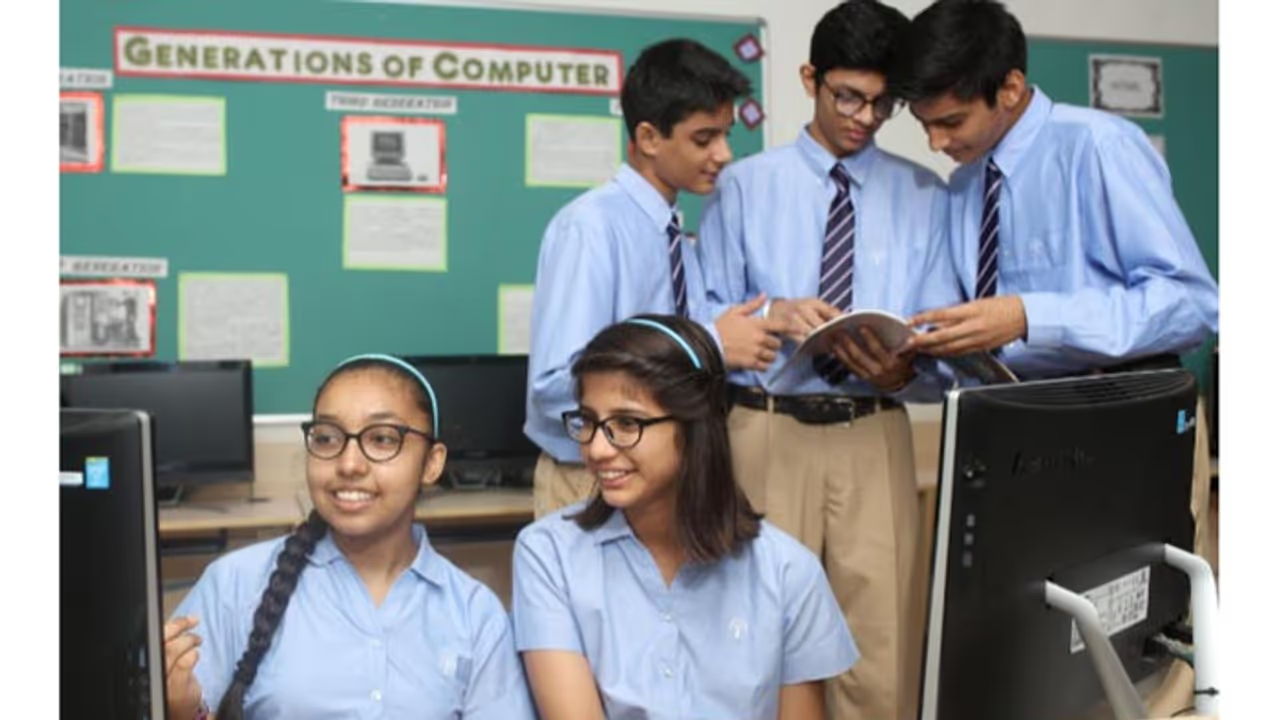
At many leading schools in Dhule, these qualities grow through a combination of classroom methods and school culture.
For many parents, a strong report card is only one part of the picture. They also want their children to communicate well, make sound decisions, handle pressure, solve problems, and grow into grounded individuals. This has made life skills and values an increasingly important part of school education, especially at a time when success depends not only on marks, but also on adaptability, collaboration, resilience, and judgement.
Across Dhule, this shift has influenced the way families evaluate schools. Academic excellence still holds value, but parents now look beyond examination results and rankings. They want schools to help children become confident, responsible, emotionally aware, and socially capable. Leading schools such as Podar International School, Dhule, reflect this wider expectation through an approach that places equal importance on academic learning, personal development, and character formation.
The growing focus on life skills comes from a simple reality: children now face a more complex world than ever before. They must learn how to respond to change, work with different kinds of people, express themselves clearly, and remain steady in difficult situations. Knowledge remains essential, but knowledge alone does not prepare a child for every challenge life will place before them. Students also need emotional strength, social awareness, ethical judgement, and the confidence to act with responsibility.
Related Articles

A parent in Dhule, said, “We all want our children to perform well in academics, but school should do much more than prepare them for exams. Children need to know how to speak with confidence, cope with setbacks, respect others, and make sensible choices. Those are the qualities that shape not only their future careers, but also the kind of people they become.”
This shift in parental expectation reflects changes in the wider world. Colleges, workplaces, and society now place greater value on communication, teamwork, leadership, critical thinking, and emotional maturity. The modern professional environment rewards those who can learn quickly, solve difficult problems, collaborate effectively, and stay calm under pressure. For this reason, life skills are no longer seen as optional additions to education. They have become a necessary part of preparing students for the future.
Schools play a central role in this process because they shape a child’s habits, attitudes, and conduct every day. A meaningful school experience does not limit learning to textbooks and classroom instruction. It gives students opportunities to participate in team projects, speak in public, take responsibility, resolve conflict, and reflect on values such as honesty, empathy, respect, and discipline. These lessons become stronger when schools do not teach them as isolated ideas, but make them part of everyday school life.
A school counsellor said, “Children today face pressure much earlier, whether from academics, peer comparison, social expectations, or uncertainty about the future. Life skills help them manage these pressures in healthier ways. A child who understands emotions, communicates clearly, listens to others, and thinks through problems calmly often develops into a more balanced and resilient young person.”
Among the most important life skills schools should nurture are communication, problem-solving, decision-making, adaptability, leadership, teamwork, emotional regulation, time management, self-awareness, and critical thinking. These skills help students in visible and practical ways. A child with strong communication skills expresses ideas more clearly and builds confidence in academic and social settings. A child with problem-solving ability learns to approach difficulties with patience and logic. A child with emotional awareness handles conflict and disappointment with greater maturity. Together, these abilities support better learning, stronger relationships, and healthier self-esteem.
At many leading schools in Dhule, these qualities grow through a combination of classroom methods and school culture. Project-based learning helps students apply their knowledge to practical situations and work through challenges in groups. Sports teach discipline, perseverance, teamwork, and respect for rules. Cultural activities and clubs give students space for self-expression, creativity, and confidence. Leadership opportunities through student councils, group initiatives, and community service help them understand accountability and social responsibility. Discussions around ethics, current issues, and civic values encourage students to think about the impact of their choices on others and on society.
The importance of life skills also extends far beyond future employment. These skills help students on a personal level by improving their confidence, strengthening friendships, supporting emotional wellbeing, and helping them make better decisions. A child who learns empathy becomes more considerate. A child who learns responsibility becomes more dependable. A child who learns resilience becomes better equipped to handle disappointment and recover from setbacks. In this way, life skills and values support not only professional readiness, but also healthy and meaningful living.
The role of parents and teachers in this journey remains equally important. Children develop values more deeply when home and school talk about the same lessons. Teachers may guide students through activities, classroom interactions, and structured opportunities, but parents strengthen those lessons through everyday example, conversation, and trust. When children see honesty, respect, responsibility, and empathy practised both at home and in school, those values begin to shape their character more firmly.
Schools such as Podar International School, Dhule, promote strong parent-teacher collaboration, recognising that education is most effective when families and schools work together. This partnership creates a supportive environment where children can grow not only academically but also emotionally, socially, and morally. For more information on their school’s admission in Dhule, contact their team.
Email Address: admissions@podar.org
Telephone No: 6366437837