The Hyundai Creta Electric, in contrast, combines familiar Creta DNA with a cleaner, tech-forward package.
India’s electric car market is buzzing with innovation, and 2025 is shaping up to be a turning point for EV buyers. With major manufacturers like Tata Motors, Hyundai, and MG launching advanced electric models across segments, customers now have choices that balance range, performance, and technology.
Among the most anticipated are the Tata Harrier EV, Hyundai Creta Electric, and MG Comet EV — three very different cars that represent three distinct lifestyles: premium SUV adventure, mid-size electric practicality, and compact city convenience. Here’s how they stack up against each other.
Design and Road Presence
Related Articles

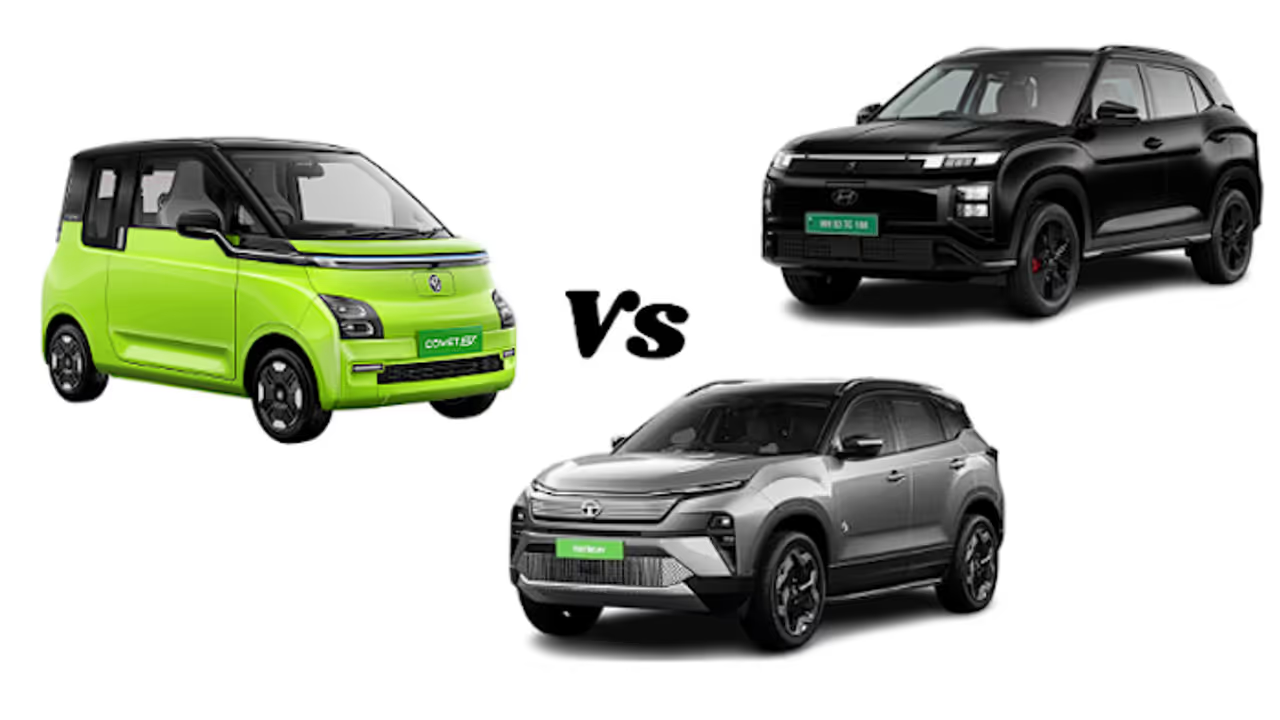
The Tata Harrier EV is the boldest of the trio — a full-sized electric SUV with futuristic styling and a commanding road presence. It features connected LED DRLs at the front and rear, R19 aero-optimised alloy wheels, and a dual-motor AWD setup that gives it a rugged yet modern look. The “Stealth Edition” adds a matte black finish with Carbon Noir interiors for extra flair.
The Hyundai Creta Electric, in contrast, combines familiar Creta DNA with a cleaner, tech-forward package. Its pixelated front grille, R17 aero alloy wheels, and LED sequential indicators instantly make it recognisable. The Knight Edition variant adds darker accents and red brake callipers for sportier appeal.
Meanwhile, the MG Comet EV takes a completely different route. Its minimalist, boxy design is made for city life. With a two-door layout, extended horizon LED lights, and floating twin displays, it’s the most compact EV here — stylish in its own way and perfect for tight urban spaces.
The Harrier EV dominates in presence, the Creta Electric balances elegance and modernity, while the Comet EV brings unique urban charm.
Interior and Comfort
Inside, the Tata Harrier EV feels like a luxury lounge. It offers a 36.9 cm (14.53”) Harman cinematic display powered by Samsung Neo QLED, ventilated memory seats, and a panoramic sunroof with voice assist. The rear cabin even includes a Powered Boss mode, turning it into a reclining lounge.
The Hyundai Creta Electric also sets high standards for comfort. Its dual-curved 26.03 cm screens, ambient ocean blue lighting, and dual-zone automatic climate control deliver a calming atmosphere. The cabin uses eco-friendly upholstery made from recycled materials, while the driver memory seat with welcome retract and 8-way powered adjustment adds luxury.
By comparison, the MG Comet EV is compact yet surprisingly comfortable. It features leatherette seats, a dual-tone Space Grey interior, and clever storage solutions. Its 4-seater layout ensures adequate legroom for all passengers despite its small footprint.
The Harrier EV leads in luxury, the Creta Electric impresses with its tech and comfort balance, and the Comet EV intelligently maximises space.
Performance and Range
The Tata Harrier EV comes with two battery pack options — 65 kWh and 75 kWh, offering certified ranges of 538 km and 627 km, respectively (MIDC-certified). Its dual-motor configuration produces a combined 504 Nm of torque, enabling quick acceleration while maintaining SUV-grade capability. With Eco, City, Sport, and Boost drive modes, plus terrain settings like Normal, Snow/Grass, Mud-Ruts, Sand, and Rock Crawl, the Harrier EV delivers an impressive blend of long-range efficiency and true all-terrain performance.
The Hyundai Creta Electric uses 51.4 kWh and 42 kWh battery options, delivering up to 510 km of range on a full charge. The 126 kW (171 PS) motor accelerates from 0–100 km/h in 7.9 seconds, offering three drive modes — Eco, Normal, and Sport. Fast DC charging (10–80%) takes only 58 minutes, while an 11 kW AC charger can top up the battery in about 4 hours.
The MG Comet EV, on the other hand, is designed for city driving. Its 17.4 kWh battery delivers 230 km of range, and it can be charged fully in about 7 hours (3.3 kW AC). While it’s not built for speed or long drives, its nimble handling and 4.2 m turning radius make it perfect for urban commutes.
For performance and range, the Harrier EV is unmatched. The Creta Electric offers a practical middle ground, while the Comet EV is ideal for short, city-focused mobility.
Technology and Connectivity
The Harrier EV is built on Tata’s new t.idal digital architecture, integrating Harman infotainment, Mappls navigation, DrivePay UPI-based payments, and iRA.ev connected suite with smartwatch connectivity. It also supports Vehicle-to-Load (V2L) and Vehicle-to-Vehicle (V2V) charging, turning the car into a portable power hub.
The Hyundai Creta Electric comes with 70+ Bluelink connected car features, digital key access, voice-enabled panoramic sunroof, and Vehicle-to-Load functionality. The system supports OTA updates, in-car payments, JioSaavn music streaming, and 16 OTA upgrades, ensuring a truly smart driving experience.
The MG Comet EV features 55+ i-SMART connected functions, wireless Android Auto and Apple CarPlay, and 100+ voice commands. The floating twin 10.25-inch displays merge the cluster and infotainment system, creating a futuristic feel. Its digital key sharing and Find My Car features are particularly handy for city users.
The Harrier EV leads with its advanced digital ecosystem, the Creta Electric excels in everyday convenience, and the Comet EV offers simplified, tech-forward functionality.
Safety
Safety is a core strength across all three EVs.
The Tata Harrier EV boasts a 5-star Bharat NCAP rating, seven airbags, Level 2 ADAS with 22 intelligent features, and 540° surround vision with transparent mode. It also includes rain-sensing wipers, Acoustic Vehicle Alert System (AVAS), and Electronic Stability Program with i-VBAC.
The Hyundai Creta Electric features Level 2 ADAS with 20 functions, six airbags, ESC, VSM, and Hill Descent Control. With 75+ safety features and all-wheel disc brakes, it ensures complete protection for all passengers.
The MG Comet EV, though smaller, prioritises safety with dual airbags, ABS + EBD, Electronic Stability Control, rear parking sensors, and 17 hot-stamped body panels. It’s designed for robust protection in city environments.
The Harrier EV sets the benchmark for advanced safety, followed closely by the Creta Electric. The Comet EV provides essential urban safety in a compact package.
Pricing and Value
- Tata Harrier EV: It is priced between ₹21.59–₹30.23 lakh (ex-showroom, Delhi).
- Hyundai Creta Electric: Priced in the range of ₹18.02–₹24.55 lakh (ex-showroom, Delhi).
- MG Comet EV: ₹7.50 lakh – ₹9.56 lakh (ex-showroom, Delhi).
The MG Comet EV is by far the most affordable option, making electric mobility accessible to city dwellers. The Creta Electric hits the sweet spot for practicality and tech, while the Harrier EV justifies its premium with high performance, advanced safety, and long-range capability.
Final Thoughts
The Tata Harrier EV, Hyundai Creta Electric, and MG Comet EV represent three aspects of India’s electric future: performance, practicality, and urban simplicity.
- Choose the Tata Harrier EV if you want a powerful, tech-packed, and go-anywhere electric SUV.
- Pick the Hyundai Creta Electric if you prefer a balanced EV with strong range, features, and value.
- If you need an affordable, efficient, and compact car for everyday city use, opt for the MG Comet EV.
No matter which one you choose, each of these EVs showcases just how exciting and diverse India’s electric mobility landscape has become in 2025.