
A critical vulnerability forced Zcash engineers into emergency mode, resulting in a rare soft-fork and hard-fork response within days.
- ZODL founder Josh Swihart compared Zcash's emergency fix of a privately disclosed Orchard vulnerability to the "Pickle Rick" episode of Rick and Morty.
- Swihart said he was "read in" on the flaw during a call from the R&D head, after a security researcher disclosed it to a subset of the team's core engineers.
- Engineers fixed the flaw in two steps that patched the issue and restored those transactions.
A privately disclosed security flaw sent Zcash developers into crisis mode last week, triggering an emergency network upgrade that Zcash (ZEC) Open Development Lab (ZODL) founder Josh Swihart has described as the most important fix in the privacy-focused blockchain's history.
Comparing the episode to Rick Sanchez's unlikely survival as "Pickle Rick" in the animated series Rick and Morty, Swihart said the network emerged from the ordeal stronger than ever.
Zcash’s price was up over 7% during the past 24 hours. On Stocktwits, the retail sentiment around ZEC remained in the ‘extremely bullish’ zone, while chatter around it stayed in the ‘extremely high’ levels over the past day.
Why Swihart Compared The Incident To ‘Pickle Rick’
“He got a call on Signal at 10 a.m.,” said Swihart. “I received a Signal call from Daira-Emma, the head of ZODL protocol R&D. An issue had been discovered, and I would need to be read in,” said Swihart.
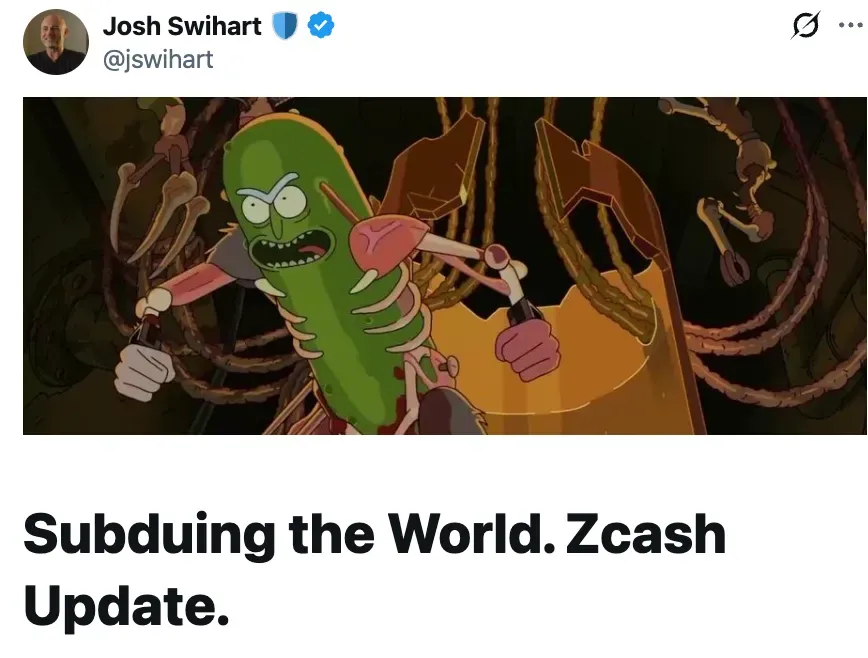
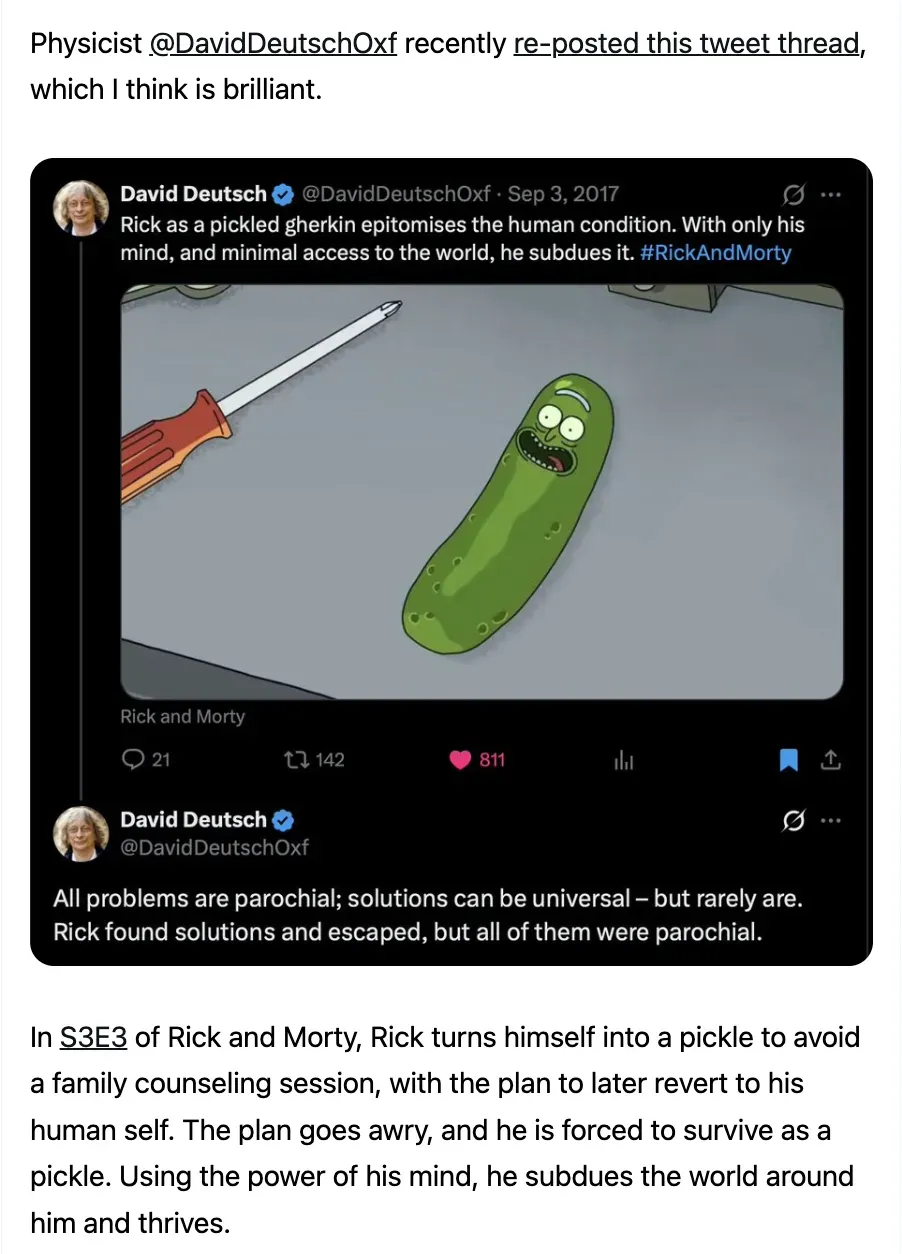
In the episode of Rick and Morty, Rick turns himself into a pickle and gets stuck that way, but against the odds, survives using only his mind. Swihart made the analogy because his team was in a similarly difficult, boxed-in position while fixing a major Zcash security bug - racing against the clock, keeping it under wraps, and coordinating engineers in multiple locations - and succeeded and emerged better. "Zcash is stronger than it has ever been," Swihart wrote.
Zcash Security Updates
Last week, a security researcher named Taylor shared the vulnerability exclusively with a small group of the team’s core cryptographically skilled engineers. Engineers did a two-step fix – first a soft fork to remove Orchard transactions from blocks, then a hard fork to fix the underlying issue and turn them back on.
Swihart wrote that after a 25-block reorg, the soft fork was confirmed as the winning chain on June 2. The emergency NU6.2 network upgrade (zcashd v6.20.0) was then activated at mainnet block 3364600 on June 3 around 03:00 UTC, fixing the disclosed vulnerability in the Orchard circuit’s halo2_gadgets. A parallel time-critical release, zcashd v6.12.5, was shipped simultaneously with a soft fork at block 3363426 to fix a coinbase value-balance desync.
However, soon after the exploit was made public, Arthur Hayes, one of its strongest cheerleaders, exited all his positions last week.
Zcash Rebounds Strongly After Flash Crash
Simon Dedic, founder and managing partner of crypto venture firm Moonrock Capital, was bullish on Zcash. Developers have abandoned the Ironwood proposal to move holders to a new verified pool, and ZEC “took an exploit, flash crashed to $250, and is already bouncing back hard,” Dedic wrote on X.
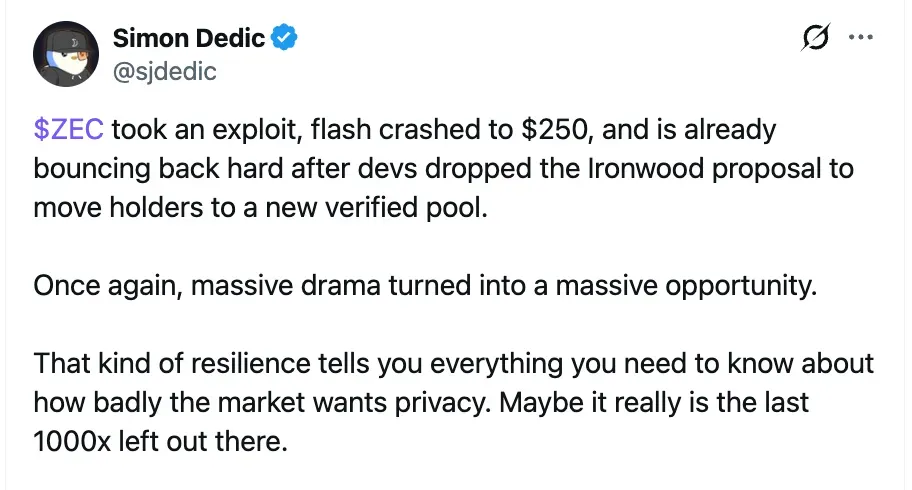
He called the recovery a sign of demand for privacy, writing that the resilience tells the market “everything you need to know about how badly the market wants privacy” and floated that the token “really is the last 1000x left out there.”
Read also: HYPE, NEAR, ZEC Outrun Bitcoin After Hayes Dumps Them — Now He's Denying A $2M Buyback
For updates and corrections, email newsroom[at]stocktwits[dot]com<
