
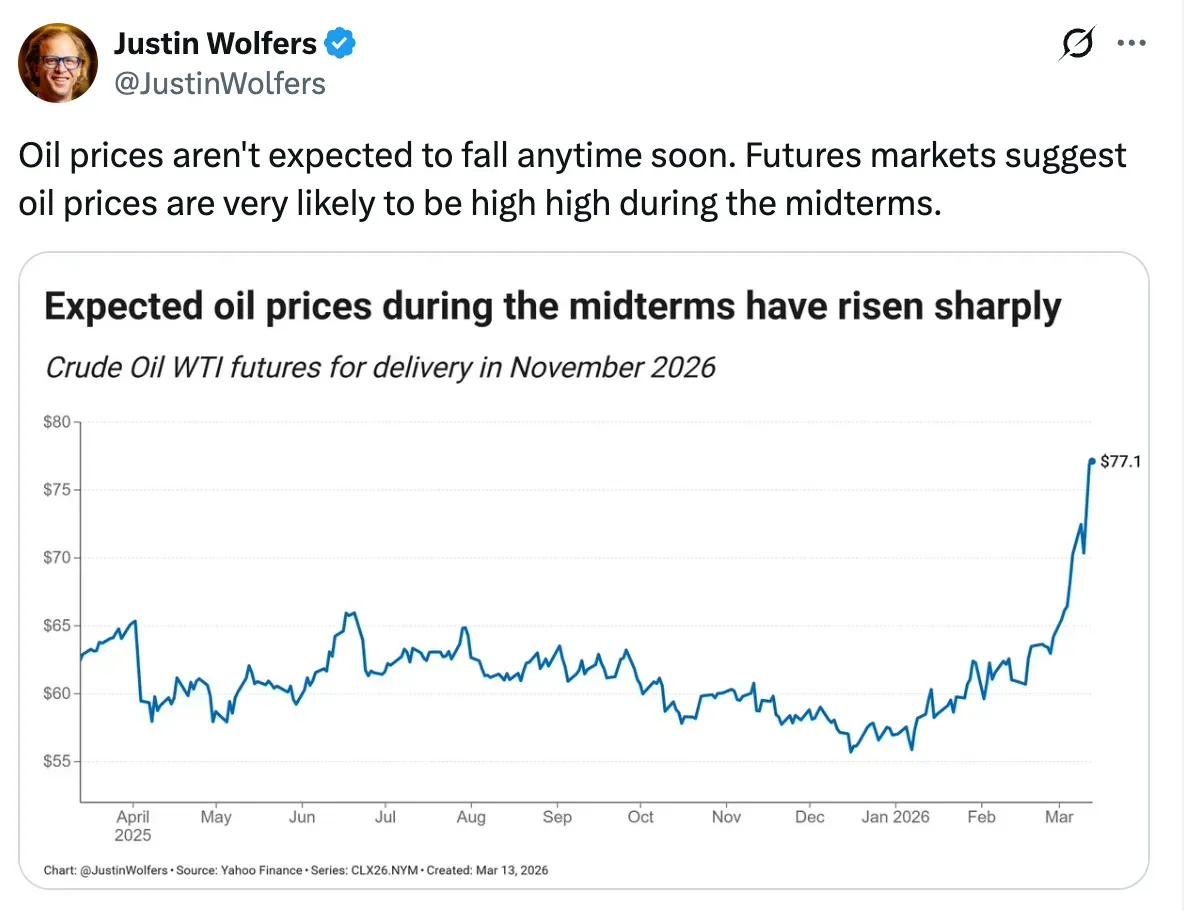
In a post on X on Friday, Wolfers made the statement based on the futures market, adding that oil prices were unlikely to fall anytime soon.
- The Trump administration is gearing up for midterm elections in November, where affordability is likely to be a central theme.
- The administration has said it will tap into the country’s Strategic Petroleum Reserve and is considering a temporary waiver to permit foreign tankers to deliver fuel from the Gulf Coast.
- Sen. Martin Heinrich, D-N.M., the ranking member of the Senate Energy and Natural Resources Committee, reportedly believes that the impact of the war on oil and gas prices will remain.
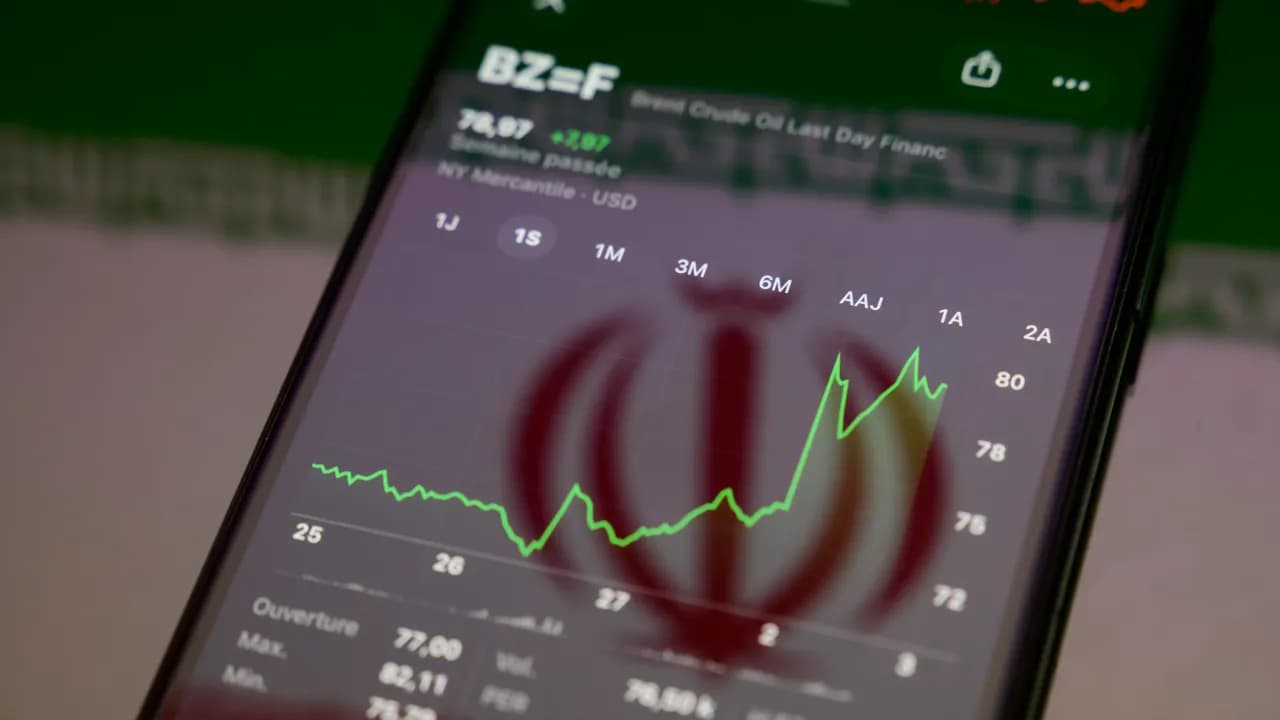
Oil prices, which have edged up amidst the war in Iran, are likely to be elevated during the U.S. midterm elections, according to Professor of Economics and Public Policy at the University of Michigan, Justin Wolfers.
In a post on X on Friday, Wolfers made the statement based on the futures market. “Futures markets suggest oil prices are very likely to be high high during the midterms,” he said.
“Oil prices aren't expected to fall anytime soon,” he added.
Meanwhile, U.S. West Texas Intermediate (WTI) crude futures maturing in April were up 1.2%, trading at $96.91 per barrel at the time of writing. ICE Brent crude futures expiring in May were about 1% higher, trading at $101.38 per barrel.
Strait Of Hormuz Disruptions
The U.S. and Israel’s war on Iran has led to a blockade in the Strait of Hormuz, one of the most important energy shipping routes in the world, sending crude oil prices soaring past $100 per barrel. This has caused concerns over energy supply chain disruptions and economic stability.
As the Trump administration stares down midterm elections in November, where affordability is likely to be a central theme, elevated oil prices are likely to be concerning.
While the president indicated in a Truth Social post on Thursday that the U.S. would “make a lot of money” from rising oil prices, the administration has taken many measures to ease it back, including tapping into the country’s Strategic Petroleum Reserve and considering a temporary waiver to permit foreign tankers to deliver fuel from the Gulf Coast.
Can The U.S. Curb Oil Prices?
Analysts and lawmakers widely believe that the president is unlikely to be able to stabilize prices. Sen. Martin Heinrich, D-N.M., the ranking member of the Senate Energy and Natural Resources Committee, reportedly believes that the impact of the war on oil and gas prices will remain, despite counter measures.
“I don’t care what you do with the Strategic Petroleum Reserve or drilling, you can’t make up that kind of quantity,” Heinrich said in an interview, as per CNBC.
“The tail of how long it’s going to take to get back to normal is going to be many months,” he added.
The United States Oil Fund (USO) was 0.76% higher at the time of writing.
Meanwhile, U.S. equities were trading in red on Friday. The SPDR S&P 500 ETF (SPY), which tracks the S&P 500 index, was down 0.34% at the time of writing, while the Invesco QQQ Trust ETF (QQQ) inched 0.47% lower.
For updates and corrections, email newsroom[at]stocktwits[dot]com.<
