
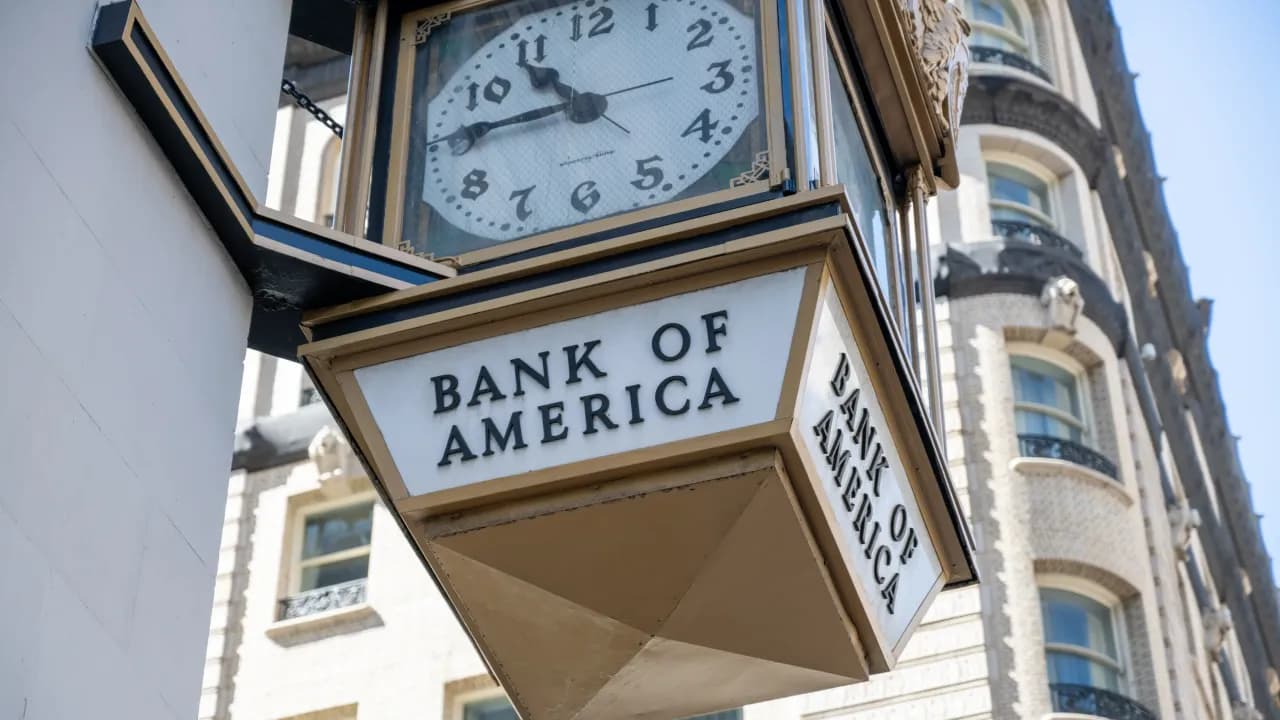
Bank of America market strategists suggest that investors worried about a swelling technology stock bubble can manage risk by using options contracts instead of buying stocks directly.
- A narrow group of artificial intelligence companies is driving the Nasdaq 100 Index to all-time highs, creating classic "low breadth" conditions often seen ahead of a market bubble, BofA said.
- Analysts recommend using call option spreads on tech ETFs like Invesco QQQ to secure upside potential while capping downside equity exposure.
- According to Bank of America’s proprietary Bubble Risk Indicator, U.S. technology equities currently show the highest warning metrics among global asset classes.
Market strategists at Bank of America Corp. (BAC) are alerting investors to potential bubble dynamics forming in the technology sector, while advising a controlled, derivative-based approach to remain invested.
The Nasdaq 100 Index has reached fresh highs despite pressure from rising Treasury yields. However, market observers highlight that the advance is largely concentrated in a handful of mega-cap artificial intelligence firms rather than broad market participation.
Longer-duration yields have hit multi-decade highs, but tech stocks have been resilient so far to the risks of soaring yields.
"Low breadth is a classic feature of bubbles building and typically doesn't stop until they pop," Bank of America strategists Arjun Goyal, Riddhi Prasad, and Benjamin Bowler wrote in a note to clients.
Mitigating Downside via Equity Derivatives
To address concerns among fund managers who fear underperforming benchmark indexes, the bank's strategy team advises using derivative contracts over direct equity positions.
Specifically, the strategists recommend buying call options and call spreads on the Invesco QQQ Trust ETF (QQQ), an exchange-traded fund that tracks the Nasdaq 100. This structure lets market participants capture further gains while limiting potential losses if tech shares pull back suddenly. To offset option premiums, institutional investors can sell downside protection on the index.
For advanced institutional trading desks, the team also suggested exotic options structured to pay out if the technology index continues to climb in a rising-rate environment.
Bubble Indicators Point to Elevated Risk Levels
The advisory comes as internal analytics show growing valuation risks in major equity indexes. Bank of America tracks market frothiness across 32 asset classes, equity sectors, commodities, and cryptocurrencies through its proprietary Bubble Risk Indicator (BRI).
As of early October 2026, U.S. technology stocks ranked at the very top of the bank's indicator. Other asset categories showing elevated risk levels include crude oil, healthcare equities, and South Korean equities—the latter heavily weighted by semiconductor manufacturers SK Hynix (SKHY) and Samsung Electronics.
The Invesco QQQ Trust (QQQ), which tracks the Nasdaq-100 Index, has stayed ‘extremely bullish’ since last week.
For updates and corrections, email newsroom[at]stocktwits[dot]com.<
