
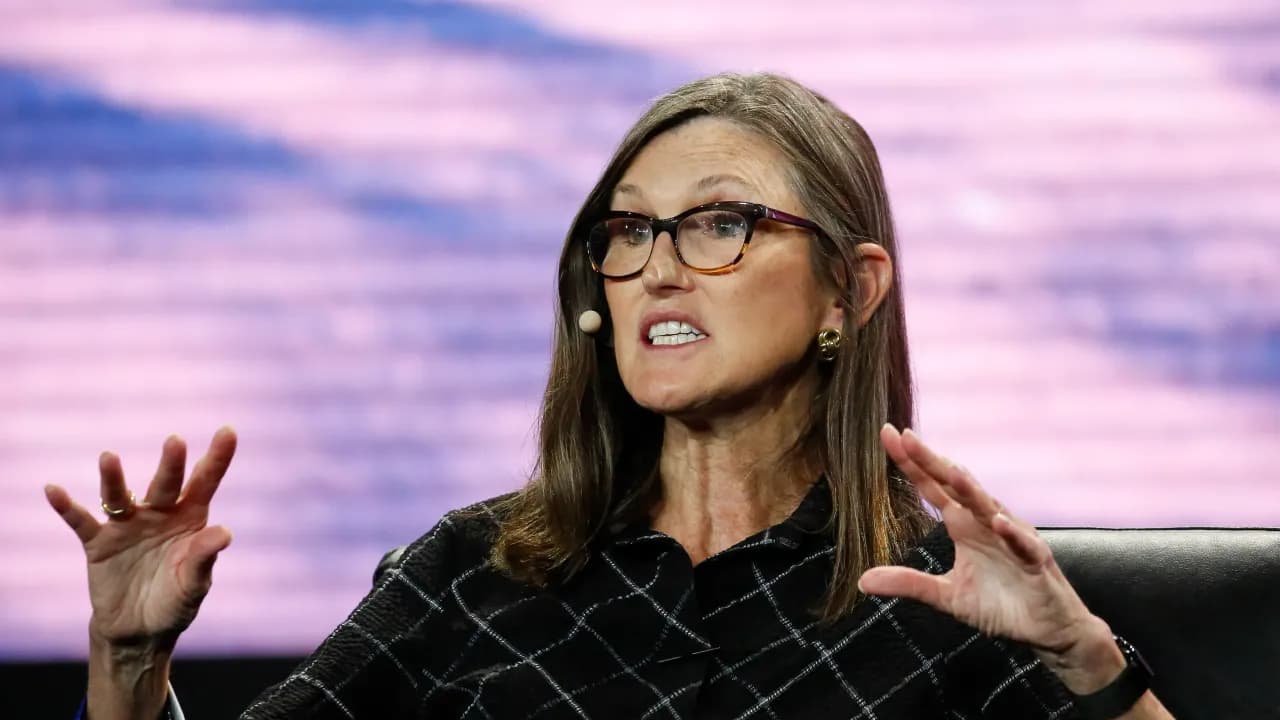
In a series of posts on X, Wood said that while inflation fears dominated conversations during her recent investor meetings across Asia and Europe, she believes inflation could decline significantly.
- Wood pointed to rising U.S. productivity, subdued unit labor costs, and declining “Truflation” readings to support her argument.
- Wood also expressed confidence in Fed’s Kevin Warsh's understanding of these trends, adding that she believes he recognizes both the disinflationary impact of productivity gains and the shortcomings of government inflation measures.
- Meanwhile, RBC expects core inflation to remain just below 3% by the end of the year.
As markets increasingly price in the possibility of renewed inflation pressures and a more hawkish Federal Reserve, ARK Invest founder Cathie Wood believes otherwise..
In a series of posts on X, Wood said that productivity gains and easing labor-cost pressures could push inflation sharply lower, potentially giving a Kevin Warsh-led Fed room to support growth rather than restrain it
Wood said while inflation fears dominated conversations during her recent investor meetings across Asia and Europe, she believes inflation “could break down in a big way, and not just because of oil prices.” The investor added that she expects Warsh to “give the financial markets a master class in monetary policy” even as investors expect higher interest rates.
Her comments come as markets are increasingly pricing in another Federal Reserve rate hike this year after May’s Consumer Price Index rose 0.5%, pushing the annual inflation rate to 4.2% before seasonal adjustment, the highest level since April 2023.
May’s Personal Consumption Expenditures Price Index, the Fed's preferred gauge of inflation, is due on Thursday.
Wood Highlights Lower ‘Truflation’ To Back Stance
To support her argument, Wood pointed to rising U.S. productivity, subdued unit labor costs and declining “Truflation” readings, arguing that inflation is poised to cool sharply.
In her posts, she noted that productivity rose about 3% year over year in the first quarter while compensation per hour increased about 3.5%. “Thus, “underlying inflation”was 0.5%. No cost-push inflation there!” she said.
She also noted how Truflation, an alternative to government-issued inflation metrics that measures the prices of thousands of consumer goods and services in real time, has declined from 11% on a year-over-year basis in 2022 to 1.8% now, while core Truflation has dropped to 1.4%.
Wood’s Confidence In Warsh
The ARK Invest founder also expressed confidence in Warsh's understanding of these trends.
“From the five studies that he has commissioned, I believe that Kevin Warsh understands not only the disinflationary role that productivity is playing but also the flaws in government-measured inflation rates,” she said in her posts.
In a separate post, she said that if the U.S. economy continues to pick up pace, or even boom, while inflation falls to 0% to 1% in the next few years, “as we believe is likely, Kevin Warsh’s Fed will not stand in the way.”
“The Fed is shifting from fighting growth to encouraging it,” she added.
But Wall Street Is Not Convinced
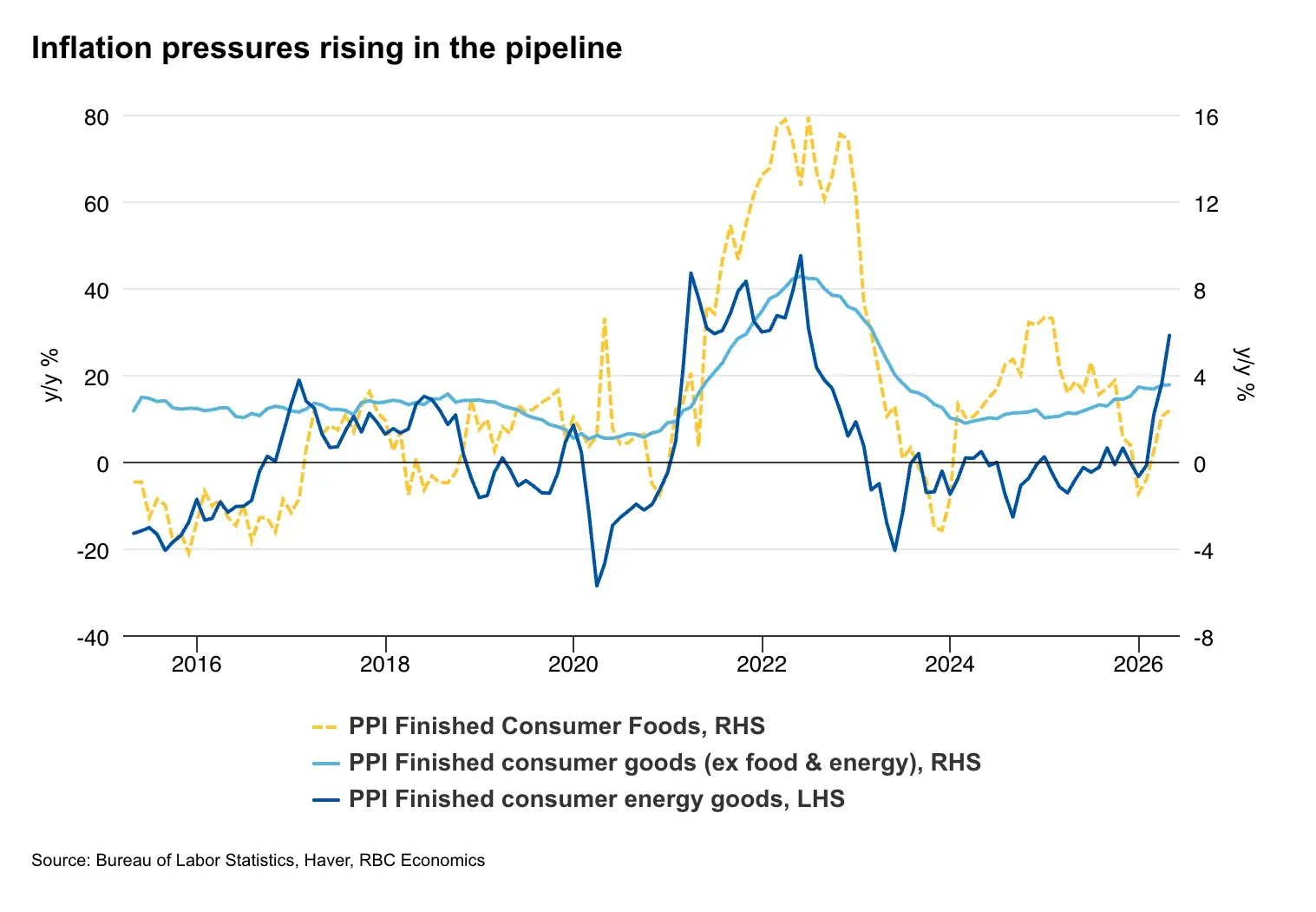
Meanwhile, other market participants are anticipating higher inflationary pressures and tighter monetary policy in the coming months. Meanwhile, in its latest June briefing, RBC highlighted inflation concerns beyond energy, noting that broad-based U.S. inflationary pressures have persisted over a multi-year horizon.
“While the ‘peak’ in headline inflation is likely behind us, we aren’t convinced that’s the case for non-energy inflation,” it said.
The firm said goods inflation continues to be supported by tariffs, housing inflation remains elevated, and strong wage growth is keeping services inflation resilient. RBC expects core inflation to remain just below 3% by the end of the year.
“The new wrinkle in our outlook is incoming Federal Reserve Chair Kevin Warsh, who has decidedly positioned the central bank as keen to return inflation back to the 2% target. Should the Fed begin hiking again, the heat under inflation may be more contained,” the firm added.
Meanwhile, at the time of writing, the SPDR S&P 500 ETF (SPY), which tracks the S&P 500 index, was up 0.61% and the Invesco QQQ Trust ETF (QQQ) gained 1.95%, while the SPDR Dow Jones Industrial Average ETF Trust (DIA) edged 0.03% lower.
Retail sentiment on Stocktwits for the S&P 500 ETF was in the ‘bearish’ territory at the time of writing, while it was ‘bullish’ for QQQ and ‘neutral’ for DIA.
For updates and corrections, email newsroom[at]stocktwits[dot]com.<
