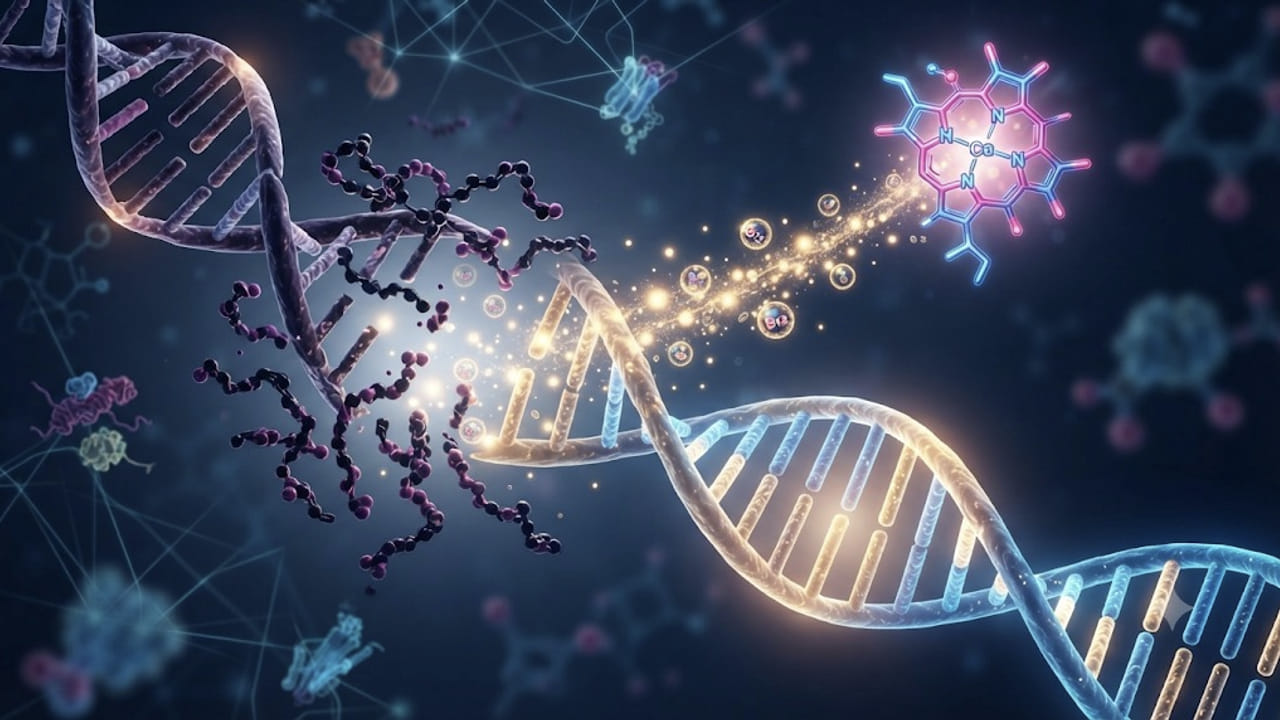
Scientists have found that vitamin B12 largely reversed growth and developmental problems in worms carrying a mutation linked to Verheij syndrome, a rare genetic disorder. The mutation disrupted metabolic pathways that depend on the vitamin.
A common vitamin could offer a new direction for research into rare genetic disorders. Scientists have found that vitamin B12 largely reversed growth and developmental problems in tiny worms carrying a genetic mutation linked to Verheij syndrome, a rare condition that affects human growth and development.
The discovery is particularly interesting because the researchers also found similar changes in the metabolism of people diagnosed with the condition. This raises the possibility that vitamin B12-related processes could become a target for future treatments.
However, the findings do not mean that vitamin B12 can currently treat Verheij syndrome in people. The benefits have so far been demonstrated in worms, and further research is needed to establish whether the same approach could help patients.
Related Articles

What is Verheij syndrome?
Verheij syndrome is a rare genetic disorder associated with developmental delays, growth problems and short stature. It is linked to changes in genes involved in RNA splicing, an important process that helps cells prepare instructions for making proteins.
Cells first copy information from DNA into molecules called messenger RNA (mRNA). These messages contain sections that must be removed and others that need to be joined together in the correct order before the instructions can be used.
This editing process is known as RNA splicing. It helps cells produce the proteins needed for normal growth and functioning.
When the genes responsible for splicing do not work properly, the process can go wrong. This can affect several activities inside cells and contribute to developmental disorders.
How vitamin B12 corrected problems in worms
The research involved Caenorhabditis elegans, commonly known as C. elegans. These tiny roundworms are widely used in scientific studies because their biology allows researchers to investigate how genes affect growth, ageing and other life processes.
The scientists were initially studying genes that could influence lifespan when they examined a mutation in a gene involved in RNA splicing. This gene is also associated with Verheij syndrome in humans.
The worms carrying the mutation grew much more slowly than normal and remained unusually small. Researchers then examined their genes and metabolism to understand what was causing these problems.
They found that the mutation disrupted certain metabolic pathways that depend on vitamin B12. These pathways are important for normal cell activity and healthy growth.
The team then tested whether giving the worms additional vitamin B12 could correct the damage. The results were encouraging: the vitamin restored the affected metabolic processes and largely reversed the developmental abnormalities.
Jonathan Kölschbach, the study's first author, said the researchers were surprised that a change in RNA processing had such a specific effect on vitamin B12-dependent metabolism.
He also described the correction of the developmental problems in the worm model using vitamin B12 as particularly exciting.
Do the findings have any connection to humans?
After seeing the results in worms, the researchers wanted to find out whether similar changes occurred in people with Verheij syndrome.
They examined existing datasets from human cells and worked with Hormos Dafsari, a neuropediatrician at University Hospital Cologne, to study blood samples from patients diagnosed with the condition.
Their investigations found evidence of similar metabolic changes in humans. This suggests that the vitamin B12-related pathways affected in the worms may also be involved in Verheij syndrome in people.
However, this is an important distinction: finding similar metabolic changes in patients does not prove that vitamin B12 supplements will correct the condition in humans.
The researchers have not yet established whether giving patients additional vitamin B12 can improve their growth, development or other symptoms.
Could vitamin B12 lead to new treatments for rare diseases?
The findings offer a new way to understand how problems with RNA splicing can affect the body's metabolism.
Until now, researchers have largely focused on how faulty RNA processing disrupts the production of proteins. This study suggests that the effects may also extend to specific metabolic pathways, including those that depend on vitamin B12.
If further research confirms this connection, it could help scientists identify treatment approaches for Verheij syndrome and possibly other rare genetic conditions involving RNA splicing.
The next challenge is to understand whether the benefits seen in worms can be reproduced safely and effectively in humans.