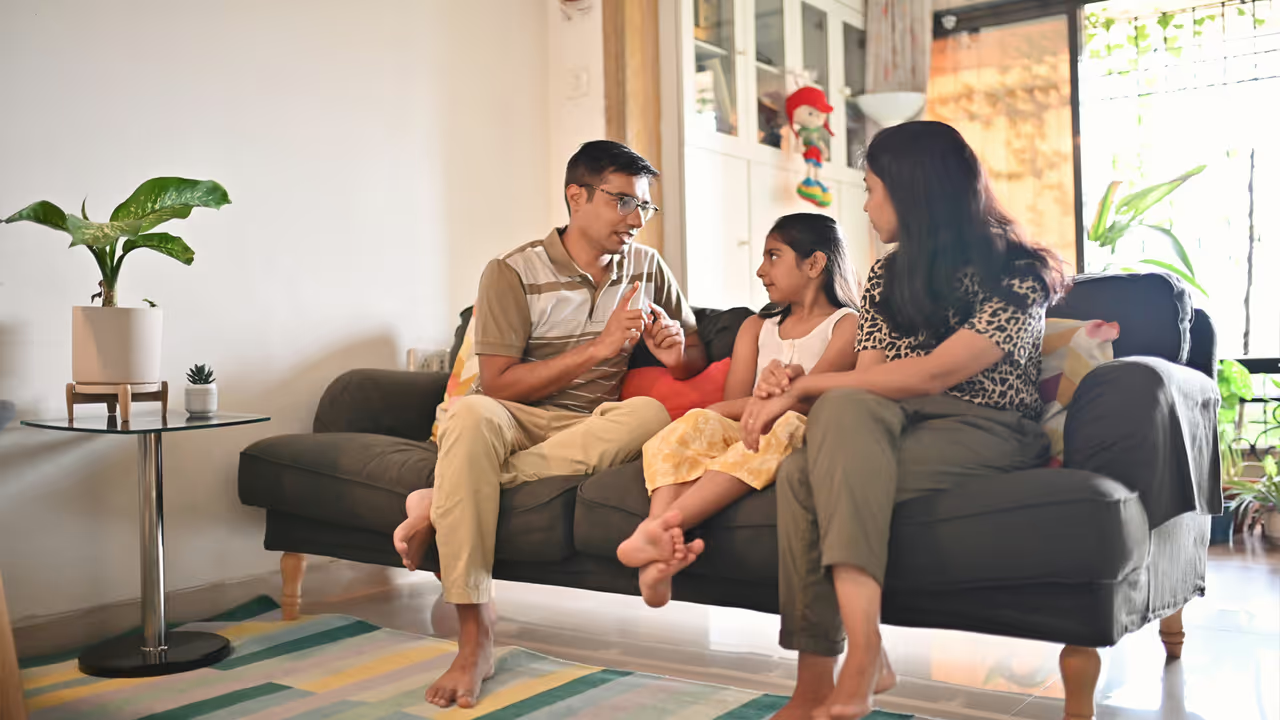
Parenting in India is changing, but many experts believe children may not be fully equipped for the modern world. Balancing traditional values with skills like critical thinking, emotional intelligence, and adaptability is becoming essential.
Parenting in India is undergoing a rapid transformation; yet many experts contend that children today are not being fully equipped to face the challenges of the modern world they are entering. Traditional Indian parenting has often emphasized academic excellence, obedience, and respect for elders. While these are all very important values, such attributes may not always prepare children for modern-day challenges such as critical thinking, emotional intelligence, and adaptability.
Are Indian Parents Raising Kids Under Prepared For Their World?
One such concern is the heavy emphasis on rote learning and examinations. Indian children spend long hours memorizing concepts instead of enhancing their problem-solving skills and creativity. This methodology leaves them underprepared for workplaces where innovation, collaboration, and independent thinking are of utmost importance.
Another area of concern is emotional preparedness. Many Indian parents do not openly discuss issues such as mental health, failure, or their personal struggles. Because of this, their children may be under-equipped to cope with high-stress environments when faced with issues such as stress, self-confidence, or resilience. Encouraging open conversations, showing empathy, and emotionally regulating oneself is quite important in this age of competitiveness and fast-changing landscapes.
Related Articles

How would the world be?
Technology works as a double-edged sword in this scenario. Kids must adapt with technology; however, if they spend excessive time on it without proper guidance on digital literacy, it can impact their critical-thinking and social skills. Parents should strive for a wholesome balance between online engagement and real-life experiences.
Lastly, decision-making and life skills are often overlooked in Indian households. These children, although academically fulfilling, are often regarded as lacking any practical life skills of big importance in adulthood such as financial literacy, time management skills, and independent thought.
In conclusion, even though Indian parents shower their children with love, structure, and security, being raised in a traditional manner may leave them unprepared for a fast-affecting world. A more balanced approach, with partial emphasis on academic intelligence, emotional intelligence, life skills, and adaptability, can further empower children to shine in a fast-paced, global community.